
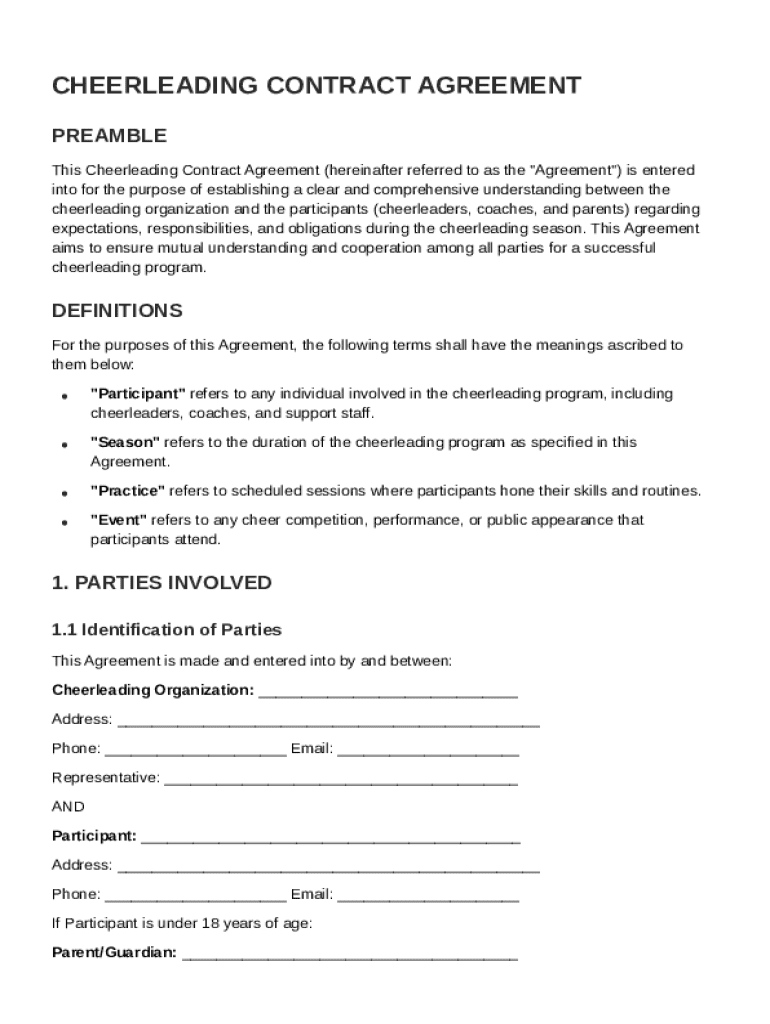







Definition and Meaning
The Cheer Contract Template serves as a formal agreement within a cheerleading program, delineating the expectations, responsibilities, and obligations of all involved parties, including cheerleaders, coaches, and parents. This structured document establishes the scope of the relationship between the cheerleading organization and its participants. It typically covers the duration of the contract, conditions for termination, and roles and responsibilities of each party. An essential part of this contract is the Code of Conduct, which sets behavioral standards to maintain discipline and respect within the program. Additionally, it includes provisions addressing financial commitments, health and safety protocols, and media consent requirements.
Key Elements of the Cheer Contract Template
A well-crafted Cheer Contract Template should include several critical components to ensure clarity and enforceability:
- Participant Responsibilities: Specifies the duties and conduct expectations for cheerleaders, covering practice attendance, performance standards, and teamwork.
- Coach Obligations: Details the responsibilities of coaches, such as providing training, ensuring safety, and fostering a positive environment.
- Parent/Guardian Involvement: Outlines the role of parents or guardians, particularly in supporting their child's participation and fulfilling financial obligations.
- Financial Commitments: Lists the fees, payment schedules, and any refunds or penalties for late payments.
- Health and Safety Requirements: Details the necessary safety measures, such as routine health checks, injury prevention strategies, and emergency protocols.
- Media Consent: Addresses permission for the use of participants’ images or likenesses in promotional materials and social media.
- Dispute Resolution: Describes the procedures for addressing grievances or breaches of contract.
How to Use the Cheer Contract Template
Using a Cheer Contract Template is a straightforward process that involves customizing the document to suit the specific needs of your cheerleading program. Here are steps to effectively utilize this document:
- Download and Review: Start by acquiring a copy of the template and thoroughly reviewing its sections.
- Customize: Modify the template to reflect your program's unique requirements, such as adjusting financial terms or adding specific expectations for participants.
- Consult Legal Expertise: Seek legal advice to ensure the contract is comprehensive, compliant with state laws, and protects all parties involved.
- Distribute for Feedback: Share the draft with key program stakeholders, such as senior coaches and board members, for their input.
- Finalize the Contract: Incorporate any necessary revisions and create the final version of the document.
- Execute: Have all relevant parties—participants, parents, and coaches—review and sign the contract to formalize the agreement.
Who Typically Uses the Cheer Contract Template
The Cheer Contract Template is predominantly utilized by cheerleading programs, which could be associated with:
- Schools and Universities: Academic institutions that include cheerleading as an extracurricular activity.
- Independent Cheerleading Clubs: Community-based organizations offering cheerleading opportunities outside of school settings.
- Competitive Cheer Teams: Groups that participate in local, regional, or national cheerleading competitions.
- Youth Sports Organizations: Broader sports organizations that offer cheerleading as one of their activities.
These organizations use the template to ensure that all participants adhere to the program's standards and requirements.


Legal Use of the Cheer Contract Template
The Cheer Contract Template must comply with legal standards to be enforceable. Elements to consider include:
- Contractual Capacity: Confirming that all signatories have the legal capacity to enter into the agreement.
- Legal Compliance: Ensuring all terms abide by applicable federal and state laws, including those related to minors.
- Clarity and Specificity: The contract must clearly define the rights and obligations of parties to avoid ambiguity.
- Consideration: The contract must contain mutually agreed-upon terms with benefits for all parties involved.
- Possibility of Performance: The terms set out in the contract must be achievable within the legal and operational capacities of the parties.
Steps to Complete the Cheer Contract Template
To effectively fill out the Cheer Contract Template, follow these steps:
- Gather Information: Collect necessary details about the cheerleading program, including participant information and program guidelines.
- Input Specific Details: Enter relevant data, such as participant names, dates, roles, and financial commitments.
- Review and Revise: Read through the filled-out contract to ensure accuracy and completeness of all entered information.
- Seek Legal Review: Have a legal expert examine the completed document to verify compliance and enforceability.
- Distribute for Signing: Provide copies to all parties for review and signature.
- Store Securely: Keep signed copies in a secure location for future reference and enforcement.
Examples of Using the Cheer Contract Template
The Cheer Contract Template can be employed in various contexts to enhance program management:
- Annual Youth Cheer Camps: Implement the contract for short-term engagement, ensuring clear expectations and conduct rules.
- High School Cheerleading Seasons: Utilize the template for entire seasons to cover both competitive and non-competitive periods.
- Competitive Championships: Customize the template for teams participating in specific events to address unique competition-related standards.
- Parent and Booster Club Partnerships: Establish roles and expectations for financial and logistical support from parents and supporters.
State-specific Rules for the Cheer Contract Template
State regulations can influence how a Cheer Contract Template is drafted and enforced. Considerations include:
- Age of Majority: Varied age limits across states determine when an individual can sign a binding contract.
- Educational Regulations: Some states may impose specific rules for school-affiliated programs, such as financial disclosure requirements.
- Minor Participation Guidelines: Additional consent procedures may be required when participants are minors.
- Safety Standards: State-specific mandates regarding participant safety, including required certifications for coaches.
- Insurance Provisions: Distinct insurance requirements that the program may need to satisfy.
Understanding and adhering to these variations ensure the contract remains legally sound and effective across different jurisdictions.




