
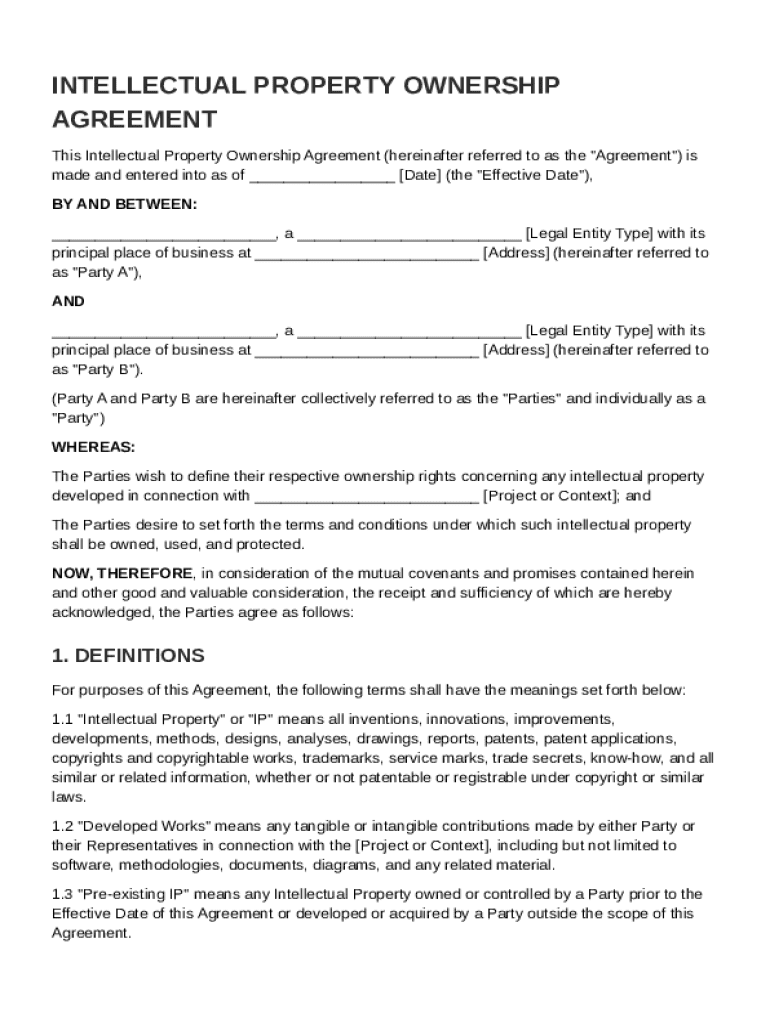







Definition & Meaning
An IP Ownership Agreement Template is a predefined document outlining the ownership rights and responsibilities related to intellectual property (IP) developed as part of a specific project or collaboration. This type of agreement is crucial for establishing clear guidelines on who holds the rights to existing and new creations. By using this template, parties can prevent future disputes over IP by detailing terms upfront, ensuring transparency and mutual understanding.
Key Elements of the IP Ownership Agreement Template
A comprehensive IP Ownership Agreement Template includes several key components:
- Definitions: Clear explanations of terms such as "intellectual property," "ownership," "licensing," and other relevant concepts used throughout the document.
- Ownership Rights: Clauses detailing which party holds ownership over pre-existing works and developed intellectual property during the project.
- Licensing Terms: Any applicable licensing arrangements, including permissions and limitations for using the IP.
- Confidentiality Obligations: Provisions protecting sensitive information shared between parties.
- Dispute Resolution: Processes for resolving disagreements, potentially including arbitration or mediation.
- Indemnification and Liability: Responsibilities for indemnifying parties against claims and limits on liability to manage potential risks.
Including these elements ensures comprehensive coverage of all crucial aspects of IP management.
Steps to Complete the IP Ownership Agreement Template
Completing an IP Ownership Agreement Template involves a series of methodical steps:
- Download the Template: Obtain the template from reliable sources, such as legal document providers or online platforms like DocHub.
- Review Template Structure: Familiarize yourself with the sections and ensure you understand the included terms.
- Customize the Template: Tailor the document to the specifics of your project and parties involved, filling in necessary fields.
- Include Relevant Details: Add details such as party names, project descriptions, and precise ownership rights.
- Seek Legal Review: Consult with a legal professional to validate the agreement's legality and compliance with applicable laws.
- Sign and Execute: Once finalized, all parties should sign the document to formalize the agreement. Using DocHub, signatures can be electronically captured to ensure legality and efficiency.
Proper completion ensures that all parties clearly understand their rights and responsibilities.
Who Typically Uses the IP Ownership Agreement Template
The IP Ownership Agreement Template is typically used by:
- Businesses: Companies collaborating on projects that require clear IP ownership terms, such as joint ventures or subcontracting arrangements.
- Individuals: Independent contractors, consultants, or freelancers wanting to protect their rights concerning created works.
- Educational Institutions: Universities and research facilities engaged in collaborative projects with other organizations.
- Tech Startups: Founders looking to delineate ownership over software, inventions, or patents developed in partnership.
Each user benefits from the template's capacity to establish transparent ownership rights and responsibilities, fostering mutual trust and collaboration.


Benefits of Using the IP Ownership Agreement Template
Utilizing the IP Ownership Agreement Template offers several advantages:
- Clarity of Ownership: Prevents disputes by clearly defining who owns what aspects of the intellectual property.
- Legal Protection: Provides a binding legal framework safeguarding the interests of all parties.
- Time Efficiency: Streamlines the process of creating tailored agreements without starting from scratch.
- Professionalism: Offers assurance to stakeholders that IP rights are managed in an organized and recognized manner.
- Flexibility: Adapts to various project types and industries, catering to specific needs and regulations.
Employing this template promotes a structured approach to managing IP.
Legal Use of the IP Ownership Agreement Template
The IP Ownership Agreement Template is crafted to comply with established legal standards and practices within the United States, making it suitable for formalizing intellectual property arrangements. It is essential to ensure the agreement is customized to align with state-specific laws and any unique jurisdictional requirements in the U.S. A legal review before execution can help ensure the document fulfills legal obligations and remains enforceable in a court of law.
Important Terms Related to IP Ownership Agreement Template
Understanding key legal terms is crucial when engaging with an IP Ownership Agreement Template:
- Intellectual Property (IP): Encompasses creations like inventions, literary works, designs, and symbols.
- Licensing: Permission granted by the IP owner to allow another party to use the property under specified conditions.
- Confidential Information: Any private data shared between parties that must remain undisclosed to third parties.
- Indemnity: Protection against losses or damages claimed by others, provided within the agreement's terms.
- Sub-license: Secondary licensing rights offered by a licensee to another entity, subject to restrictions.
Familiarity with these terms ensures all parties accurately interpret the agreement.
State-Specific Rules for the IP Ownership Agreement Template
While the IP Ownership Agreement Template provides a general structure applicable across the United States, specific state laws may influence the final document. For example, California's regulations on employee inventions differ from those of other states, influencing agreement terms. It's essential to account for:
- State Employment Laws: These may affect IP ownership relating to employee-created works.
- Contractual Obligations: Varying requirements for contract enforceability in different states.
- Data Protection Laws: Specific confidentiality obligations regarding data sharing and retention.
Consulting a legal expert familiar with local jurisdiction will ensure compliance with state-specific rules.




