






Definition and Meaning of Framework Contract Template
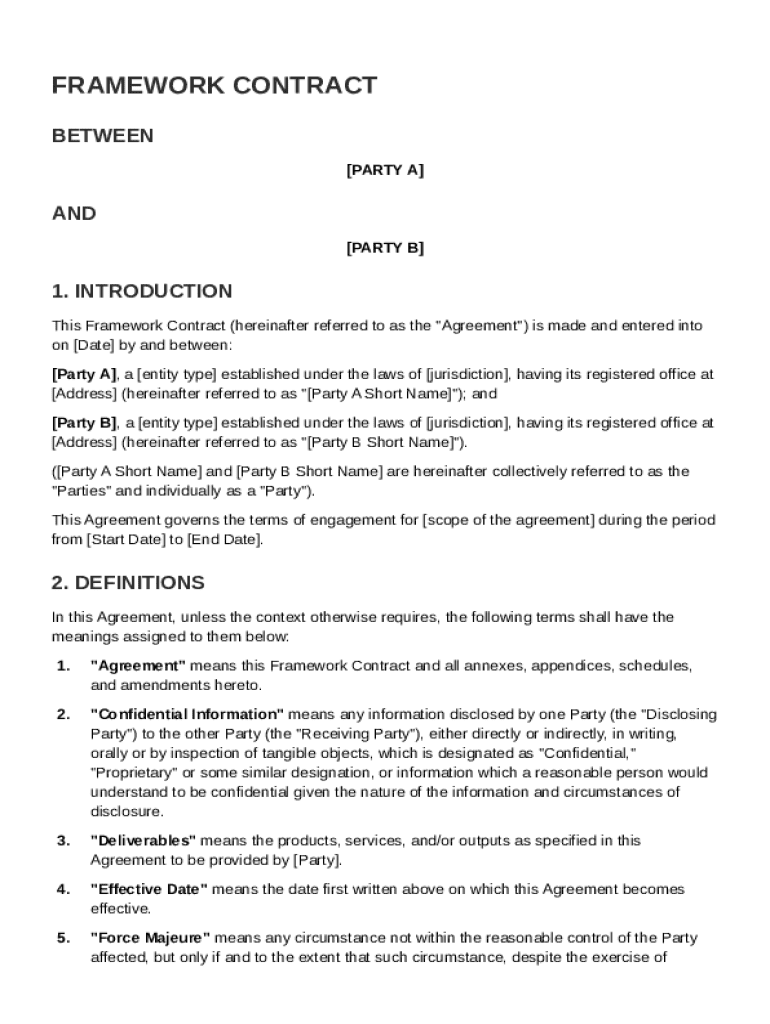
A Framework Contract Template serves as a foundational document establishing the terms and conditions under which two parties agree to provide services over a designated period. This template includes essential components such as scope of work, payment terms, and termination conditions. It defines the mutual responsibilities and expectations, ensuring both parties are aligned with regard to confidentiality, intellectual property rights, dispute resolution, and applicable governing laws. By standardizing these elements, the template offers a structured approach to forming agreements that protect the interests of all parties involved.
Key Elements of the Framework Contract Template
The Framework Contract Template consists of several critical sections:
- Scope of Work: Clearly defines the services or products provided, including specific responsibilities of each party.
- Payment Terms: Outlines how and when payments are to be made, including details on pricing, invoicing, and any applicable taxes.
- Termination Conditions: Specifies conditions under which the agreement can be terminated by either party, including notice requirements and potential penalties.
- Confidentiality Obligations: Protects sensitive information exchanged between parties, detailing how and what data should be kept confidential.
- Dispute Resolution: Describes the process for resolving disagreements, which may include mediation, arbitration, or litigation procedures.
How to Use the Framework Contract Template
To utilize the Framework Contract Template effectively, follow these steps:
- Review and Customize: Begin by reading through the entire template to understand its provisions. Customize it by adding specific details relevant to your particular agreement.
- Consult with Legal Advisors: Engage with legal counsel to ensure all terms comply with applicable laws and regulations, tailoring sections as needed to fit unique circumstances.
- Negotiation: Discuss the terms with the other party to confirm mutual understanding and agreement. Make any necessary amendments based on these discussions.
- Finalization and Execution: Once all terms are agreed upon, both parties should sign the document to officially execute the contract.
Steps to Complete the Framework Contract Template
When completing the Framework Contract Template, consider the following steps for thoroughness:
- Identify Parties: Clearly state the names and contact information of all parties involved.
- Define Work and Deliverables: Explicitly outline deliverables, timelines, and performance expectations.
- Specify Payment Details: Include exact payment schedules, amounts, and methods.
- Establish Legal Compliance: Verify that the contract adheres to relevant legal standards, ensuring enforceability.
- Signatures and Dates: Obtain signatures from all parties, indicating formal acceptance and agreement, accompanied by relevant dates.
Legal Use of the Framework Contract Template
The Framework Contract Template must be used within the legal frameworks governing contract law. It should:
- Comply with Jurisdictional Requirements: Ensure the contract complies with specific state laws where the services are provided.
- Adhere to Federal Regulations: Follow any necessary federal requirements, particularly when engaging in interstate commerce.
- Maintain Enforceability: Draft all clauses with clarity to avoid ambiguities that could render any part of the contract void.
Important Terms Related to Framework Contract Template
Understanding the technical terminology within a Framework Contract Template is crucial:
- Consideration: Refers to the value exchanged between parties as part of the contract agreement.
- Force Majeure: Describes events beyond control (e.g., natural disasters) that may excuse non-performance.
- Liability Limitations: Specifies limits on the extent to which parties are responsible for damages arising from the contract.
Who Typically Uses the Framework Contract Template
This template is commonly utilized by:
- Service Providers and Clients: Businesses offering professional services and their clientele.
- Government Agencies: Public sector organizations engaging vendors for continual services.
- Large Corporations: Enterprises entering into vendor-supplier relationships or collaborative projects.


Examples of Using the Framework Contract Template
Consider these practical applications of the Framework Contract Template:
- IT Services: A tech firm uses the template to establish terms with a client for ongoing software maintenance.
- Construction Projects: A contractor creates a framework agreement with subcontractors to streamline project execution.
- Consultancy Engagements: Consultants formalize long-term advisory services with corporate clients.
State-Specific Rules for the Framework Contract Template
Each state in the U.S. may have differing regulations influencing the framework contract. Noteworthy variations include:
- Governing Law Clauses: States may require specific declarations of which state's laws apply.
- Consumer Protection Laws: Ensure compliance, as some states have robust consumer rights affecting service contracts.
- Notarization Requirements: Certain jurisdictions may mandate contracts to be notarized to be considered legally binding.