




Definition & Meaning
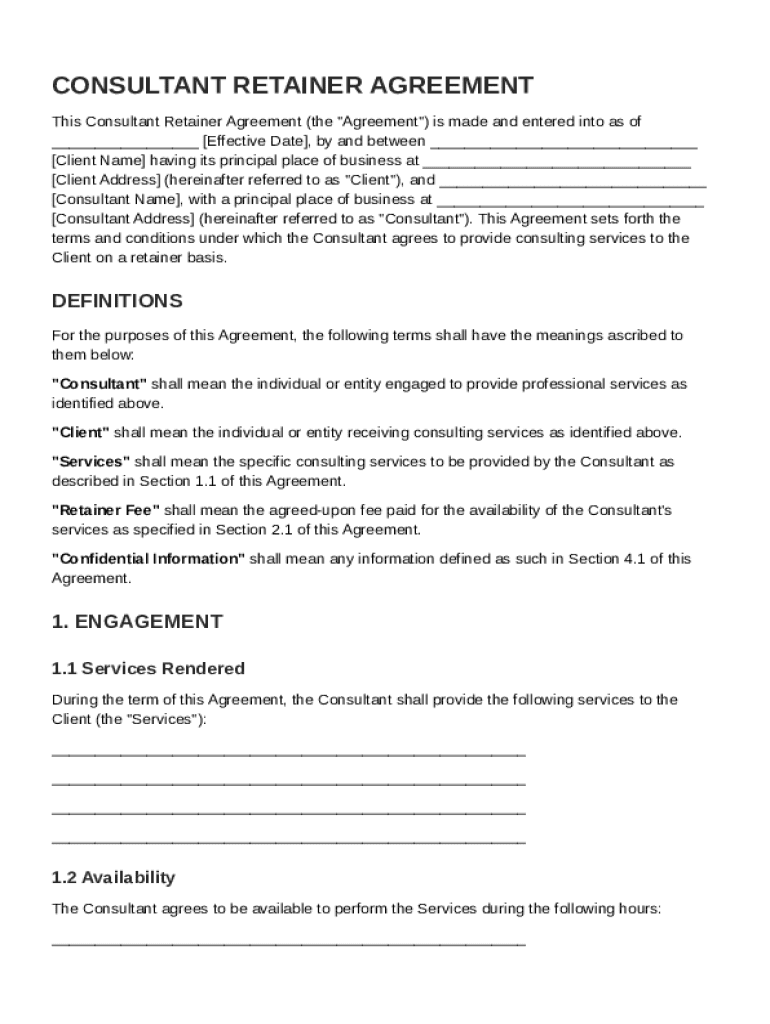
A Consultant Retainer Agreement Template serves as a formal legal document that defines the relationship between a consultant and a client on a retainer basis. This agreement is essential for establishing the terms under which a consultant provides ongoing services to a client for a predetermined period or project. The document typically outlines the scope of work, fees, and other essential elements to ensure mutual understanding and expectations. It is particularly useful for setting a framework for an ongoing partnership, providing stability and reliability for both parties involved.
Key Elements of the Consultant Retainer Agreement Template
The Consultant Retainer Agreement Template is composed of various critical components that ensure clarity and legal compliance:
-
Scope of Work: Defines the specific services the consultant will provide. This section should be detailed to prevent any misunderstandings about what is expected from both parties.
-
Compensation Structure: Details the payment terms, including the retainer fees and any additional compensation. It may also include stipulations for expense reimbursements.
-
Term and Termination: Identifies the duration of the agreement and terms for termination. This includes procedures for either party to end the agreement before the expiration term.
-
Confidentiality Obligations: Protects sensitive information exchanged during the consultation. Parties agree to maintain confidentiality before, during, and after the term of the agreement.
-
Intellectual Property Rights: Clarifies who retains ownership of work products and inventions developed during the consulting relationship.
-
Dispute Resolution: Provides mechanisms for resolving any potential disagreements, typically stipulating mediation or arbitration processes.
-
Indemnification Responsibilities: Outlines each party’s responsibility to compensate for any potential losses or damages incurred.
Steps to Complete the Consultant Retainer Agreement Template
-
Identify Parties: Clearly state the legal names of both the consultant and the client.
-
Define Roles and Responsibilities: Outline the consultant’s duties, deliverables, and the client's obligations for an organized workflow.
-
Set the Compensation Terms: Specify the fee structure, including retainer fees, invoicing frequency, and payment methods.
-
Determine Duration: Clearly explain the start and end date of the agreement, including any renewal terms.
-
Add Confidentiality and IP Clauses: Craft detailed sections that specify how confidential information will be protected and who owns the deliverables.
-
Include Termination Conditions: Lay out procedures and conditions under which either party can terminate the agreement.
-
Save, Review, and Sign: After filling in all necessary sections, both parties should review the agreement thoroughly before signing.
Important Terms Related to Consultant Retainer Agreement Template
Understanding key legal terminologies included in a Consultant Retainer Agreement is crucial:
-
Retainer Fee: An upfront cost to secure the consultant’s services for a specific timeframe or project.
-
Independent Contractor: Clarifies that the consultant is an independent entity and not an employee, affecting tax and employment law applications.
-
Amendments: Changes or additions to the agreement require written consent from both parties, ensuring no unilateral alterations.
-
Non-Disclosure Agreement (NDA): Part of the confidentiality obligations that restricts information sharing.
-
Legal Jurisdiction: Specifies which state’s laws govern the agreement and any legal actions stemming from it.
Legally Binding Electronic Signatures
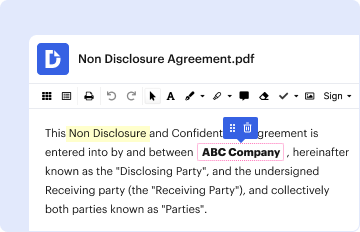
In today’s digital era, using electronic signatures for executing Consultant Retainer Agreements makes the process efficient and secure:
-
Compliance: Electronic signatures used in the agreement adhere to the ESIGN Act, ensuring they are legally binding in the U.S.
-
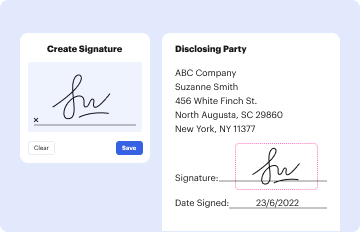
Method of Creation: Consultants and clients can create their signatures through various means including typing, drawing, or uploading a signature image.
-
Authentication: Proper protocols like OAuth 2.0 ensure secure and authenticated signatures, adding validity to the document.
-
Convenience and Security: Electronic signatures streamline the process by allowing parties to sign from anywhere while maintaining document security through SSL encryption.
Who Typically Uses the Consultant Retainer Agreement Template
The Consultant Retainer Agreement Template is utilized by various professionals and organizations to formalize service relationships:
-
Freelancers: Independent professionals who provide services like writing, design, or IT consulting often use this template to manage client work.
-
Legal Advisors: Attorneys and legal consultants ensure their services are well-defined and protected through this agreement.
-
Business Consultants: Entities providing strategic advice or services to businesses require a clear agreement to manage expectations and protect trade secrets.
-
Marketing Agencies: Retainer agreements help in managing recurring services like digital marketing campaigns for clients.
-
Human Resources Consultants: Experts hired to advise on HR-related matters, such as recruitment, policy development, and training programs.

State-Specific Rules for the Consultant Retainer Agreement Template
While the foundation of a retainer agreement is similar across the U.S., certain states have specific requirements:
-
California: Requires clear stipulations about independent contractor status due to stringent labor laws.
-
New York: Emphasizes detailed confidentiality agreements and may have specific rules regarding employment-related claims.
-
Texas: Has particular laws concerning non-compete clauses that must be considered when drafting the agreement.
By understanding these differences, parties can ensure compliance with state regulations and reduce the risk of legal challenges.
Examples of Using the Consultant Retainer Agreement Template
Practical applications of the Consultant Retainer Agreement demonstrate its versatility:
-
Long-term Software Development Project: An IT company contracts a software developer on a retainer to provide continuous updates and maintenance.
-
Ongoing Legal Counsel: A corporation retains a law firm to provide monthly legal reviews, advice, and document preparation.
-
Continuous Marketing Support: A startup engages a marketing freelancer for sustained brand management and advertising efforts, secured through the agreement.
By using real-world scenarios, both consultants and clients can better understand the benefits and operational effectiveness of a retainer agreement.