
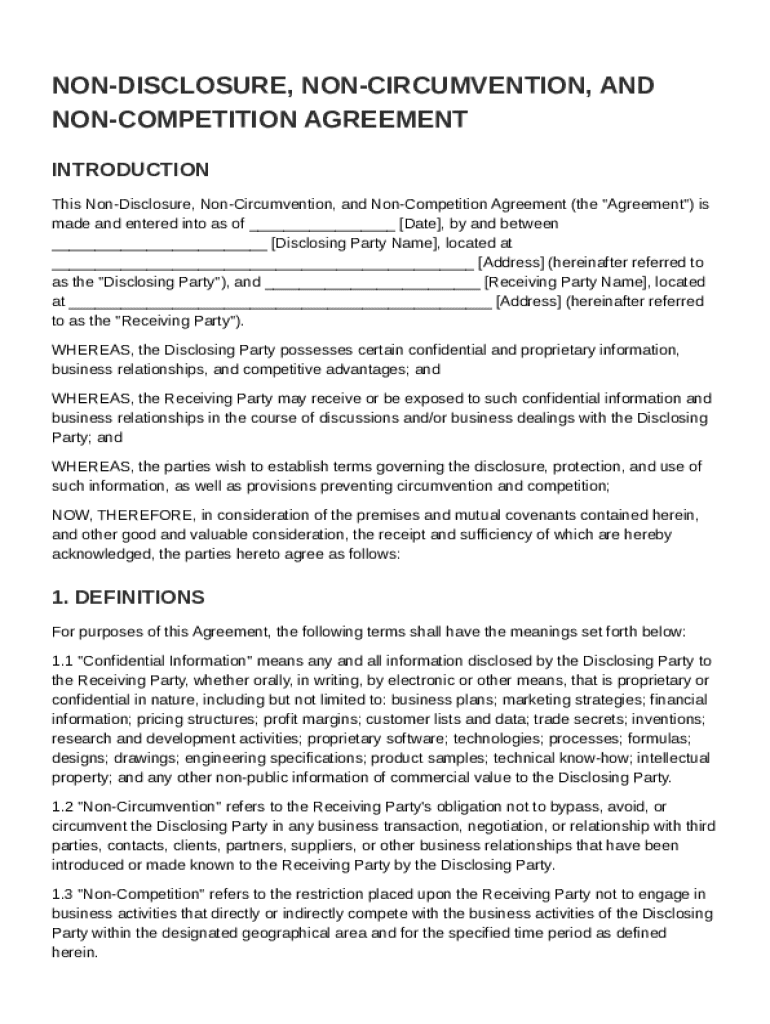







Definition and Meaning
A Non-Disclosure, Non-Circumvention, and Non-Competition Agreement, often known as an "NDNCNC" agreement, serves as a multifaceted legal document between two parties — typically a disclosing and a receiving party. The primary purpose of this agreement is to protect sensitive information, ensure non-circumvention in business dealings, and prevent unfair competition. By defining key terms, the document clarifies the responsibilities and expectations between involved parties, ensuring that confidential information remains protected, business opportunities are not bypassed, and competitive practices are fair.
Key Components of the Agreement
- Confidentiality Obligations: Specifies the duty to protect classified information and restricts unauthorized disclosures.
- Non-Circumvention Clause: Prevents the receiving party from bypassing the disclosing party to leverage business opportunities or relationships.
- Non-Competition Terms: Outlines the restrictions on engaging in competitive activities within a defined scope and timeframe.
How to Use the Agreement Template
Using an NDNCNC agreement template involves several steps that ensure its effectiveness and compliance with relevant laws. First, it’s crucial to customize the template to suit the specific needs and circumstances of the parties involved.
Steps for Customization
- Identify the Parties: Clearly state the names and roles of the disclosing and receiving parties.
- Define the Scope: Specify what constitutes confidential information, types of non-compete activities, and the timeframe for non-circumvention.
- Insert Specific Clauses: Tailor conditions such as geographic limitations for competition and any penalties for breach.
- Consult Legal Counsel: Before finalizing the agreement, obtaining legal advice can ensure the document is enforceable and tailored to your business context.
Steps to Complete the Agreement Template
Completing the NDNCNC agreement template requires careful attention to detail. It is vital to accurately fill in all required details to prevent future disputes or legal challenges.
Step-by-Step Process
- Fill Out Basic Information: Include the names, addresses, and roles of both parties.
- Specify Confidential Information: Clearly list the types of information covered by the agreement.
- Set Terms for Non-Circumvention and Non-Competition: Define what actions are restricted and for how long.
- Include Signatures and Dates: Ensure both parties sign and date the document to make it legally binding.
- Review and Store the Agreement: Safeguard a copy of the signed agreement in a secure location.
Key Elements of the Agreement Template
Several key elements make up an effective NDNCNC agreement, each designed to provide clarity and protection for both parties involved.
Essential Components
- Definition of Confidential Information: Specifies what constitutes confidential material and information.
- Obligations and Prohibitions: Details the specific actions restricted under the agreement.
- Duration and Termination: Outlines the length of time during which restrictions apply and conditions for termination.
- Legal Remedies: Identifies potential consequences and remedies for breaches of agreement terms.
Legal Use of the Agreement Template
Ensuring the NDNCNC agreement complies with applicable laws is crucial. This document should be used legally to protect the interests of the involved parties.
Legal Considerations
- Compliance with Local Laws: Adjust any terms to align with state-specific legal requirements, especially for non-competition clauses which vary considerably by state.
- Enforceability: Ensure all terms are reasonable and enforceable under American law to avoid potential nullification.
- Remedies for Breach: Clearly outline the legal recourse available if the agreement is breached, such as injunctions or claims for damages.
Who Typically Uses the Agreement Template
The NDNCNC agreement template is widely used across various business sectors to safeguard proprietary and competitive interests.


Common Users
- Businesses Entering Partnerships: To protect shared information and avoid business circumvention.
- Employers and Employees: To secure company trade secrets and define employment-related competitive restrictions.
- Consultants and Clients: To maintain confidentiality of client data and project details.

Important Terms Related to the Agreement
Understanding the specific legal jargon often included in NDNCNC agreements can enhance comprehension and proper application.
Key Terms Explained
- "Disclosing Party": The entity sharing confidential information.
- "Receiving Party": The entity obligated to maintain the confidentiality of the shared information.
- "Equitable Relief": Legal intervention that may prevent a party from violating the agreement before any damages occur.
State-Specific Rules for the Agreement Template
Given the variation in laws across different states, recognizing state-specific rules for NDNCNC agreements is critical.
Differences Across States
- California: Generally does not enforce non-competition clauses except in limited circumstances.
- Texas: Requires consideration for non-compete clauses and that they are reasonable in scope.
- New York: Enforces non-compete agreements that protect legitimate business interests without imposing undue hardship.
Providing a comprehensive understanding of an NDNCNC agreement involves examining these various aspects, ensuring the agreement is thorough, enforceable, and tailored to the involved parties.




