






Definition and Purpose of the Compliance Agreement Template
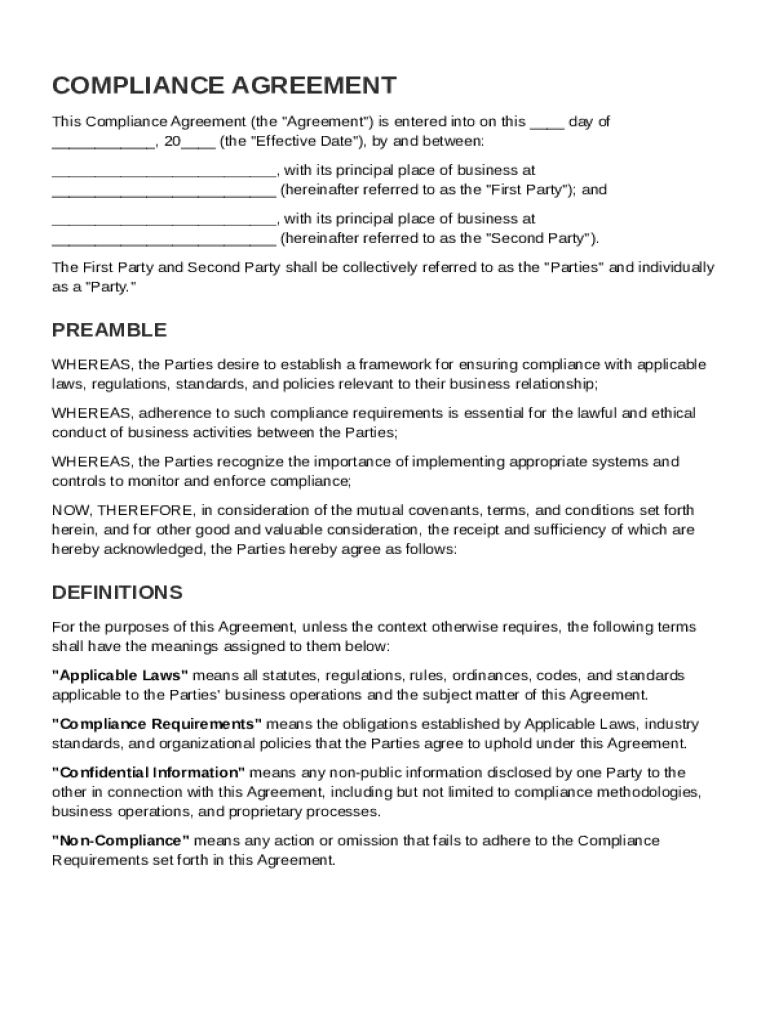
A Compliance Agreement Template outlines the responsibilities of two parties in adhering to applicable laws, regulations, and compliance requirements within a business relationship. It ensures both sides commit to compliance programs, active monitoring, and timely reporting of any non-compliance incidents. By stipulating confidentiality, data protection, and addressing potential breaches, such agreements safeguard the interests of all involved parties. This template is crucial for maintaining transparency and accountability in various business dealings, offering a legal framework that helps prevent disputes and ensures proper resolution processes.
Steps to Complete the Compliance Agreement Template
- Identifying Parties Involved: Clearly state the names and details of all parties engaged in the agreement.
- Outlining Obligations: Specify the compliance-related obligations that each party must adhere to, including guidelines for compliance programs and monitoring processes.
- Defining Monitoring and Reporting Requirements: Detail the methods for ongoing monitoring and the procedures for reporting any non-compliance issues.
- Establishing Confidentiality Terms: Highlight the importance of maintaining confidentiality and the measures in place to ensure data protection.
- Determining Breach and Resolution Procedures: Outline the procedures and repercussions for addressing any breaches of the agreement.
- Specifying Duration and Termination Clauses: Clearly define the duration of the agreement and the conditions under which it may be terminated.
Each section should be completed in detail to ensure the agreement is clear and enforceable, safeguarding both parties' interests.
Key Elements of the Compliance Agreement Template
- Parties Involved: Identifies all parties bound by the agreement.
- Obligations: Outlines the specific duties and responsibilities of each party under the agreement.
- Monitoring Mechanisms: Specifies the tools and processes for ensuring compliance.
- Reporting Protocols: Details how incidents of non-compliance should be reported.
- Confidentiality Clauses: Includes provisions to protect sensitive information.
- Breach and Penalty Clauses: Clearly defines what constitutes a breach and the penalties involved.
- Legal Framework: Provides information on the governing law and jurisdiction.
- Termination Terms: Explains the conditions for termination of the agreement.
These elements offer a comprehensive framework ensuring effective compliance management.
Legal Use and Implications of the Compliance Agreement Template
The legal enforceability of a Compliance Agreement Template hinges on its clarity and comprehensiveness. Within the U.S., such agreements often include clauses that conform to federal and state regulations. Having provisions for dispute resolution and governing law ensures any legal issues can be processed efficiently. This template is frequently used in industries like healthcare, finance, and corporate businesses where compliance adherence is critically important. Legal counsel should review the template to confirm it meets all required standards and includes any industry-specific regulations that must be followed.
Who Typically Uses the Compliance Agreement Template
- Corporations and Large Businesses: To manage vendor and client compliance.
- Healthcare Providers: Ensuring adherence to HIPAA and other regulatory requirements.
- Financial Institutions: Managing compliance with financial regulations.
- Government Contractors: Ensuring contractual compliance when engaging in public projects.
- Supply Chain Partners: Maintaining compliance in logistics and supply processes.
These parties rely on these agreements to protect their operations and ensure all regulatory measures are adhered to.


Important Terms Related to the Compliance Agreement Template
- Compliance Programs: Systems designed to assist organizations in adhering to legal standards.
- Monitoring Mechanisms: Tools and processes used to ensure continuous compliance oversight.
- Confidentiality: A commitment to protect sensitive information from unauthorized disclosure.
- Data Protection: Measures enforced to safeguard data integrity and privacy.
- Breach of Agreement: Instances where the terms of the agreement have been violated.
- Governing Law: The jurisdiction under which the agreement is enforced.
Understanding these terms is vital for effective navigation and enforcement of the compliance agreement.
State-Specific Rules for Compliance Agreement Templates
Compliance regulations can vary across states, affecting how agreements are drafted and enforced. For example, California's Consumer Privacy Act (CCPA) requires stringent privacy measures, which must be reflected in compliance agreements involving data sharing. Likewise, New York has specific requirements for financial transactions and data security protocols. Businesses must consult with legal experts familiar with specific state laws to align their agreements accordingly. This ensures that all regional legal requirements are thoroughly met.
Examples of Using the Compliance Agreement Template
- A Tech Company develops a compliance agreement to ensure all third-party vendors adhere to strict data protection measures.
- Hospitals use the template to enter into agreements with suppliers who must comply with healthcare standards and regulations regarding patient information.
- Financial Firms draft compliance agreements with clients to ensure adherence to anti-money laundering laws and financial reporting standards.
Each example shows how entities use these templates to uphold regulatory standards and protect their interests.
Compliance Agreement Template in Different Business Contexts
Various industries benefit from employing Compliance Agreement Templates to fit their specific regulatory environments:
- Healthcare Industry: Protect patient data and ensure the confidentiality of medical records.
- Finance Sector: Adhere to regulatory standards unique to financial transactions.
- Manufacturing: Ensure safety standards and environmental regulations are consistently met.
- Information Technology: Manage the compliance of software and data security protocols.
Adapting the template to fit these diverse contexts ensures comprehensive coverage and legal protection.