




Definition & Meaning
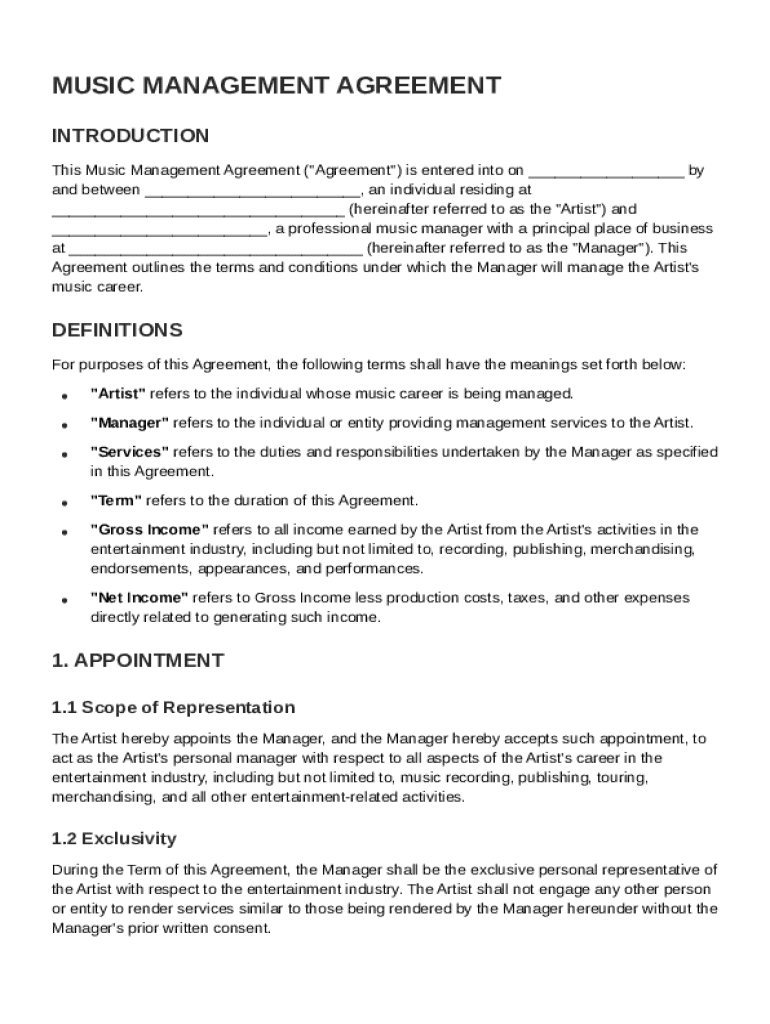
A Music Management Agreement outlines the professional relationship between an artist and a manager in the music industry. This legal contract establishes the roles, responsibilities, and expectations for both parties. Key aspects typically include the appointment of the manager, financial management, compensation structures, and confidentiality terms. It serves to formalize and protect the interests of both the artist and the manager, ensuring clarity in their business dealings.
Key Elements of the Music Management Agreement Template
The Music Management Agreement Template is structured to cover several critical sections:
- Appointment and Term: Details the length of the agreement and conditions under which the manager is appointed.
- Duties of the Manager: Specifies the responsibilities the manager will undertake, such as booking gigs, negotiations, and promotions.
- Compensation and Expenses: Outlines how the manager will be paid, including percentage or flat fee structures, and how expenses will be handled.
- Exclusivity: Determines whether the manager has exclusive rights to represent the artist.
- Confidentiality and Privacy: Sets terms for the protection of sensitive information shared between parties.
- Termination Conditions: Lists the scenarios under which the agreement can be terminated.
Steps to Complete the Music Management Agreement Template
Completing a Music Management Agreement Template involves several key steps:
- Gather Information: Collect necessary details about the artist and manager, including contact information and roles.
- Customize Key Sections: Tailor sections such as compensation, duties, and exclusivity to fit the specifics of the relationship.
- Review Legal Terms: Ensure both parties understand the legal implications, particularly around privacy, termination, and dispute resolution.
- Signatures: Both the artist and manager should sign the agreement, and it is advisable to have it witnessed or notarized.
- Finalize and Distribute: Provide copies to both parties for their records after ensuring all details are accurate and complete.
Legal Use of the Music Management Agreement Template
This agreement is legally binding under the ESIGN Act when signed electronically. It ensures that both parties can rely on the terms outlined should disputes arise. Clauses on dispute resolution and termination not only offer legal protection but also provide a structured method for resolving disagreements, crucial for long-term business relationships.
Important Terms Related to Music Management Agreement Template
Understanding specific legal and industry jargon is important:
- Force Majeure: Refers to unforeseeable circumstances that may prevent the execution of the agreement.
- Gross vs. Net Income: Defines how earnings are calculated before reaching the compensation clause.
- Recoupable Expenses: Costs that the artist may need to repay out of future earnings.
- Sunset Clause: A section that determines how the agreement winds down or ends under certain conditions.
Who Typically Uses the Music Management Agreement Template
This agreement template is primarily used by:
- Aspiring and Established Artists: Singers, musicians, and bands seeking formal management.
- Music Managers: Professionals aiming to establish clear terms with their clients.
- Record Labels: To formalize in-house management arrangements with artists.
- Legal Advisors: In drafting or reviewing agreements for the involved parties.

State-specific Rules for the Music Management Agreement Template
In the U.S., some states may have unique requirements or restrictions:
- California: Strong protections for artists, including limitations on the duration of management contracts.
- New York: As a hub for entertainment law, there may be specific industry standards for contract language.
- Tennessee: Offers guidelines given its significant music industry presence, particularly in Nashville.
Why Use a Music Management Agreement Template
Using a standardized template provides numerous benefits:
- Clarity: Ensures all parties have a clear understanding of their roles and compensation.
- Legal Compliance: Helps meet industry and legal standards, reducing risks of disputes.
- Efficiency: Saves time through structured content, requiring only specific customizations rather than creating a new agreement from scratch.
Overall, the Music Management Agreement Template is a vital tool for maintaining a successful and legally sound professional relationship in the music industry.