Definition & Meaning
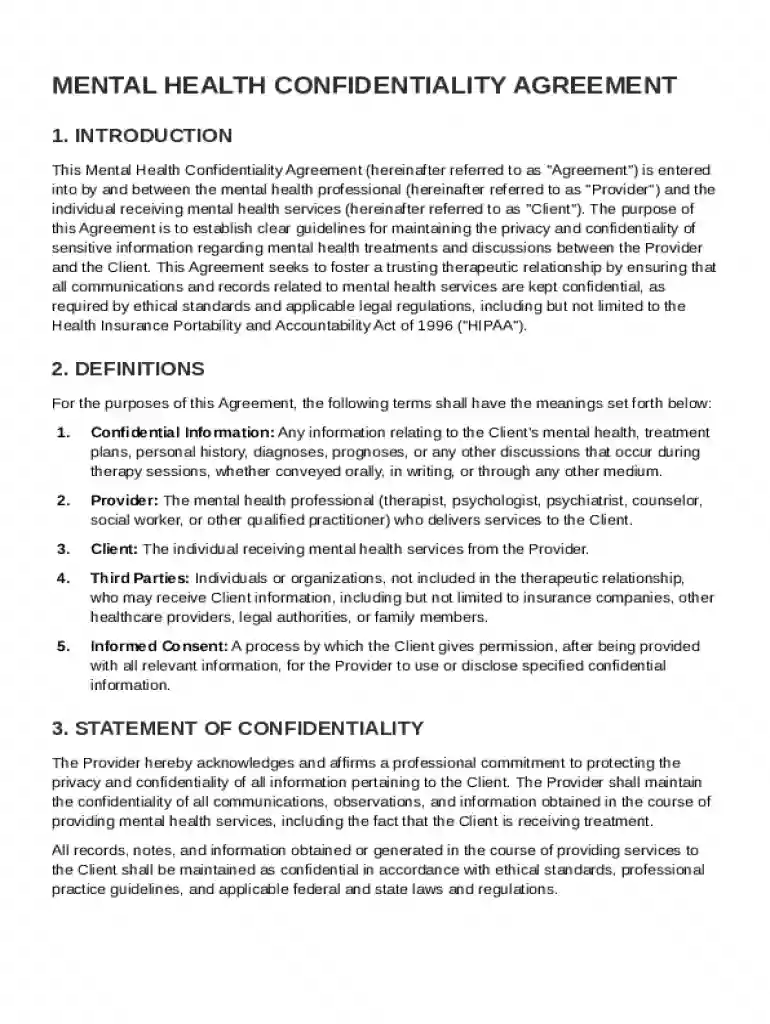
The Mental Health Confidentiality Agreement Template is a legal document that outlines the privacy obligations of mental health professionals in safeguarding sensitive client information. It ensures that the client's personal and therapeutic details remain confidential, except under specific circumstances where disclosure is legally required. This template serves as a foundation for building trust between mental health providers and clients, aligning with regulations such as the Health Insurance Portability and Accountability Act (HIPAA).
Essential Concepts
- Confidentiality Obligations: Specifies the duties of mental health providers in maintaining the privacy of client information.
- Client Rights: Details the rights clients have regarding their personal information and records.
- Legal Compliance: Adheres to federal and state laws regarding client confidentiality, ensuring both parties are protected under the law.
Key Elements of the Mental Health Confidentiality Agreement Template
The Mental Health Confidentiality Agreement Template comprises several critical components that ensure its effective implementation:
Provider and Client Information
- Identification: Names and contact details of both the mental health provider and the client.
- Practice Details: Information about the provider’s practice, including location and type of services offered.
Terms of Confidentiality
- Confidential Scope: Defines what types of client information are considered confidential.
- Exceptions to Confidentiality: Outlines specific scenarios where confidentiality may be breached, such as harm to self or others or legal subpoenas.
Duties and Responsibilities
- Provider's Responsibilities: Details the steps providers must take to safeguard client information.
- Client's Rights: Clarifies the rights of clients to access their records and understanding disclosure policies.
Steps to Complete the Mental Health Confidentiality Agreement Template
Completing the Mental Health Confidentiality Agreement Template involves a series of straightforward steps designed to clarify and document confidentiality expectations:
- Review the Template: Carefully read through each section of the template to understand its provisions.
- Input Provider and Client Information: Enter pertinent details for both parties involved in the agreement.
- Define Confidentiality Terms: Specify which types of information will be kept confidential and clarify any exceptions.
- Clarify Legal Requirements: Include necessary legal clauses, especially those mandated by HIPAA.
- Sign and Date the Document: Both provider and client should review, sign, and date the agreement to formalize its terms.
Legal Use of the Mental Health Confidentiality Agreement Template
The Mental Health Confidentiality Agreement Template is designed to meet legal standards and protect both clients and providers:
Compliance with HIPAA
- Implementation: Ensures compliance with privacy regulations set forth in HIPAA, providing legal backing for confidentiality standards.
- State Laws: Accommodates state-specific legal requirements as necessary.
Enforceability
- Legal Standing: Upon signature, the agreement is a legally binding document enforceable in court.
- Dispute Resolution: Provides procedures for resolving disputes related to confidentiality breaches.
Important Terms Related to the Mental Health Confidentiality Agreement Template
Understanding the terminology used within the Mental Health Confidentiality Agreement is essential for its correct usage:
Key Terms
- Breach of Confidentiality: Unlawful disclosure of confidential client information.
- Informed Consent: The process by which a client is educated about privacy rights and provides consent to the handling of their information.
- Protected Health Information (PHI): Any information related to health status, provision of health care, or payment for health care that can be linked to an individual.
Who Typically Uses the Mental Health Confidentiality Agreement Template
This template is widely utilized in various professional settings where mental health services are provided:

Primary Users
- Mental Health Professionals: Psychologists, psychiatrists, counselors, and social workers.
- Clinical Settings: Hospitals, private practices, and mental health clinics.
Scenarios of Use
- Individual Therapy: Protection of individual client information during therapeutic sessions.
- Group Therapy: Ensures confidentiality for multiple participants in a group session.
State-Specific Rules for the Mental Health Confidentiality Agreement Template
The template may need modification to comply with the specific regulations of each U.S. state:
Variations by State
- State Regulations: Some states have specific mandates for reporting certain conditions or disclosures.
- Local Amendments: Adjustments to the template might be required to address particular state-enforced confidentiality requirements.
Examples of Using the Mental Health Confidentiality Agreement Template
The Mental Health Confidentiality Agreement Template can be adapted for various real-world applications:
Practical Scenarios
- Individual Client Sessions: Establishing confidentiality boundaries at the start of one-on-one therapy.
- Research Studies: Obtaining consent from participants while ensuring their data remains confidential.
- Court Orders: Handling legal situations where information might be required by a subpoena while minimizing disclosure.
These examples demonstrate the template's flexibility in addressing different professional needs while maintaining compliance with legal and ethical standards.