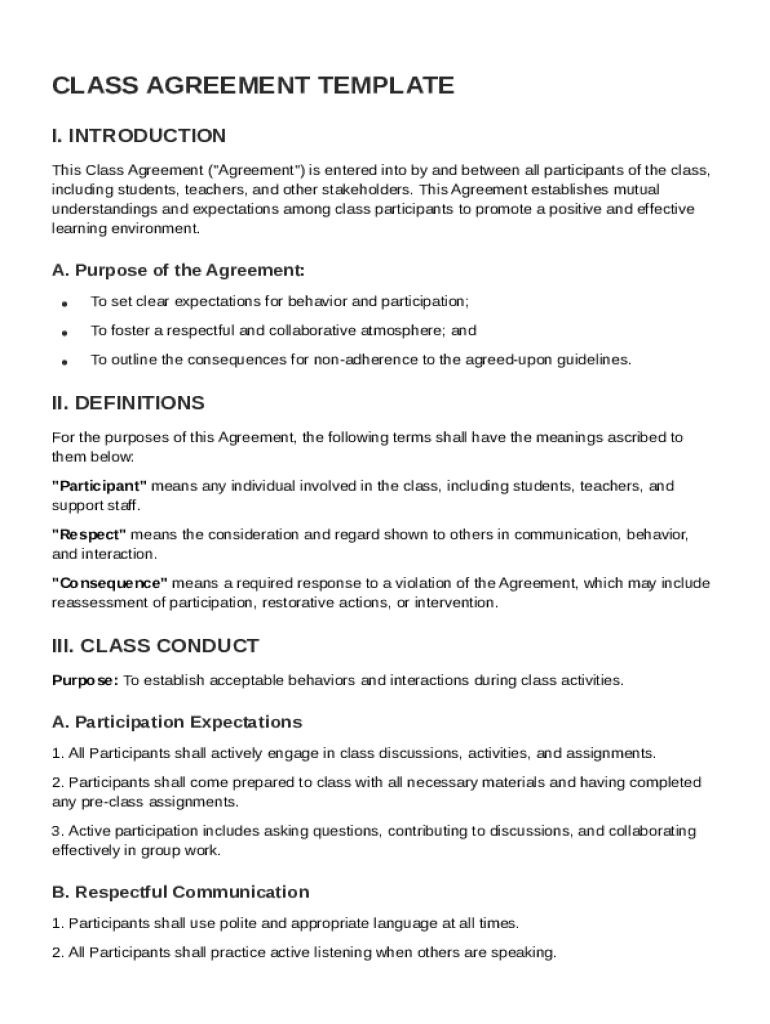







Definition & Purpose of the Class Agreement Template
A Class Agreement Template is a structured document designed to outline the expectations and responsibilities of participants in a classroom or educational environment. This template is typically used by educators to set standards for behavior, participation, attendance, punctuality, assignments, and conflict resolution. It serves as a contract between students and teachers, aiming to foster a positive, respectful, and engaging learning environment. The agreement often includes guidelines to promote constructive communication and delineates the consequences for non-compliance. Furthermore, it provides procedures for amending the agreement and resolving disputes among participants.
Key Elements of the Class Agreement Template
The Class Agreement Template consists of several crucial elements that ensure clarity and comprehensiveness.
- Behavior Guidelines: Establish clear expectations for student behavior, emphasizing respect and cooperation.
- Participation Requirements: Outline criteria for active engagement in class activities and discussions.
- Attendance and Punctuality: Define rules regarding class attendance, tardiness, and acceptable reasons for absence.
- Assignment Protocols: Detail submission deadlines, formatting standards, and penalties for late or incomplete work.
- Conflict Resolution Procedures: Provide steps for addressing disputes and conflicts, promoting a fair and unbiased process.
- Amendment Processes: Specify how the agreement can be updated or changed, ensuring adaptability to evolving class dynamics.
Steps to Complete the Class Agreement Template
To effectively complete the Class Agreement Template, follow these structured steps:
- Identify Participant Roles: Clearly define the roles and responsibilities of both students and educators.
- Customize Behavioral Expectations: Tailor guidelines to reflect the specific needs and culture of the class.
- Set Participation and Engagement Standards: Establish benchmarks for student engagement and contributions.
- Define Attendance Policies: Articulate detailed attendance policies, including procedures for addressing absences.
- Outline Assignment Requirements: List all necessary criteria for assignments, including format, deadlines, and grading criteria.
- Establish Conflict Resolution Methods: Include a step-by-step guide for resolving disagreements or misunderstandings.
- Detail Amendment Procedures: Provide a clear process for updating the agreement as needed.
Important Terms Related to the Class Agreement Template
Understanding terminology within the Class Agreement Template is vital for accurate comprehension and implementation.
- Behavioral Standards: Set rules for student conduct.
- Engagement Criteria: Standards for class participation and involvement.
- Submission Guidelines: Directives for turning in assignments.
- Conflict Resolution: Processes for handling disagreements.
- Amendment Process: Procedures for modifying the agreement terms.
How to Use the Class Agreement Template
Utilizing the Class Agreement Template involves several straightforward steps:
- Customization: Adjust the template to fit the unique environment and needs of the class.
- Implementation: Present the agreement to students at the beginning of the academic term.
- Review: Regularly revisit the agreement to ensure it remains relevant and effective.
- Feedback: Encourage student input for continuous improvement of the agreement.
Who Typically Uses the Class Agreement Template
The Class Agreement Template is primarily used by educators, including teachers and professors, across various educational settings. Other users might include:
- School Administrators: For setting overarching institutional standards.
- Counselors and Educational Coaches: To support specific behavioral goals.
- Teaching Assistants: In facilitating sections or smaller group activities.


Legal Considerations of the Class Agreement Template
While primarily an educational tool, the Class Agreement Template may carry legal weight in certain contexts. It is essential to consider:
- Binding Nature: Clarify whether the agreement is considered a binding contract.
- Dispute Resolution: Ensure procedures align with broader institutional policies.
- Compliance with Educational Regulations: Verify that agreements adhere to educational standards and legal requirements.
Examples of Using the Class Agreement Template
Practical scenarios where the Class Agreement Template is employed include:
- Primary and Secondary Education: To introduce students to accountability in the classroom.
- University Courses: For setting expectations in higher education environments, particularly in courses requiring significant collaboration.
- Online Classes: Adjusting traditional guidelines to fit digital learning spaces, accommodating factors like virtual presence and digital etiquette.
By following the comprehensive guidelines and utilizing the Class Agreement Template effectively, educators can create a structured, consistent, and fair classroom environment that promotes successful learning outcomes.