
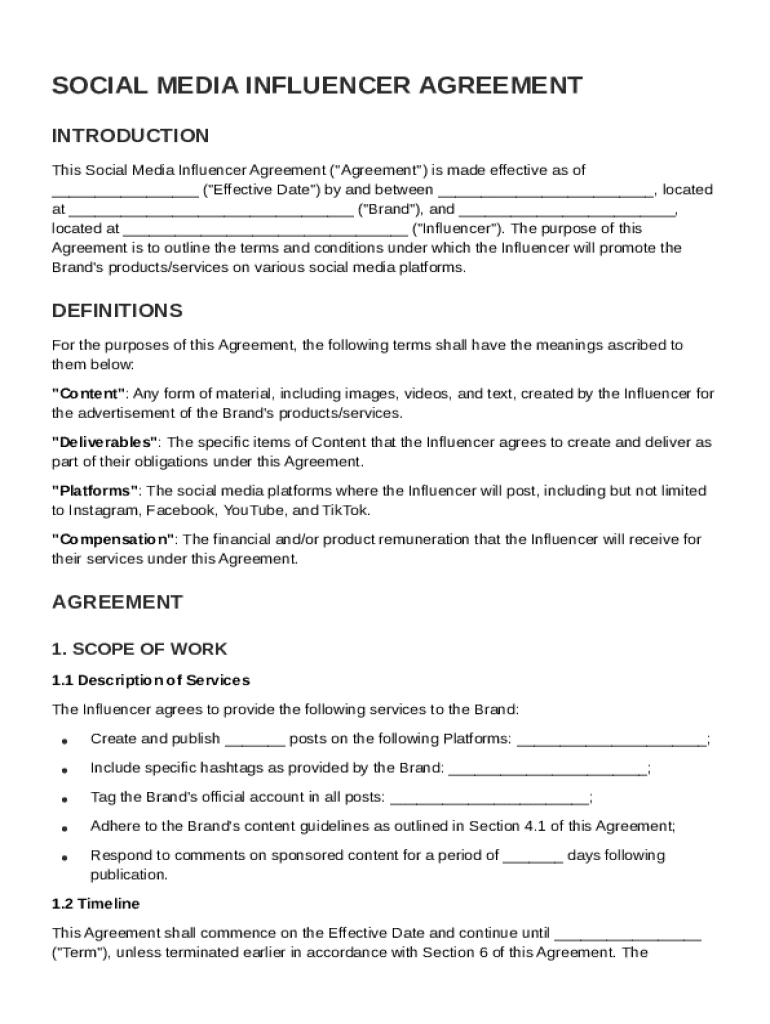







Definition and Meaning
The Social Media Influencer Agreement Template is a legal document designed to establish the terms of collaboration between a brand or company and a social media influencer. This agreement outlines the responsibilities and rights of both parties, ensuring that the influencer's promotion of the brand's products or services aligns with mutual expectations. Key elements addressed in this template include content creation guidelines, compensation, deadlines, confidentiality, and ownership of the content produced.
Understanding this document is crucial for both brands and influencers to protect their interests and avoid potential disputes. The agreement sets clear expectations about deliverables, such as the type of content to be posted, frequency, platform specifications, and the metrics used to judge success.
Key Elements of the Social Media Influencer Agreement Template
Scope of Work
The scope of work section is central to any influencer agreement, as it defines the specific tasks and deliverables expected from the influencer. This could include posts on specific platforms such as Instagram, Twitter, or TikTok, the number of posts required, and any specific messaging or branding guidelines to be adhered to. This section should clearly specify the type of content to be produced, such as videos, blog posts, or images.
Compensation and Payment Terms
An essential component of the influencer agreement template is the compensation structure. Compensation may be monetary or in the form of products or services. The template should detail how much the influencer will be paid, the payment schedule, and any conditions attached to the payment, such as performance metrics or engagement rates.
Content Ownership and Rights
Establishing content ownership rights is vital to prevent disputes. This section clarifies who owns the rights to the content once it is produced and posted. Typically, brands want ownership to use content for marketing purposes across different platforms. However, influencers may retain the right to use the content in their portfolios or for self-promotion.
Important Terms in the Social Media Influencer Agreement Template
Confidentiality
Confidentiality clauses ensure that any sensitive information exchanged during the collaboration, such as marketing strategies or product details, is kept private. This is to protect the brand's competitive edge and to ensure influencers do not disclose non-public information.
Indemnification
Indemnification clauses protect both parties from claims or liabilities that arise from the influencer's activities. For example, if an influencer is sued due to copyright infringement in a post, they may need to indemnify the brand against any resulting legal costs or damages.
Steps to Complete the Social Media Influencer Agreement Template
- Review and Customize: Start by reviewing the template thoroughly. Tailor the sections to fit the specific needs and expectations of both the influencer and the brand.
- Negotiate Terms: Discuss and negotiate any terms that might require adjustment, such as payment structures or deadlines.
- Add Specific Details: Fill in specific details like the delivery timeline, platforms for posts, and detailed descriptions of the type of content required.
- Sign and Secure Agreement: Once both parties agree on the terms, both should sign the document. It's important to use electronic signatures when using digital formats to ensure legality.
Legal Use of the Social Media Influencer Agreement Template
The use of a legally binding agreement is crucial to protect both parties. In the U.S., such agreements need to comply with applicable laws, including advertising standards set by the Federal Trade Commission (FTC), which ensures that all advertising statements made by the influencer are truthful and not misleading.
It's also essential for agreements to include state-specific legal requirements, which may vary in different jurisdictions. Consulting with a legal professional to ensure that all necessary legal provisions are included can prevent future disputes.
Examples of Using the Social Media Influencer Agreement Template
Case Study: Lifestyle Brand Collaboration
A lifestyle brand partners with a social media influencer to promote their new product line. Using the agreement template, they define clear deliverables: three Instagram posts and two TikTok videos. The brand compensates the influencer with a combination of free products and a monetary fee, detailed in the payment terms section. The agreement also specifies that the brand holds the rights to all content created.
Case Study: Event Promotion
An influencer collaborates with an event planning company to promote an upcoming charity event. The agreement outlines that the influencer will create social media stories, live sessions, and posts leading up to and during the event. Compensation is tied to ticket sales generated through personalized links shared by the influencer.
Software Compatibility and Digital Use
In today's digital age, the Social Media Influencer Agreement Template can be efficiently managed using document handling software like DocHub. By integrating with Google Workspace, DocHub enables users to import, edit, and share these templates with ease, eliminating the need for cumbersome paper processes. The software's comprehensive editing tools allow users to insert digital signatures, making the process of finalizing agreements swift and secure.




