






Understanding the Service Level Report Agreement Template
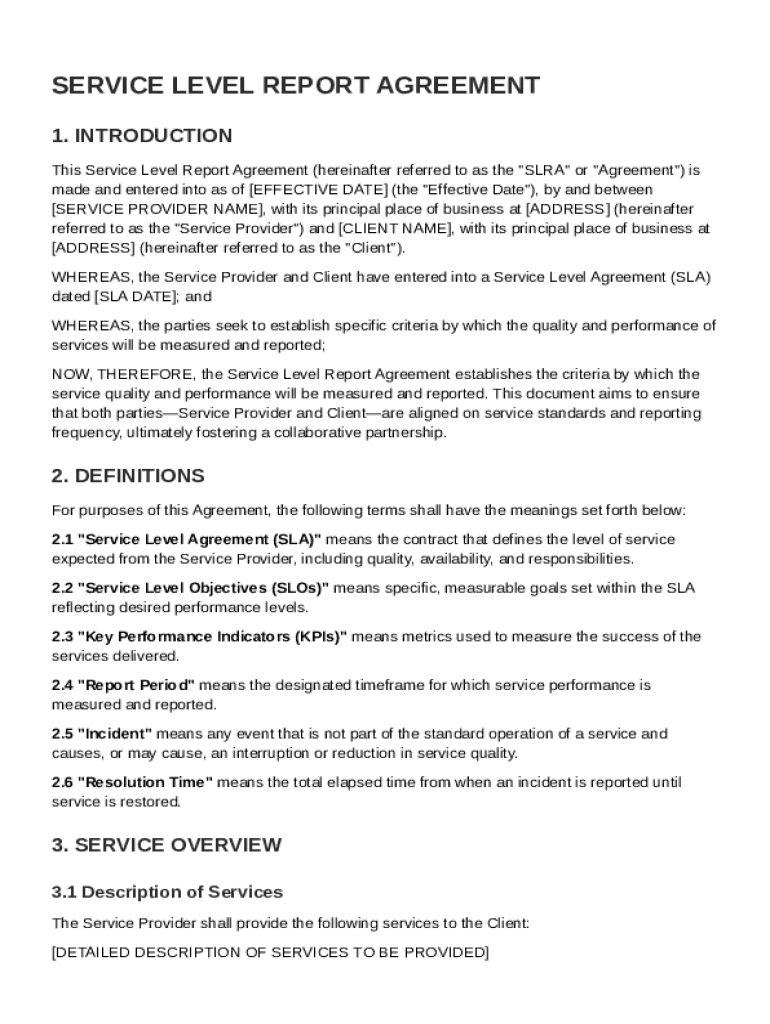
The Service Level Report Agreement (SLRA) Template is a vital document utilized to formalize the understanding between a Service Provider and a Client regarding the quality and performance metrics of specific services. It outlines benchmarks and performance indicators that determine the success of the services offered. The template is structured to include definitions, services covered, performance metrics, reporting schedules, and responsibilities for both parties. This framework ensures both parties are aligned on expectations and fosters a collaborative relationship.
Key Elements of the Service Level Report Agreement Template
For an SLRA to be effective, it should be crafted comprehensively. Key elements typically found in the template include:
- Service Descriptions: Detailed explanation of the services being provided.
- Performance Metrics: Specific criteria that measure service quality, like response times or resolution rates.
- Reporting Schedules: Regular intervals at which reports are generated and shared.
- Responsibilities: Duties and obligations of both the Service Provider and the Client.
- Dispute Resolution Procedures: Established methods for resolving disagreements.
Each of these sections helps ensure clarity and accountability.
Steps to Complete the Service Level Report Agreement Template
- Identify Service Requirements: Clearly list and describe all the services covered under the agreement.
- Define Performance Metrics: Establish quantifiable indicators that the service will be measured against.
- Schedule Reporting: Agree upon a timetable for delivering service performance reports.
- Assign Responsibilities: Detail which party is accountable for each aspect of the service, including delivery and issue resolution.
- Draft Procedures for Dispute Resolution: Outline steps to address service disputes or failures.
Ensuring each section is thoroughly attended to maintains the agreement's enforceability.
Legal Implications of the Service Level Report Agreement Template
The SLRA serves as a legally binding contract once signed by both parties. It's crucial to ensure each clause within the document adheres to applicable laws. The agreement aligns with the ESIGN Act when electronically signed, reinforcing its legitimacy. Including a clause for dispute resolution ensures clarity in the process for settlements, which can be critical when disagreements arise.
Typical Users of the Service Level Report Agreement Template
This template is predominantly used by businesses engaged in service delivery, such as IT firms, telecommunications companies, and cloud service providers. Any organization offering measurable services to a client can employ this framework to define service quality and avoid conflicts. Both small businesses and large corporations benefit from having such an agreement in place to safeguard expectations.
Benefits of Using the Service Level Report Agreement Template
The primary advantage of utilizing this template is the clear definition of service expectations, which helps prevent misunderstandings. It provides a standardized method of reporting service-related metrics, facilitating transparency. Moreover, having structured procedures for addressing disputes can save time and resources, minimizing disruptions to business operations.
Digital vs. Paper Version of the Service Level Report Agreement Template
In the digital age, many prefer using electronic versions of the SLRA template for ease of access and enhanced collaboration. Platforms like DocHub allow users to edit, share, and sign documents online efficiently. The digital format supports real-time collaboration and synchronization, ensuring all parties access the most current version. Conversely, the paper version remains a viable option for those requiring hard copy documents, though it may not offer the same flexibility and ease of modification.
Examples of Using the Service Level Report Agreement Template
Consider a tech startup providing managed IT services. By implementing an SLRA template, they can specify expected response times for technical support. A telecommunications provider might use the template to define service uptime guarantees. These examples illustrate how clearly defined service agreements help manage client expectations and maintain service standards.
How to Use the Service Level Report Agreement Template
Using the template begins with understanding the required inclusions for a valid SLRA. Once key performance indicators and reporting schedules are agreed upon, the template can be customized to reflect specific service details and provider-client expectations. Reviewing and confirming each section with legal advisers ensures compliance with relevant laws and the protection of both parties' interests.
Each section of the SLRA should be completed with precision and clarity to maintain the document's relevance and enforceability. With the appropriate use of this template, service providers and clients can establish a mutually beneficial arrangement that promotes ongoing collaboration and service improvement.