
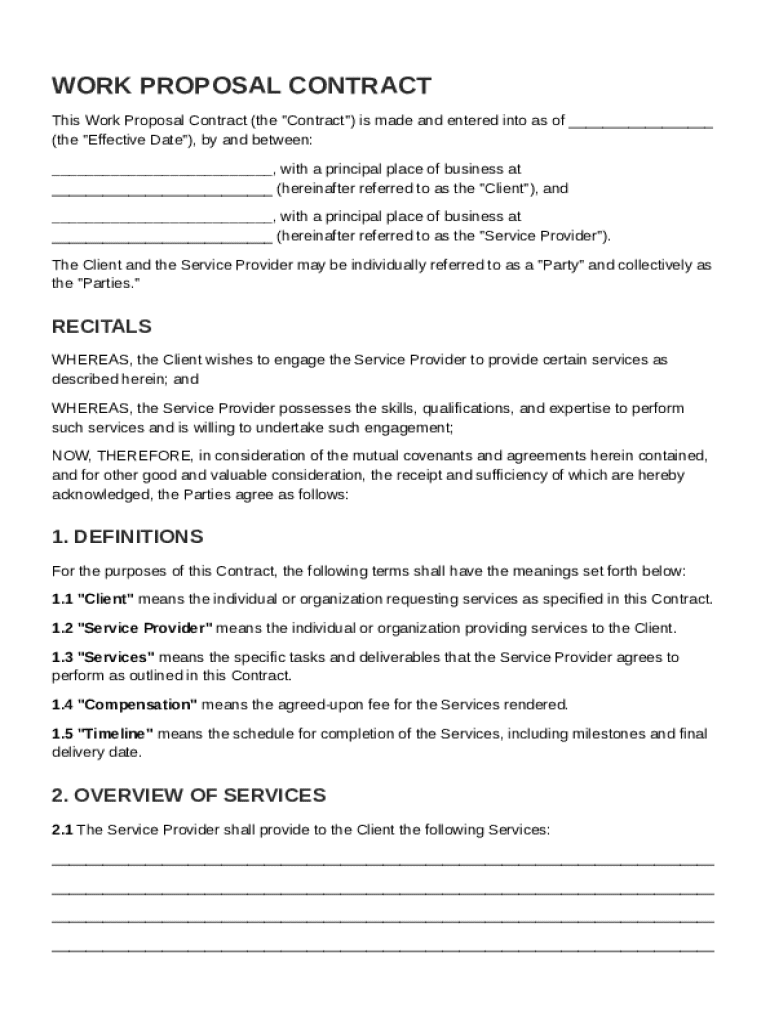







Definition and Purpose of the Work Proposal Contract Template
The Work Proposal Contract Template is a legal document used to establish a formal agreement between a client and a service provider. This contract outlines the terms and conditions under which specific services will be provided, ensuring both parties have a clear understanding of their roles and responsibilities. By using this template, parties can mitigate misunderstandings and conflicts by setting clear expectations from the onset.
Key Components of the Document
- Definitions: Clarifies terms and meanings to prevent ambiguity.
- Scope of Work: Outlines the specific tasks, duties, and services to be performed.
- Timeline: Establishes deadlines and milestones for project completion.
- Compensation Details: Specifies payment terms, rates, and schedules.
- Responsibilities: Details obligations of each party involved.
How to Use the Work Proposal Contract Template
To effectively utilize the Work Proposal Contract Template, consider the following steps:
- Initial Review: Assess the template to determine which sections apply to your agreement.
- Customization: Modify sections to fit the specific nuances of your project.
- Detailed Descriptions: Fill out the template with comprehensive descriptions to ensure clarity.
- Legal Review: Consult with a lawyer to verify legal accuracy and completeness.
- Sign and Distribute: Obtain signatures from all parties and distribute copies for records.
Real-World Examples
- A freelance graphic designer using the template to formalize a one-time project with a corporate client.
- An IT consultant integrating the template for ongoing service agreements with various businesses.
Steps to Complete the Work Proposal Contract Template
Completing the Work Proposal Contract Template involves several critical steps, ensuring thorough and accurate documentation:
- Identify Parties Involved: Clearly state the names and contact information of the client and the service provider.
- Define the Project Scope: Provide a detailed overview of the work to be done, including objectives and deliverables.
- Establish Terms: Specify the payment terms, including methods, schedules, and fees for services rendered.
- Set Milestones: Outline the timeline for each phase of the project, if applicable.
- Ensure Compliance: Confirm that the template adheres to relevant legal standards and regulations.
- Add Signatures: Ensure both parties review, agree, and sign the document.
Practical Scenarios
- A small business owner using the template to set timelines for custom service delivery with a new vendor.
- An educator drafting it as part of a service agreement for curriculum development with an external consultant.
Key Elements of the Work Proposal Contract Template
Each Work Proposal Contract Template encompasses several elemental sections that provide clarity and ensure fairness:
- Confidentiality: Protects sensitive information shared during the contract's duration.
- Termination Clauses: Specifies conditions and notices necessary for ending the agreement.
- Dispute Resolution: Outlines the process for resolving disagreements.
- Governing Law: Determines the jurisdiction under which the contract will be interpreted.
- Amendments: Procedures for making changes to the contract post-signing.
Legal Use of the Work Proposal Contract Template
The legal use of this template is crucial for both compliance and protection against potential disputes:
- Formality: Provides a legal framework that formalizes the business relationship.
- Legally Binding: Once signed, it becomes a legally enforceable contract.
- Protection: Shields both parties from potential breaches and misunderstandings.
Examples of Legal Use
- A tech startup using the template to safeguard its intellectual property when engaging external software developers.
- An event planner deploying it to ensure vendors meet their delivery terms without deviation.
Important Terms Related to the Template
Understanding essential terms related to the Work Proposal Contract Template can provide greater insights into its application:
- Client: The party receiving services.
- Service Provider: The party delivering services.
- Deliverable: A tangible or intangible output derived from the work provided.
- Milestone: A marker that indicates progress at various stages of the project.
Who Typically Uses the Work Proposal Contract Template
This template is widely used by a diverse range of professionals and businesses aiming to formalize service agreements:
- Freelancers: For project agreements with clients.
- Consultants: To outline scopes of work with various business entities.
- Small and Medium Enterprises (SMEs): When engaging external services for business operations.
- Contractors: To set conditions and terms with subcontractors or clients.


User Scenarios
- A photographer using it to outline deliverables and timelines for client shoots.
- An architect drafting a proposal for building designs with structural engineers.
State-Specific Rules and Norms
It's important to recognize that state-specific rules may affect the application and enforcement of a Work Proposal Contract Template in the United States:
- Jurisdiction Compliance: Ensure the contract aligns with the state's laws where the services are performed.
- State Amendments: Some states may have unique mandatory clauses or consumer protection requirements.
- Licensing Requirements: Service providers needing specific licenses must acknowledge these in the contract.
Understanding these variations ensures that the contract is legally sound and applicable within specific state boundaries, avoiding potential legal challenges.




