
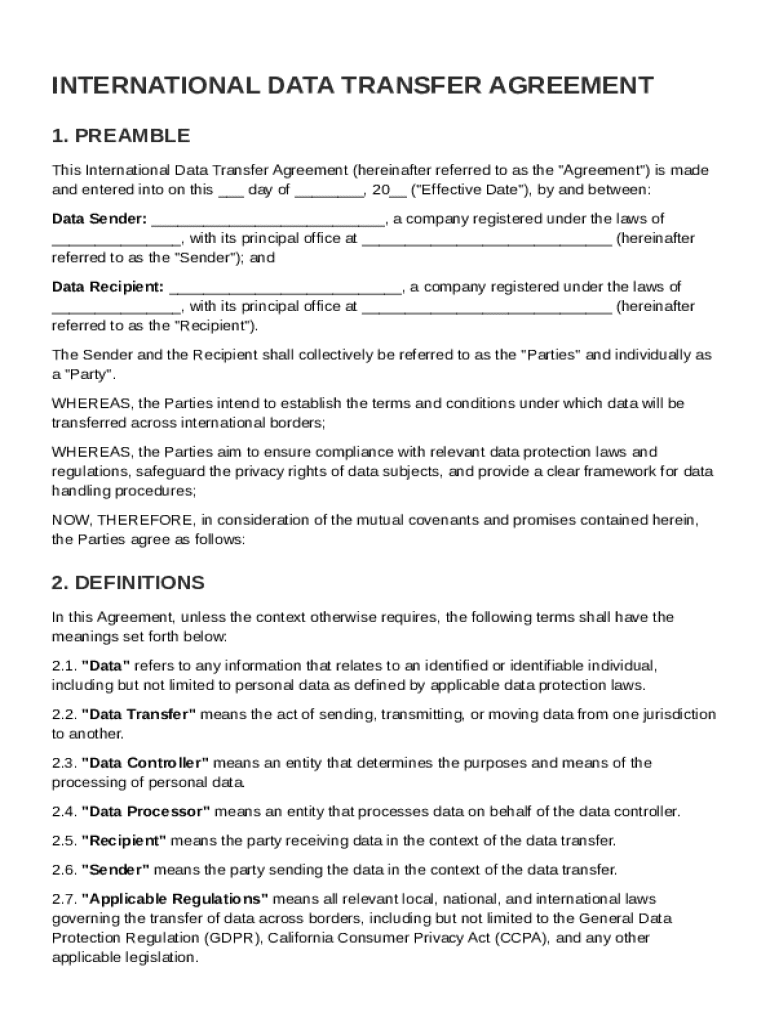







Definition and Meaning of the International Data Transfer Agreement Template
The International Data Transfer Agreement Template is a structured framework used to facilitate the secure movement of data across international borders. This agreement is designed to ensure compliance with the relevant data protection laws, such as the GDPR in Europe or similar regulations in other jurisdictions. By defining clear roles and responsibilities, this template aims to protect sensitive data from unauthorized access, misuse, or breaches. It specifies the obligations of both the sending and receiving parties to maintain the integrity and confidentiality of the transferred data.
How to Use the International Data Transfer Agreement Template
To effectively use the International Data Transfer Agreement Template, users should follow a structured approach:
-
Review and Customize: Begin by reviewing the pre-drafted clauses within the template. Modify sections to tailor the agreement to the specific transaction at hand. Customizations may include the names of the parties involved, the type of data being transferred, and any specific compliance requirements.
-
Consult Legal Counsel: Due to the complexities of international data laws, consulting with legal counsel is advisable to ensure that the agreement adequately covers all necessary legal bases.
-
Incorporate Security Measures: Clearly outline the security measures both parties must adhere to. This can include encryption standards, access control protocols, and regular audits.
-
Sign and Execute: Once both parties agree on the terms, execute the agreement by obtaining legally binding signatures, which can be facilitated through platforms like DocHub to ensure compliance with the ESIGN Act.
-
Monitor Compliance: After execution, continuously monitor compliance with the outlined terms and review for any necessary updates or adjustments in response to legislative changes.
Steps to Complete the International Data Transfer Agreement Template
Completing the International Data Transfer Agreement Template involves detailed steps:
-
Identify Parties: Fill in the legal names and contact information of both the Sender and Recipient. Specify their roles in the transaction.
-
Detail the Data: Outline the types of data involved, including personal, financial, or proprietary information.
-
Specify Purpose and Duration: Clearly state the purpose of the data transfer and the duration for which the data will be retained post-transfer.
-
Security Provisions: Enumerate the security measures that both parties will implement, such as encryption and restricted access.
-
Legal Compliance: Verify that all clauses comply with relevant data protection laws, and note any jurisdiction-specific requirements.
-
Signatures: Use an electronic signature platform to complete the signing process, ensuring all parties have documented their agreement to the terms.
-
Maintain Records: Keep a comprehensive record of the executed agreement and related correspondence for future reference or audits.
Legal Use of the International Data Transfer Agreement Template
The legal use of the International Data Transfer Agreement Template involves ensuring that all terms adhere to applicable laws in both the sending and receiving countries. This template assists in maintaining legal compliance by:
- Providing a standardized approach to specifying data protection obligations.
- Outlining the rights of data subjects and processes for responding to requests.
- Defining breach notification procedures in alignment with legislative requirements.
- Including indemnification clauses that protect both parties against potential legal claims resulting from unauthorized data access or breaches.
Key Elements of the International Data Transfer Agreement Template
Several essential elements characterize this agreement:
- Roles and Responsibilities: Clarification of duties for both the Sender and Recipient.
- Data Protection Measures: Specified security protocols to protect data integrity.
- Compliance Clauses: Provisions regarding adherence to data laws.
- Termination Terms: Conditions under which the agreement may be terminated.
- Dispute Resolution: Mechanisms for resolving disputes amicably.
- Indemnification: Protection clauses against legal liabilities.
Important Terms Related to the International Data Transfer Agreement Template
Several terms play crucial roles in understanding and executing the agreement effectively:
- Data Controller: The individual or entity that determines the purposes and means of processing personal data.
- Data Processor: An entity that processes data on behalf of the data controller.
- Data Subject: An individual whose personal data is being collected, held, or processed.
- Data Breach: A security incident where data is accessed without authorization.
- Encryption: The method used to secure data by converting it into a code to prevent unauthorized access.
Who Typically Uses the International Data Transfer Agreement Template
Typically, the parties involved in the use of this template include:
- Multinational Corporations: Companies operating in multiple countries use this template to ensure seamless data transfers.
- IT Service Providers: Outsourcing firms dealing with international data processing.
- Legal and Compliance Teams: Professionals who need to document and enforce data protection strategies.
- Government Agencies: When sharing sensitive information across borders.
- E-commerce Platforms: Organizations engaging in cross-border transactions involving consumer data.


State-Specific Rules for the International Data Transfer Agreement Template
While the template provides a foundation, it is critical to account for state-specific laws in the agreement due to variances in:
- Data Breach Notification Requirements: Some states have unique rules on how quickly breaches must be reported.
- Consumer Privacy Laws: Variations in states like California with the CCPA require specific inclusions.
- Cross-Border Data Transfer Limitations: Ensure compliance with state regulations that might have stricter interpretations of federal laws.
Understanding the specific legal landscape in each state ensures that data transfer practices remain compliant and legally defensible.




