
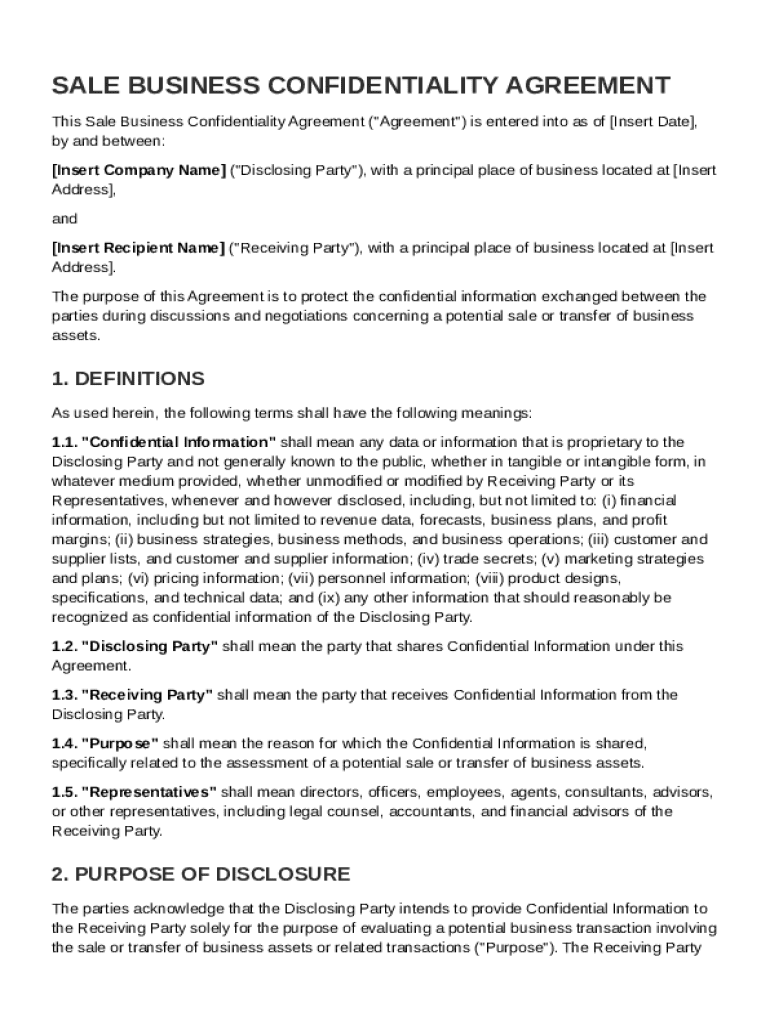







Definition & Meaning
A Sale Business Confidentiality Agreement Template is a legal framework designed to safeguard confidential information exchanged during negotiations pertaining to the sale or transfer of business assets. This document ensures that sensitive data shared between parties remains protected and undisclosed to unauthorized individuals. It outlines specific obligations for the receiving party, reflecting an understanding that shared information is proprietary and vital to the disclosing party's interests.
Key Components
- Confidential Information: Clearly defines what constitutes confidential data, ensuring all parties recognize and understand the scope of protected information.
- Receiving Party's Obligations: Specifies the duties of the receiving party in terms of confidentiality, non-disclosure, and the handling of sensitive information.
- Exclusions: Identifies information not considered confidential, such as publicly available data or information legally acquired from other sources.
- Term and Duration: Outlines how long the confidentiality obligations last after the agreement's execution, typically until the information becomes public domain or for a specified period.
How to Use the Sale Business Confidentiality Agreement Template
Utilizing the Sale Business Confidentiality Agreement Template involves a series of straightforward steps to tailor it to your specific transaction. Here’s a breakdown of how to effectively use this template for securing sensitive business discussions.
Step-by-Step Guide
-
Identify the Parties: Clearly delineate the involved parties by name, including the disclosing and receiving parties who will exchange sensitive information.
-
Customize the Definitions: Define what constitutes confidential information based on the specifics of your transaction to prevent ambiguity.
-
Specify Obligations: Detail the obligations of the receiving party, such as non-disclosure commitments and restrictions on information sharing.
-
Outline Exclusions: Highlight any data not subjected to confidentiality to clarify potential sources of public or non-restricted information.
-
Set a Timeline: Determine the term of confidentiality, ensuring it aligns with project deadlines or a mutually agreed period.
Steps to Complete the Sale Business Confidentiality Agreement Template
Completing the Sale Business Confidentiality Agreement Template requires precise inputs and cooperation from involved parties. Here's how to accurately fill the template to ensure all legal bases are covered.
Detailed Instructions
-
Fill Personal and Business Details: Include the names, contact information, and relevant business identifiers for all parties involved.
-
Specify Confidentiality Boundaries: Adjust the sections specifying what information is considered confidential to fit your situation.
-
Add Legal Obligations: Insert clauses detailing the legal obligations of the parties, including the handling and sharing of information.
-
Include Legal Remedies: Define what constitutes a breach of agreement and the legal remedies available in such cases.
-
Review and Revise: Ensure both parties review the draft for accuracy and completeness, adding any additional terms if necessary.
-
Signatures and Dates: Secure signatures from all parties, along with dates to validate the agreement.
Key Elements of the Sale Business Confidentiality Agreement Template
The effectiveness of a Sale Business Confidentiality Agreement hinges on several core elements that collectively ensure comprehensive protection of proprietary information.
Core Components
-
Ownership of Information: Establishes that all shared data remains the property of the disclosing party, critical in maintaining control over the information.
-
Non-Disclosure Obligations: Clearly states the receiving party's responsibilities to safeguard and not disclose any shared information.
-
Legal Remedies for Breach: Provides a framework for legal action if a party breaches their obligations, serving as a deterrent against unauthorized disclosure.
-
Return of Materials: Conditions under which the receiving party should return or destroy confidential information upon conclusion of discussions or termination of the agreement.
State-Specific Rules for the Sale Business Confidentiality Agreement Template
Different states have unique laws and regulations impacting the Sale Business Confidentiality Agreement. Understanding these nuances ensures compliance and validity.
Considerations
-
Legal Precedents: States may have differing legal precedents when it comes to enforcing confidentiality agreements, particularly concerning remedies for breach.
-
State-Specific Clauses: Certain states mandate specific clauses, like dispute resolution procedures or jurisdictional specifications.
Legal Use of the Sale Business Confidentiality Agreement Template
Proper legal usage of the Sale Business Confidentiality Agreement Template is crucial for ensuring its enforceability and protection of sensitive information.
Recommendations
-
Legal Review: Engage with legal counsel to review the template to ensure it meets all statutory requirements and aligns with your specific needs.
-
Updates and Amendments: Periodically review the document for potential amendments to maintain compliance with evolving legal standards.
Examples of Using the Sale Business Confidentiality Agreement Template
Real-world scenarios often illuminate the practicality and necessity of a Sale Business Confidentiality Agreement in business transactions.
Illustration
-
Mergers and Acquisitions: Frequently used during negotiations to prevent leaks of financial data and strategic plans which could impact stock prices.
-
Technology Transfers: Protects proprietary information in licensing deals or joint ventures where technological innovations are involved.
Eligibility Criteria
Understanding who should use the Sale Business Confidentiality Agreement Template is vital for ensuring it serves its protective purpose effectively.


Target Users
-
Business Owners: Especially those involved in potential mergers, acquisitions, or sales stemming from confidentiality-sensitive transactions.
-
Legal Advisors: Professionals advising clients on business transactions or engagements involving sensitive information exchange.
Each section offers detailed insights, practical examples, and comprehensive coverage to aid in the effective use of Sale Business Confidentiality Agreement Templates across varying business contexts.




