






Definition & Meaning
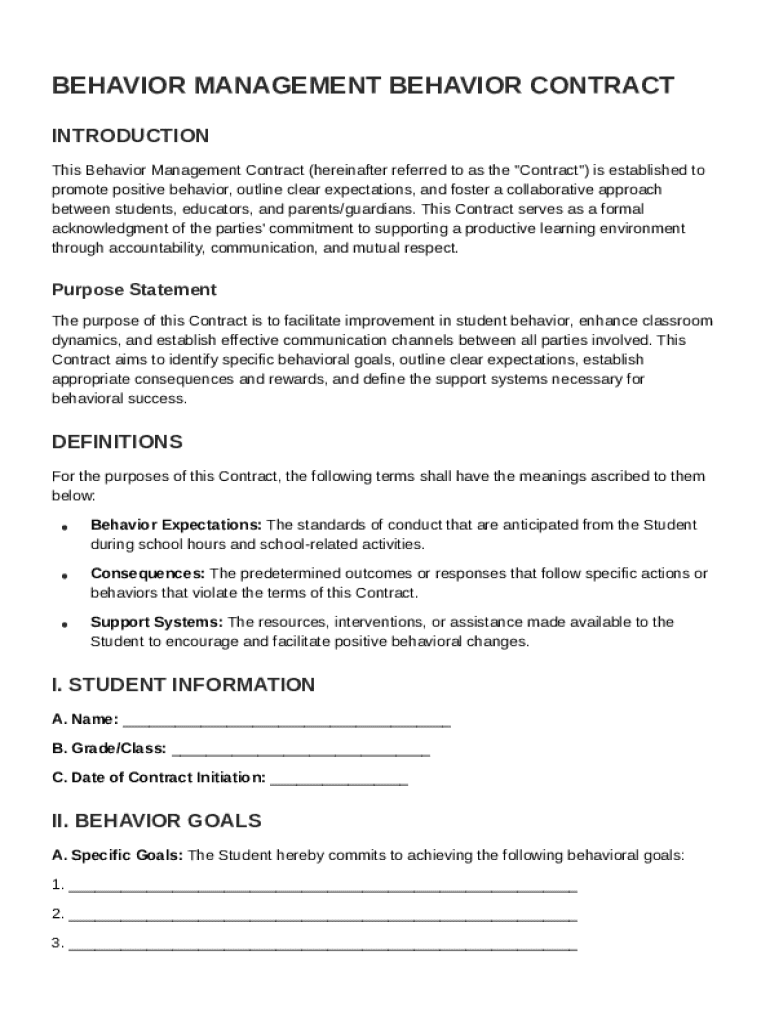
Behavior Management Behavior Contract Templates are structured documents used in educational settings to promote positive behavior among students. These templates lay out clear expectations and provide a framework for behavioral goals, outlining roles for students, teachers, and parents or guardians. By clearly defining acceptable and unacceptable behaviors, these documents help create a productive learning environment. The contracts typically detail consequences for violations, rewards for meeting goals, and resources available to support behavioral improvement.
A typical behavior management contract serves as both a guideline and a commitment, ensuring all parties understand their responsibilities. It's important for maintaining consistent rules and expectations, which can help prevent misunderstandings and conflicts in classroom management. These contracts can also be adapted for individual student needs, making them a versatile tool in managing classroom behavior systematically.
Key Elements of the Behavior Management Behavior Contract Template
A complete Behavior Management Behavior Contract Template includes several essential components that ensure clarity and effectiveness:
-
Behavior Expectations: Clearly delineates acceptable and unacceptable behaviors. This part sets the standard for how students should conduct themselves in the school environment.
-
Parties Involved: Names the student, teacher, and parent/guardian, highlighting each individual’s responsibilities in maintaining positive behavior.
-
Goals and Objectives: Outlines specific behavioral goals and objectives to be achieved by the student. This may include improvements in specific areas like participation, respect for others, or adherence to class rules.
-
Rewards and Consequences: Defines rewards for meeting behavioral goals, as well as consequences for failing to adhere to the expectations. This section is fundamental for motivating students to maintain good behavior.
-
Support Systems and Resources: Details the support systems available, such as counseling services or tutoring, that can aid students in achieving their behavioral goals.
-
Review and Monitoring Procedures: Establishes a timeline for reviewing the student’s progress and adjusting the plan as necessary.
Steps to Complete the Behavior Management Behavior Contract Template
Creating an effective behavior management contract involves several detailed steps:
-
Identify the Needs: Assess the specific behavioral issues and goals of the student. This requires input from teachers, parents, and the student to clearly understand the challenges and objectives.
-
Draft the Contract: Begin by filling in the basic information, including the names of involved parties and the date. Clearly state behavior expectations, goals, and objectives.
-
Define Rewards and Consequences: Outline specific rewards for achieving the set goals and consequences for not meeting the expectations. Ensure these are reasonable and enforceable.
-
List Available Resources: Identify resources and support systems the student can use to meet their goals. This might include mentors, counseling, or academic support services.
-
Set Review Timelines: Establish how often the contract will be reviewed and who will be involved in these evaluations. Regular checks help in ensuring that the contract is effective and adjust it as necessary.
-
Finalize and Sign: Discuss the contract with all involved parties to ensure understanding and agreement. Once finalized, all parties should sign the document to acknowledge their commitment.
Important Terms Related to Behavior Management Behavior Contract Template
Understanding the terminology associated with behavior management contracts is crucial to implementing them effectively:
-
Objective: A specific outcome that the behavior management contract aims to achieve. Objectives are often measurable and time-bound to track progress accurately.
-
Non-Compliance: Refers to behaviors that do not align with the expectations outlined in the contract. Identifying non-compliance is key to imposing agreed consequences and revising strategies.
-
Stakeholders: Individuals directly involved with the contract—typically, the student, teachers, and parents or guardians. Each stakeholder has a role in the successful implementation of the contract.
-
Intervention: Strategies or programs designed to alter the student's behavior positively. Effective interventions might include peer mentoring, behavior coaching, or social skills training.
Examples of Using the Behavior Management Behavior Contract Template
Behavior management contracts can be applied in various educational contexts:
-
High School Classroom: A student exhibits disruptive behavior in class. A behavior contract is drafted to focus on reducing interruptions and increasing participation. The contract includes specific goals for the student and rewards like privileges for meeting these goals.
-
Elementary School Setting: For a younger student experiencing repeated tardiness, a behavior contract might set targets for timely arrivals and includes a reward of extra playtime.
-
Special Education Program: Tailored contracts can address specific behavioral challenges faced by students with learning disabilities, with goals and support systems adapted to individual needs.
These contracts support not only corrective measures but also encourage positive behavioral change by providing clear guidelines and motivations.
Legal Use of the Behavior Management Behavior Contract Template
While behavior contracts are not legally binding documents, they are critical tools in the educational environment for maintaining a structured approach to behavior management. It is essential to ensure that the contract is fair, reasonable, and implemented ethically, respecting the student’s rights. Involving parents or guardians in the drafting process helps ensure that the contract aligns with the student’s personal circumstances and educational needs.
Educators should be trained to create and enforce these contracts to avoid any bias or discrimination. Furthermore, regular reviews of the contract’s effectiveness should be part of the legal and ethical considerations in its application.
State-Specific Rules for the Behavior Management Behavior Contract Template
Although behavior management contracts are generally applicable, some states may have specific rules or guidelines regarding their use:
-
California: Emphasis on student privacy, requiring any behavioral notes or records to comply with state privacy laws.
-
Texas: May require additional documentation for students with disabilities to ensure compliance with state regulations on special education.
-
New York: Stress on parental involvement in educational contracts, necessitating regular updates to parents about progress and any modifications to the contract.
Understanding state-specific legal frameworks ensures that behavior management practices meet local educational standards and legal requirements.
How to Obtain the Behavior Management Behavior Contract Template
Behavior Management Behavior Contract Templates can typically be obtained through several avenues:
-
School District Resources: Many schools provide standardized templates within their district’s resources. Contacting the school’s administrative office or the district’s educational resources department is often a good starting point.
-
Educational Technology Platforms: Platforms like DocHub offer templates and tools for educators to create and manage behavior contracts efficiently. These platforms often feature customization options to fit specific needs.
-
Professional Development Workshops: Attending workshops and training sessions can provide educators with not only templates but also strategies for effective implementation.
These varied resources ensure that educators have access to the necessary tools to address student behavior systematically and proactively.