
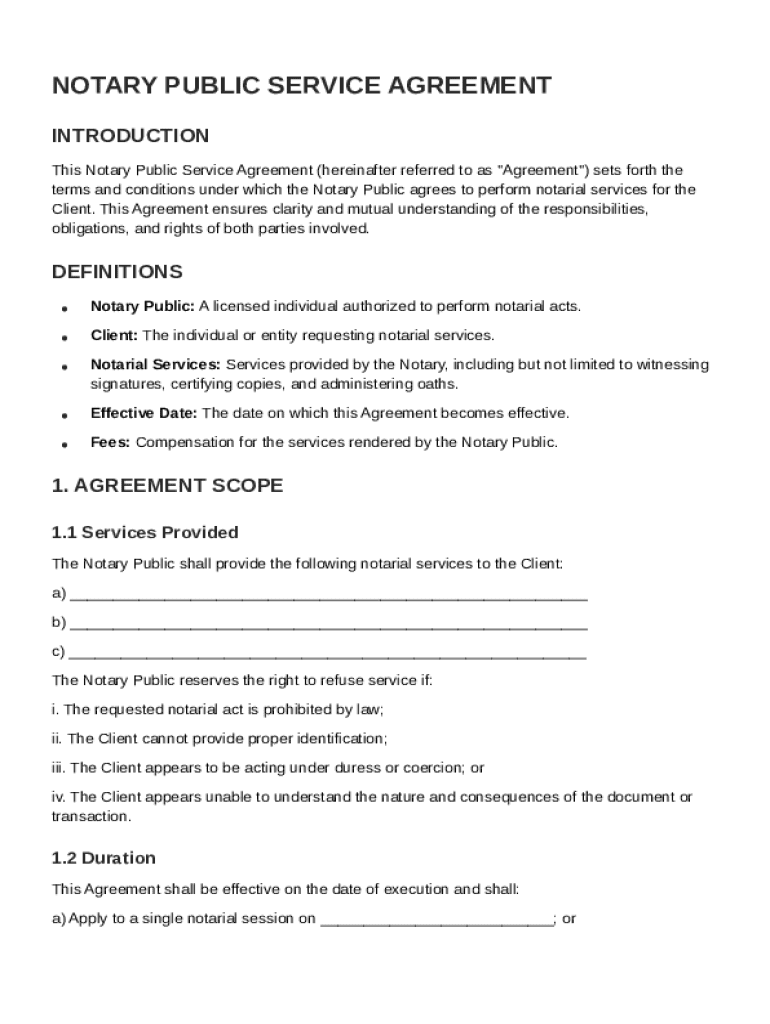







Definition and Meaning
The Notary Contract Template is a structured document designed to outline the terms and conditions under which notarial services are provided by a notary public. This template serves as a legally binding agreement between the notary and the client, ensuring clarity and mutual understanding of each party's responsibilities. Notarial services typically involve the certification of documents, witnessing signatures, and affirming the authenticity of documents, which can be crucial in various legal and business transactions. The template helps to standardize the process and ensure that all necessary legal protocols are followed, offering assurance to both parties involved.
How to Use the Notary Contract Template
Utilizing the Notary Contract Template involves several straightforward steps to ensure it aligns with the specific needs of both the notary public and the client. The process typically begins with reviewing the template to understand the standard clauses it contains, such as service scope, fees, and confidentiality agreements. Next, the user can customize these sections to reflect the particular terms of the agreement. This may involve adding specific client requirements, adapting the payment structure, or including additional confidentiality terms. Once the template is appropriately tailored, both parties should review it thoroughly to ensure mutual understanding and agreement. Finally, the notary contract is signed by both parties, making it a legally binding document.
Steps to Complete the Notary Contract Template
Completing the Notary Contract Template typically involves a series of specific steps to ensure all aspects of the agreement are addressed.
-
Download the Template: Obtain the template from a reputable source or notarial software, ensuring it meets current legal standards.
-
Populate Client Information: Fill in details such as the client's full name, address, and contact information, as well as the notary's credentials.
-
Specify the Scope of Services: Clearly outline the notarial services to be provided, including document types, intended use, and any specific client requirements.
-
Determine Fees and Payment Terms: Include the agreed-upon fees for services rendered and outline the payment terms, such as due dates and accepted payment methods.
-
Include Confidentiality Clauses: Add any necessary confidentiality agreements to protect sensitive client information.
-
Review with Legal Counsel: If applicable, it may be beneficial for both parties to review the contract with legal counsel to ensure all legal obligations are adequately met.
-
Execute the Contract: Once both parties are satisfied, they should sign the document, making the contract officially binding.
Key Elements of the Notary Contract Template
The Notary Contract Template comprises several essential elements that structure the agreement and provide comprehensive coverage of the services provided. These key elements include:
-
Parties Involved: Detailed identification of both the notary public and the client, including contact information and legal identification if necessary.
-
Service Description: A clear explanation of the notarial services to be provided, detailing the types of documents involved and the specific functions the notary will perform.
-
Fee Structure: An itemized list of associated costs, including standard notary fees, potential travel expenses, and any additional charges for special services.
-
Confidentiality and Privacy: Clauses that ensure any information disclosed during the notarial process is kept confidential and secure, in accordance with legal standards.
-
Term and Termination: Conditions under which the agreement may be terminated by either party, including notice periods and obligations upon termination.
-
Legal Compliance: Assurance that all notarial acts will comply with local, state, and federal laws, providing a framework for legal legitimacy.
Legal Use of the Notary Contract Template
The legal use of a Notary Contract Template is integral in ensuring the legitimacy and enforceability of notarial services. This template adheres to the legal requirements set forth by governing bodies, offering a standardized format that meets the necessary legal criteria. It provides clarity regarding the scope of services, protects the rights of both the notary and the client, and ensures compliance with relevant laws. By formalizing notarial transactions, the template aids in defending the agreement in potential legal disputes, safeguarding against legal discrepancies, and promoting trust and reliability in the notarial process.
State-Specific Rules for the Notary Contract Template
State-specific rules can significantly influence how a Notary Contract Template is executed and interpreted. Different states may have varying regulations regarding notarial acts, including identification requirements, document format standards, and the permissible scope of notarial services.
-
Identification Protocols: Some states mandate specific forms of identification for document signers, which the notary must verify before proceeding.
-
Document Standards: Certain states require specific wording, seals, or stamps to be included in notarized documents for them to be legally recognized.
-
Service Fees: Rates for notarial services are often regulated by state laws, capping the amount a notary can charge per service rendered.
-
Special Cases: State laws may address special cases like remote notarizations or digital signatures, aligning with advancements in notarial practices.
Who Typically Uses the Notary Contract Template
The Notary Contract Template is widely used across various professional fields where notarial services are essential. Common users include:
-
Legal Professionals: Lawyers and legal firms use notarial contracts to authenticate documents such as affidavits, depositions, and powers of attorney.
-
Business Entities: Corporates often require notarization for documents like contracts, loan agreements, and vendor certifications to ensure authenticity and legal compliance.
-
Real Estate Agents: In real estate transactions, notarization is crucial for deeds, mortgage documents, and titles, making the template invaluable.
-
Government Agencies: Various government institutions utilize notarial contracts to verify the authenticity of documents related to public records and citizen services.


Creating Customized Templates
Customization is a critical aspect of the Notary Contract Template, allowing it to cater to specific needs of different clients or scenarios.
-
Tailored Clauses: Add or modify clauses to address unique service requirements or client preferences that standard templates may not cover.
-
Amending Payment Terms: Adjustments can be made to the payment structure, reflecting the agreed terms between the parties, such as installment plans or upfront fees.
-
Specific Services: Detail any specialized services within the contract, such as digital or remote notarization capabilities, if applicable.
By offering customizable options, the Notary Contract Template ensures flexibility, making it adaptable to various professional contexts while retaining its legal robustness.




