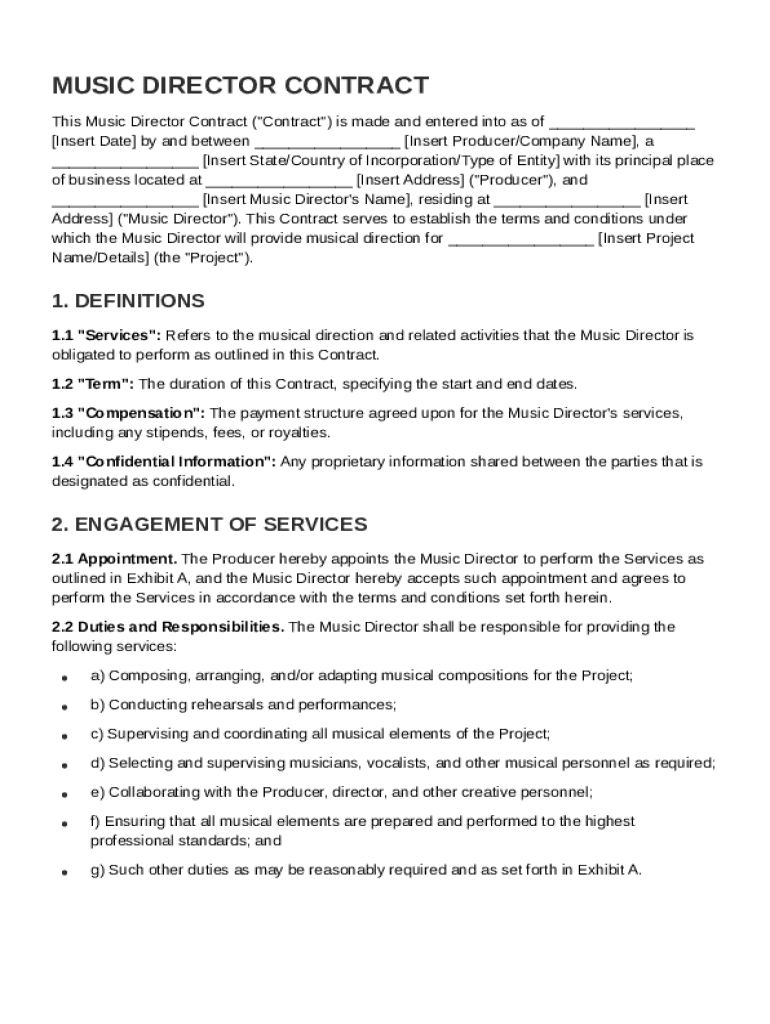







Key Elements of the Music Director Contract Template
A Music Director Contract Template is essential for documenting the agreement between a producer and a music director. This legal contract includes various elements that detail the scope of services, compensation, and other critical aspects. Understanding these elements ensures both parties are clearly aware of their obligations and rights.
Scope of Services
The contract outlines the specific services to be performed by the music director, which can include conducting, composing, and arranging music for a project. Each task should be clearly defined to avoid ambiguity.
- Conducting Duties: Tasks related to overseeing rehearsals, leading the orchestra, and ensuring musicians follow the score.
- Composing and Arranging: This may cover creating original compositions or arranging existing ones to suit project needs.
- Rehearsal Schedules: Defined timelines for preparation and practice sessions before main events or recordings.
Compensation Structure
An essential component of the contract is the financial arrangement between the parties. This section specifies how and when the music director will be paid.
- Fee Schedules: Include per session rates, lump sum payments, or milestones for project completion.
- Reimbursement Policies: Outline coverage for any expenses incurred during service provision, such as travel or equipment rental.
Term and Termination Conditions
Understanding the duration and conditions under which the contract can be terminated is crucial for both parties.
- Contract Duration: Clearly states the start and end dates of the agreement.
- Termination Clauses: Details conditions for early termination, such as breach of contract or unforeseen circumstances.
Confidentiality Obligations
This section ensures that sensitive project details are not disclosed to unauthorized parties, protecting both creative and business interests.
- Non-Disclosure Agreements (NDAs): Where parties agree to keep acquired information confidential.
- Limitations on Sharing Data: Restrictions on what can be shared with third parties or within public domains.
Who Typically Uses the Music Director Contract Template
Various professionals in the entertainment industry utilize this contract template to formalize collaborations.


Producers
They engage music directors to manage the musical components of projects such as film scores, theater productions, or live performances.
- Film and Television Producers: Often hire music directors to ensure the music enhances storytelling.
- Theater Producers: Require skilled directors to lead musicals or plays with a strong musical component.
Music Directors
These individuals use the contract to secure their roles and responsibilities within a project.
- Freelance Music Directors: Use contracts to formalize project details and protect their professional interests.
- In-House Directors: Employed by production companies or musical theaters to oversee ongoing projects.
Steps to Complete the Music Director Contract Template
Completing the Music Director Contract Template involves several steps to ensure all necessary details are included.
- Outline Service Scope: Clearly define the musical responsibilities and tasks to be undertaken.
- Negotiate Compensation: Agree on payment terms suitable for both parties and document them in the contract.
- Review Confidentiality Terms: Ensure both parties understand and agree to confidentiality provisions.
- Define Contract Duration: Include clear start and end dates and any conditions for extension.
- Sign and Date: Both parties should thoroughly review the contract before signing to confirm agreement to outlined terms.
Legal Use of the Music Director Contract Template
The legal framework of the Music Director Contract Template ensures enforceability and protection for both parties involved.
Enforceability
A well-drafted contract is legally binding and enforceable in court if disputes arise.
- Legal Jurisdiction: Specifies which state’s laws will govern the contract.
- Dispute Resolution Methods: Details whether disputes will be handled via arbitration, mediation, or court litigation.
Protection Measures
The contract includes measures to protect intellectual property and other interests of both parties.
- Indemnification Clauses: Protects parties from third-party claims related to the project's musical elements.
- Ownership of Works: Details who owns the rights to music created during the contract's term.
State-Specific Rules for the Music Director Contract Template
While the template provides a general framework, state-specific rules may affect its application.
Contract Law Variations
Different states have unique laws regarding contracts that may affect terms such as enforcement and dispute resolution.
- Governing State Law: Contracts often specify which state’s laws apply, crucial for cross-state projects.
- Registration Requirements: Some states may require contracts in specific industries to be registered or filed.
Important Terms Related to Music Director Contract Template
Understanding key terms used in the contract ensures clarity and mutual agreement between parties.
Definitions
The contract should begin with clearly defined terms, providing precise meanings for industry-specific language.
- “Director” vs. “Producer”: Ensures both roles are clearly understood within the context of the contract.
- “Project”: Specifically defines the scope and nature of the project to avoid misunderstandings.
Common Legal Terms
Understanding legal terminology utilized within the contract aids in smoother negotiations and agreement.
- “Consideration”: The agreed compensation for services rendered, a fundamental concept in contract law.
- “Breach of Contract”: Conditions under which a party is considered to have failed to honor agreed terms.
Software Compatibility
The template’s compatibility with various document formats makes it accessible and easy to use.
Supported Formats
The Music Director Contract Template can be utilized across various software platforms to streamline its preparation and management.
- PDF Compatibility: Allows for secure document sharing and signing.
- Microsoft Word Integration: Facilitates easy editing and customization for specific project needs.
Digital vs. Paper Version
Choosing between a digital or paper version of the Music Director Contract Template affects how it is managed and stored.
Benefits of the Digital Version
Digital versions offer several advantages, including ease of access and flexibility.
- Electronic Signatures: Simplifies the signing process and ensures signatures are legally binding.
- Cloud Storage Capabilities: Enables secure document storage and easy access from various locations.
Advantages of the Paper Version
While less common, paper versions may be preferred in certain scenarios.
- Tangible Recordkeeping: Provides a physical document for recordkeeping purposes.
- Traditional Approach: Some prefer paper contracts for personal reasons or industry norms.
By understanding these components and processes, individuals using the Music Director Contract Template can ensure that their agreements are comprehensive, clear, and legally sound.