01. Edit your form online
Type text, add images, blackout confidential details, add comments, highlights and more.

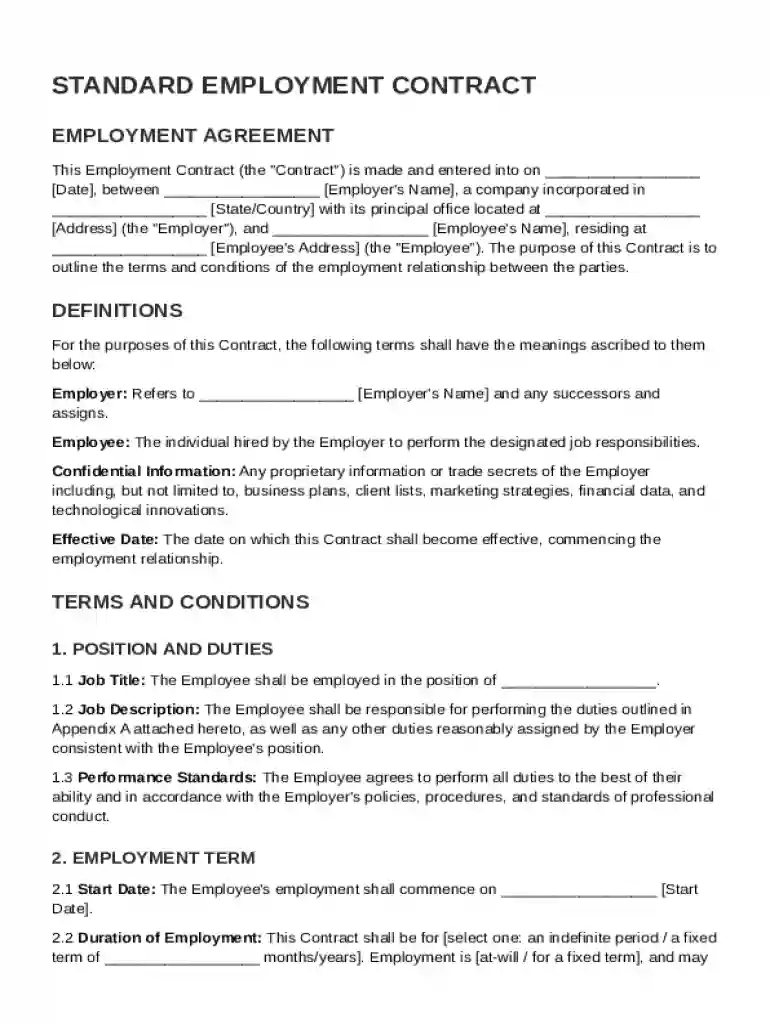
Type text, add images, blackout confidential details, add comments, highlights and more.

Draw your signature, type it, upload its image, or use your mobile device as a signature pad.

Send it via email, link, or fax. You can also download it, export it or print it out.
A standard employment contract serves as the foundational document outlining the terms and conditions of employment between an employer and an employee. Key components typically include:
Job Responsibilities: Clearly defined roles and duties expected from the employee. This ensures both parties understand the tasks and responsibilities, minimizing potential conflicts or misunderstandings.
Compensation: Details regarding salary, bonuses, and any other forms of compensation. This section might also cover payment schedules, including whether employees are paid weekly, bi-monthly, or monthly.
Benefits: A comprehensive outline of offered benefits such as health insurance, retirement plans, paid time off, and any other perks. Including this information helps in setting clear expectations about the employee's total compensation package.
Work Schedule: Standard working hours and expectations around overtime or flexible work arrangements. This is critical for compliance with labor laws and helps employees understand their daily obligations.
Confidentiality Obligations: Provisions related to the protection of company information and intellectual property. Whether it involves trade secrets or customer data, specifying confidentiality expectations is crucial for safeguarding company interests.
Termination Procedures: Conditions under which the employment relationship can be terminated, such as resignation, layoffs, or termination for cause. This section should also detail the notice period, severance pay, and other exit policies.
Governing Law and Amendments: Specifies the jurisdiction under which the contract will be interpreted and how amendments to the agreement can be made. This provides clarity on legal recourse and the procedures for modifying the contract terms.
When utilizing the standard employment contract template, it is vital to adapt it to suit specific organizational needs while ensuring compliance with legal standards. Key steps include:
Customization: Tailor the template by inserting the specific details regarding job roles, employee name, and specific company policies. This ensures the contract is relevant and applicable.
Review and Consultation: It is advisable to have the contract reviewed by a legal professional to confirm it meets all statutory requirements and industry-specific regulations.
Discussion with Employee: Before signing, discuss the contract terms with the employee to address any questions or concerns. This promotes transparency and mutual understanding.
Signing and Documentation: Once agreed upon, both parties should sign the document. Provide copies to all parties involved and securely store the original documents for future reference.
Completing the standard employment contract template involves several critical steps to ensure accuracy and legal compliance:
Gather Necessary Information: Begin by assembling all relevant information about compensation, benefits, and job responsibilities.
Populate the Template: Using the gathered information, fill out the template sections to reflect the agreed-upon terms accurately.
Verify Legal Compliance: Check that the contract adheres to applicable employment laws and regulations in your jurisdiction.
Revise for Clarity: Ensure all terms are clearly defined. Avoid using ambiguous language that could lead to misunderstandings.
Employee and Employer Review: Conduct a collaborative review session with both parties to affirm agreement and resolve potential discrepancies.
Finalize and Execute: Upon agreement by both parties, execute the contract with signatures and date it. Deliver copies to the necessary parties and store a copy within company records.
Understanding the terminology within a standard employment contract is crucial for clarity and legal standing:
Probation Period: An initial period where an employee's performance is evaluated. This allows both parties to confirm the suitability of the working relationship.
Non-Compete Clause: Restrictions placed on the employee to prevent them from joining competitors or starting a similar business for a specified time after leaving the company.
At-Will Employment: A term indicating that either party may terminate employment at any time, for any reason, unless there is a contract specifying otherwise.
Severance Package: Compensation awarded to an employee upon termination, often including statutory redundancy pay and additional company-specific benefits.
Ensuring legal compliance when creating and utilizing a standard employment contract template involves:
Adherence to Federal and State Laws: Contracts must align with relevant employment laws, including wage laws, discrimination laws, and occupational safety regulations.
Inclusion of Compliance Clauses: Enforcing clauses that obligate the adherence to industry-specific regulations and ethical guidelines.
Regular Updates: Employment laws change frequently, so maintaining an up-to-date contract template that reflects the latest legal standards is crucial.
When using a standard employment contract, it is essential to consider variations in state laws that might affect contract terms:
Wage and Hour Laws: Minimum wage rates and overtime pay regulations vary by state, impacting compensation sections of the contract.
Non-Disclosure Agreements: States have different rules about enforcing non-disclosure and confidentiality clauses.
Employee Classification: Definitions regarding exempt vs. non-exempt employees can influence contract terms, affecting benefits and working conditions.
Practical utilization of the standard employment contract template can vary across different scenarios:
Small Business Start-Up: Entrepreneurs establishing a new business can use the template to set clear expectations with first-time hires.
Remote Workers: Contracts for remote employees can emphasize location flexibility clauses and expectations around remote work tools and resources.
Temporary Employees: Businesses hiring seasonal workers might use the template to outline specific terms and duration of employment distinctly from regular full-time staff.
Considering software compatibility ensures the seamless integration of the standard employment contract template into digital workflows:
Editing Tools: Platforms like DocHub offer tools to fill, edit, and sign contracts online, making digital modification and distribution straightforward.
Storage and Sharing: Compatibility with cloud storage services such as Google Drive and Dropbox facilitates easy access and sharing of contracts with stakeholders.
E-signature Technologies: Utilizing e-signature tools ensures that the contract can be executed digitally while remaining legally binding, as per the ESIGN Act guidelines.
At DocHub, your data security is our priority. We follow HIPAA, SOC2, GDPR, and other standards, so you can work on your documents with confidence.