






Definition and Meaning of a Standard Rental Lease Agreement Template
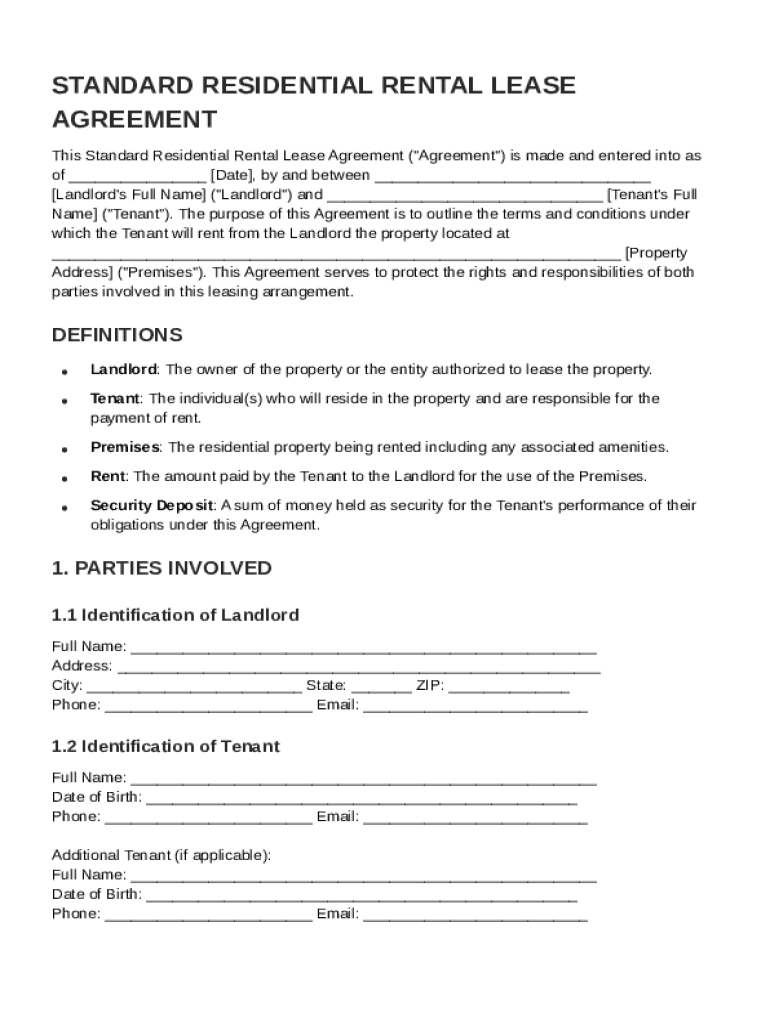
A Standard Rental Lease Agreement Template serves as a preformatted document designed for establishing the terms of a rental agreement between a landlord and a tenant for residential property. This template provides a comprehensive framework covering essential information such as tenancy length, payment obligations, and rules of occupancy, ensuring clarity and understanding for both parties. This template streamlines the documentation process, saving time for landlords and property managers while securing the tenant's commitment to the stipulated terms. By utilizing this standard form, parties can ensure they meet the typical legal requirements and expectations found in residential lease agreements across the United States.
Essential Elements of the Standard Rental Lease Agreement Template
When using the Standard Rental Lease Agreement Template, it's vital to include key components to make it a legally binding document and to avoid misunderstandings or conflicts later on:
-
Identification of Parties: Clearly outline the identities of both the landlord and tenant, including names and contact information.
-
Property Description: Specify the address and any unique characteristics of the rental property that make it identifiable.
-
Lease Duration: Define the start and end dates for the lease term, whether monthly or yearly, and the conditions for renewal.
-
Rent Payment Details: Provide the amount of rent, due date, method of payment, and penalties for late fees or bounced checks.
-
Security Deposit Guidelines: State the required security deposit amount, conditions for its return, and how it will be used for damages or missed rent payments.
-
Occupancy Limits: Establish how many occupants are allowed and any additional conditions regarding guests.
-
Utility Responsibilities: Define who is responsible for which utilities, like water, electricity, and trash disposal.
-
Termination Conditions: Explain how the lease can be terminated early by either party and any penalties involved.
Steps to Complete the Standard Rental Lease Agreement Template
Creating a comprehensive rental lease agreement involves several steps to ensure accuracy and legal validity:
-
Gather Required Information: Collect complete details about the rental property and personal information of all parties involved.
-
Customize the Template: Modify sections of the template to adhere to state-specific laws and personal preferences for rental terms.
-
Insert Detailed Payment Terms: Ensure clarity on monthly payments, including the method and schedule, as well as late fee policies.
-
Outline Maintenance Duties: Clearly assign maintenance responsibilities between the landlord and tenant, especially concerning repairs and upkeep.
-
Review Legal Obligations: Cross-check with state laws to include all required notices, such as disclosures on lead-based paint for older buildings.
-
Execute and Sign the Document: After final review, both parties must sign and date the agreement, ensuring mutual understanding and consent.
Legal Use of the Standard Rental Lease Agreement Template
The Standard Rental Lease Agreement Template is used to create a contract that is compliant with relevant tenancy laws, providing legal protection for both landlords and tenants. This document serves as a reference in the event of disputes, specifying legal repercussions for breach of contract. It ensures that both parties understand their rights and obligations, such as the right to privacy for tenants and the landlord's right to timely rent. Adhering to this agreement’s terms ensures that both parties are protected under the law, which is crucial for maintaining professional and respectful tenant-landlord relationships.
State-Specific Rules for the Standard Rental Lease Agreement
Although a Standard Rental Lease Agreement Template provides a generic framework, specific states in the U.S. have unique regulations that should be considered:
-
Security Deposit Limits: Vary by state, often dictating the maximum amount a landlord can charge.
-
Notice Requirements: States require different notice periods for terminating a lease or adjusting rent.
-
Legal Disclosures: Some regions mandate disclosure of mold or utility service arrangements.
-
Rent Control Regulations: Applicable in certain cities requiring adherence to rent stabilization laws.
-
Inspection Rights: Specific rules on how and when a landlord can inspect the rented premises.
Understanding these variations is crucial when customizing the agreement to ensure its compliance with local property and housing laws.
Important Terms Related to the Standard Rental Lease Agreement Template
A few legal and contextual terms are often encountered within a Standard Rental Lease Agreement that should be clearly understood by landlords and tenants:
-
Sublease: Transfer of part of the tenant's tenancy rights to another party.
-
Breach of Contract: Failure by either party to comply with the contractual terms.
-
Eviction: Legal process for removing a tenant due to lease violations.
-
Quiet Enjoyment: Tenant’s right to peaceful use of the property without interference.
-
Holdover Tenant: A tenant who remains in the property after the lease term expires without the landlord's consent.
Examples of Using the Standard Rental Lease Agreement Template
Landlords and property managers often utilize a Standard Rental Lease Agreement Template in various scenarios:
-
Long-Term Tenancies: For securing a one- to two-year lease term for residential properties, providing stability for landlords.
-
Multi-Family Units: Adapting a base template to suit multiple apartments within the same building, ensuring uniform lease terms across tenants.
-
Student Housing: Modifying lease agreements for the particular timeframes common in student accommodations, like semester or academic year leases.
-
Short-Term Rentals: Adjusting lease terms to comply with local bylaws for short-term rental properties on platforms like Airbnb.
In each of these scenarios, templates can be tailored to meet the specific requirements and expectations, safeguarding all parties involved.
Digital vs. Paper Version of the Standard Rental Lease Agreement
The choice between utilizing a digital or paper version of a Standard Rental Lease Agreement Template can substantially impact workflow and convenience:
-
Digital Version: Offers easy customization, distribution, and electronic storage. It facilitates remote signing through e-signature capabilities, ensuring accessibility from any location.
-
Paper Version: Preferred by traditional users who require physical documentation. Some individuals may prefer this for feeling more tangible or secure.
Both formats have unique advantages, but it's essential to ensure any chosen format aligns with the user’s needs and complies with state jurisdiction on digital signatures in contracts.