
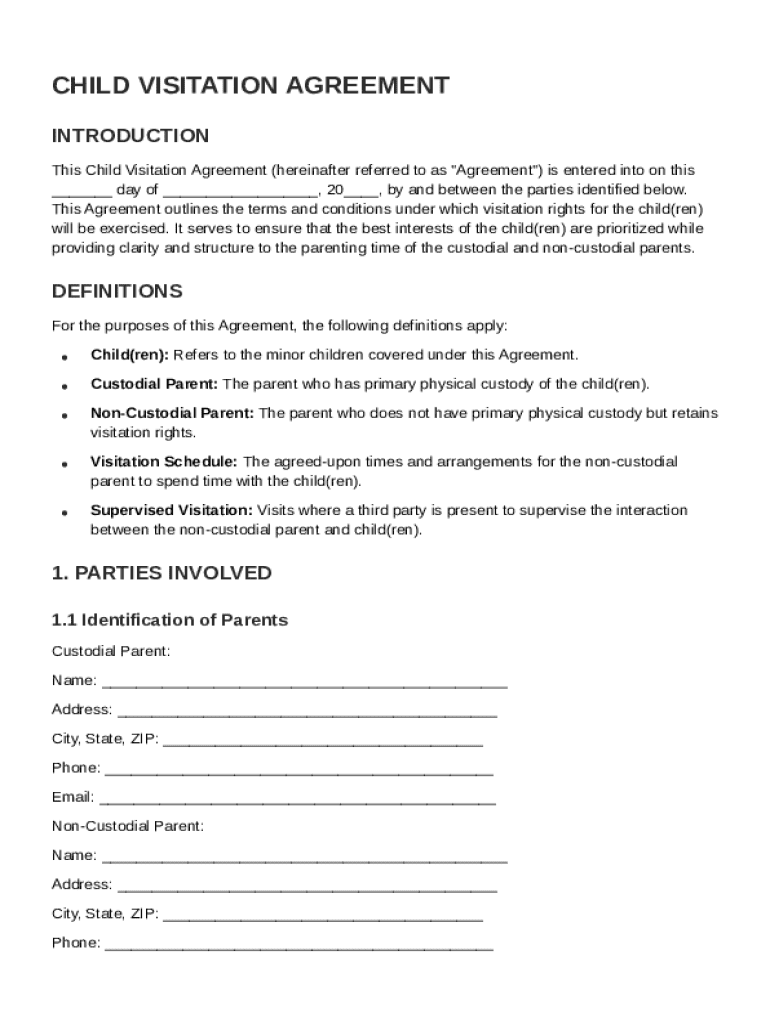







Definition and Purpose
The Child Visitation Agreement Template is a customizable document designed to outline the terms and conditions regarding visitation rights between custodial and non-custodial parents. The primary objective of such an agreement is to prioritize the best interests of the child(ren), offering clear guidelines to both parties. This may include a visitation schedule, transportation responsibilities, and communication methods. The aim is to provide a structured and amicable way to manage parenting time when parents are not living together.
Key Components
- Visitation Schedule: Establishes routine plans such as weekends, holidays, and special occasions.
- Communication Guidelines: Addresses how parents will maintain open lines of communication.
- Transportation Responsibilities: Details the responsibilities for transporting children to and from visitations.
- Modification Procedures: Provides a method for requesting changes to the agreement.
- Dispute Resolution Methods: Offers a framework to handle disagreements, possibly including mediation.
Steps to Complete the Child Visitation Agreement Template
Completing a Child Visitation Agreement Template involves several key steps to ensure clarity and enforceability.
- Gather Required Information: Collect personal information for both parents and the child(ren).
- Draft Visitation Schedule: Determine detailed timings for regular and holiday visits.
- Assign Transportation Duties: Clearly outline how transportation will be managed.
- Set Communication Rules: Decide on primary methods for parent-to-parent communication.
- Include Supervision Requirements: If necessary, detail conditions for supervised visits.
- Review and Revise: Ensure mutual agreement on all terms before finalizing.
- Legal Review: Consider having an attorney review the document for legal accuracy.
Legal Use of the Child Visitation Agreement Template
Creating a legally binding Child Visitation Agreement requires adherence to state-specific laws and practices. It's important that both parties fully understand and agree to the terms within. The agreement should also comply with state laws regarding custody and visitation. Consulting with a family law attorney can be invaluable to ensure the agreement's enforceability in a court of law.
Compliance Measures
- Ensure the document accommodates state-specific legal requirements.
- Include provisions for changes in circumstances that may affect the agreement.
State-Specific Rules for Child Visitation Agreements
Visitation agreements can vary significantly based on state laws.
- California: May emphasize the importance of co-parenting and mediation.
- Texas: Often includes standard possession orders for joint custody.
- New York: Requires clear definitions of "reasonable visitation" in agreements.
Understanding these variations can help tailor the agreement to meet regional standards.
Who Typically Uses the Child Visitation Agreement Template
This template is most often used by divorcing or separated parents who wish to formalize their parenting arrangements. Family law attorneys, mediators, and social services may also employ these templates when assisting clients. The goal is to help parents establish clear expectations and responsibilities without needing to litigate standings in court.


Important Terms Related to the Agreement
Understanding key legal and custodial terms is critical to effectively using the Child Visitation Agreement Template.
- Custodial Parent: The parent who has primary care, custody, and responsibility for the child.
- Non-Custodial Parent: The parent who has visitation rights but not primary residency of the child.
- Supervised Visitation: Visits that require another adult to be present.
Each term carries significant implications for the rights and duties described in the agreement.
Examples of Using the Child Visitation Agreement Template
Consider the benefit of implementing clear terms in various scenarios:
- Scenario One: Parents share equal custody but live in different cities, requiring detailed travel arrangements.
- Scenario Two: One parent works non-traditional hours, necessitating flexible visitation times.
- Scenario Three: Supervised visits are a condition, and a third party is needed to oversee exchanges.
These examples illustrate the flexibility and necessity of tailored agreements.
Versions or Alternatives to the Child Visitation Agreement Template
While templates provide a starting point, other methods or alternatives might be useful.
- Mediated Agreements: Involve third-party mediators to create agreements.
- Court-Ordered Agreements: Legal settlements from custody trials.
- Customized Legal Documents: Drafted by family attorneys for unique circumstances.
Exploring varied forms can help parents find the optimal solution for their family.
Versions of Digital Platforms and Software Compatibility
When using DocHub for Child Visitation Agreement Templates, compatibility with software and platforms is crucial.
- File Types: Supports PDF, DOC, and other formats for diverse user needs.
- Integration: Compatible with cloud storage like Google Drive, enhancing accessibility.
- Collaboration: Allows multiple parties to annotate and sign documents digitally.
These features maximize efficiency and simplify the process of managing visitation agreements.




