






Definition and Meaning
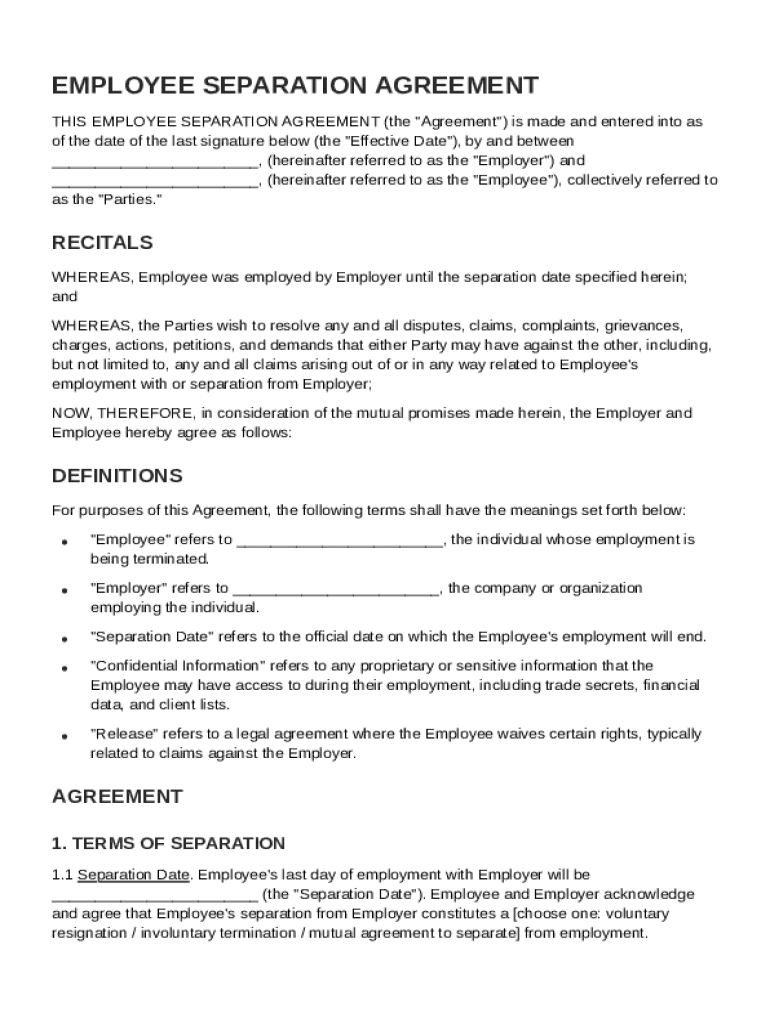
The Employee Separation Agreement Template is a formal document that sets out the terms and conditions under which an employment relationship ends. This agreement is mutually beneficial to both the employer and the employee, as it helps prevent future disputes by clarifying the exit terms. The purpose of this template is to outline crucial elements like final pay, benefits continuation, and confidentiality stipulations, ensuring a smooth transition for both parties.
Important Concepts
- Separation Date: The specific date when the employee's duties officially end.
- Final Compensation: Details the final payment including outstanding wages and unused vacation.
- Release of Claims: The employee waives future claims against the employer, protecting the company from potential litigation.
Key Elements of the Employee Separation Agreement Template
An effectively crafted Employee Separation Agreement includes several critical components. These elements facilitate a comprehensive understanding of the employee's and employer's obligations upon separation.
Primary Components
- Definitions: Clarifies important terms used throughout the document.
- Severance Package: Details any severance payment, outplacement services, or additional benefits offered.
- Non-Compete and Non-Solicitation Clauses: Stipulations to prevent the departing employee from sharing company secrets or poaching clients and employees.
- Confidentiality Obligations: Obligates the employee to maintain the confidentiality of company information post-departure.
Additional Considerations
- Return of Company Property: Specifies items the employee must return, such as keys, ID cards, and electronic devices.
- References: Agreement on what information the employer will provide when contacted by potential future employers of the departed employee.
How to Use the Employee Separation Agreement Template
Utilizing the Employee Separation Agreement Template effectively can streamline the separation process and minimize the risk of disputes.
Step-by-Step Instructions
- Review the Template Structure: Understand the layout and sections of the template.
- Customize Key Sections: Adapt the document to suit your specific circumstances, ensuring all relevant details are included.
- Consult with Legal Advisors: Before finalizing, have the document reviewed to ensure compliance with any applicable laws.
- Discuss with the Employee: Go through the agreement with the employee, ensuring clarity and agreement on all terms.
Examples
- For Voluntary Resignation: Use the template to clarify final payments and resignation terms.
- For Involuntary Termination: Include severance terms and any specific legal protections.
Legal Use of the Employee Separation Agreement Template
The legal application of this agreement ensures it acts as a binding contract between the employer and the employee, outlining agreed terms and preventing future disputes.
Accommodating Legal Standards
- Adherence to the ESIGN Act: Any electronically signed agreements are legally binding under this act.
- State-Specific Regulations: Incorporate any additional clauses necessary to comply with state regulations regarding employee separations.
Important Terms Related to the Employee Separation Agreement Template
Familiarity with specific terms can enhance understanding and effective use of an Employee Separation Agreement.
Vocabulary
- "At-Will Employment": The default assumption that either party can terminate the employment relationship at any time.
- "Waiver": Legal relinquishment of a right or claim by the employee.
- "Consideration": Anything of value promised to the other party, usually the severance package, in exchange for signing the waiver of claims.
Examples for Clarity
- Confidential Information: Patents, business strategies, customer lists.
- "Good Cause": Justifiable reason required to terminate an employee in some states.
State-Specific Rules for the Employee Separation Agreement Template
Since employment laws can vary by state, it is crucial to tailor the Employee Separation Agreement to comply with local regulations.
Common State Requirements
- California: Restrictions on non-compete clauses and specific language needed for enforceability.
- New York: Particular requirements for severance agreements, mandating consideration for a specified period.
Variations in Clauses
- Non-Compete Agreements: Exceptions in states like North Dakota and Oklahoma.
- Severance Pay Laws: Mandated severance regulations in New Jersey and other states.
Examples of Using the Employee Separation Agreement Template
Real-world scenarios demonstrate the practical applications of the template, helping visualize its utility.
Practical Applications
- Corporate Downsizing: Management uses the template to provide clear severance terms for multiple employees.
- Personal Resignation: An employee leverages the agreement to ensure all dues and entitlements are specified and honored.
Scenario Analysis
- Litigation Avoidance: Using the agreement, a company successfully defended against a wrongful termination claim by showing clearly defined separation terms and mutual agreement.
Steps to Complete the Employee Separation Agreement Template
Completing the template methodically ensures clarity and mutual understanding between both parties.
Detailed Process
- Initial Drafting: Fill in essential information, such as the employee's identification details and final working day.
- Incorporate Legal Clauses: Include any necessary provisions that apply specifically to your business or state.
- Consultation and Review: Allow legal experts to review the draft for compliance and completeness.
- Finalization and Signing: Ensure both parties review, agree upon, and sign the final document, making it legally binding.
Common Pitfalls
- Ambiguities in Language: Avoid unclear terms to prevent misinterpretations.
- Neglecting Confidentiality: Ensure comprehensive confidentiality clauses to protect business interests.