
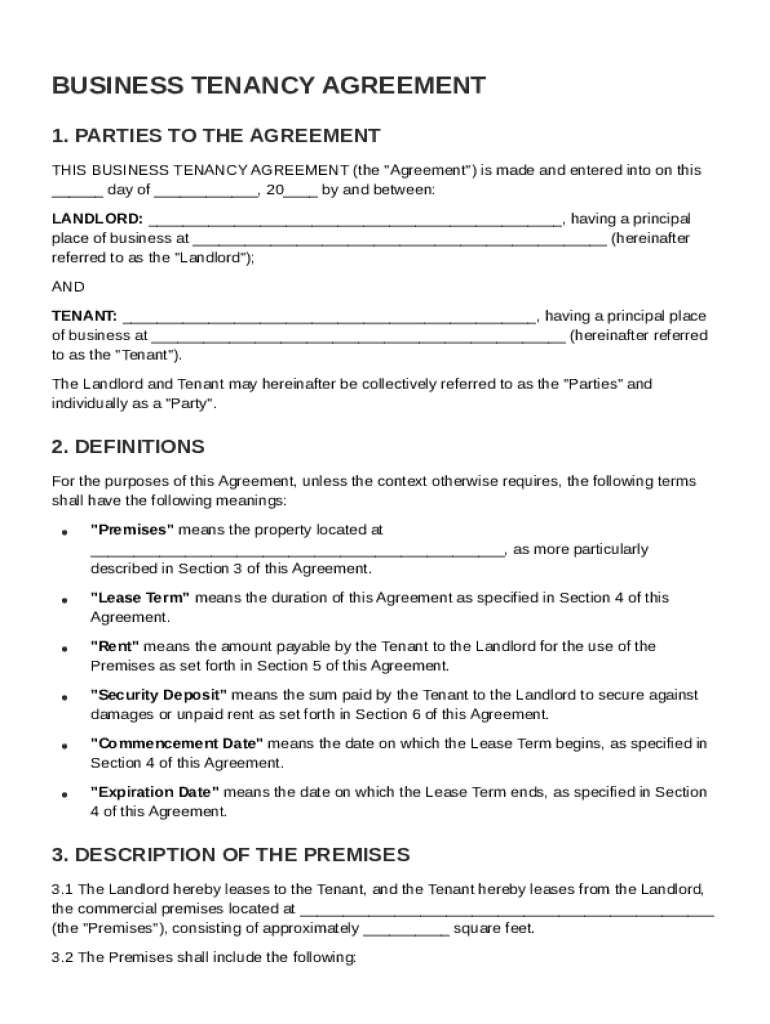







Definition & Meaning
A Business Tenancy Agreement Template is a structured document designed to outline the terms and conditions under which a landlord leases commercial property to a tenant. This crucial document serves as a legal contract that defines the relationship between both parties and sets expectations during the lease term. The agreement typically includes key details such as the identities of the landlord and tenant, definitions of terms, a description of the premises, lease duration, rent obligations, security deposit requirements, permissible property uses, maintenance responsibilities, insurance obligations, termination conditions, indemnifications, governing laws, and various miscellaneous clauses.
How to Use the Business Tenancy Agreement Template
Utilizing a Business Tenancy Agreement Template effectively ensures that all relevant terms and conditions are covered and legally binding. Here's a step-by-step guide on how to use the template:
- Review Existing Content: Start by examining the template's sections and ensure they align with your specific needs and legal requirements.
- Customize the Template: Modify sections to include details like the names of the landlord and tenant, specific terms, and property descriptions.
- Include Essential Clauses: Check that all necessary clauses, such as rent amount, payment intervals, and permitted uses of the premises, are present and clear.
- Consult with Legal Experts: Before finalizing, seek legal advice to ensure compliance with state-specific laws and regulations.
- Execution: Once both parties agree on the terms, the agreement should be signed and dated by both the landlord and the tenant to make it legally binding.
Key Elements of the Business Tenancy Agreement Template
A comprehensive Business Tenancy Agreement Template includes several critical elements to protect the interests of both the landlord and the tenant:
- Parties Involved: Clearly identifies both the landlord and the tenant with full legal names and contact details.
- Premises Description: Describes the leased property, including its location and any facilities or equipment included.
- Lease Term: Specifies the start and end dates of the lease, as well as provisions for renewal or extension.
- Rent and Deposits: Outlines the rent amount, due dates, acceptable payment methods, and details regarding the security deposit.
- Use of Premises: Defines acceptable uses of the property and any restrictions imposed by the landlord.
- Maintenance and Repairs: Details responsibilities for property upkeep and who bears the cost of repairs.
- Insurance Requirements: Specifies insurance coverage each party must maintain during the lease term.
Important Terms Related to Business Tenancy Agreement Template
Understanding key terminology is vital when dealing with a business tenancy agreement. Here are some important terms:
- Leasehold Improvement: Any alterations or improvements made to the property by the tenant for business operations.
- Net Lease: A lease agreement where the tenant is responsible for some or all of the property expenses, including taxes, insurance, and maintenance.
- Demised Premises: The area of property leased to the tenant, as defined in the agreement.
- Subletting: The tenant's ability to rent a portion or all of the premises to another party with the landlord's consent.
- Covenant of Quiet Enjoyment: The tenant's right to use the leased premises without interference from the landlord or third parties.
Legal Use of the Business Tenancy Agreement Template
The Business Tenancy Agreement Template must comply with legal standards to ensure enforceability. Consulting with an attorney or legal expert can help verify adherence to applicable federal and state laws. Key legal aspects include:
- Lease Registration: In some states, registering the lease with a local government office provides additional legal protection.
- Compliance with Zoning Laws: The agreement must stipulate permitted commercial uses that align with local zoning laws.
- Indemnification Clauses: Protects both parties against claims arising from negligence or misconduct by the other party.
Steps to Complete the Business Tenancy Agreement Template
Completing the Business Tenancy Agreement Template involves several important steps:
- Identify the Parties: Clearly write the full legal names and contact details of the involved parties.
- Describe the Premises: Provide a detailed description of the commercial space and any included amenities.
- Define the Term: Outline the lease's duration and specify any options for renewal.
- Set Rent Terms: Clearly specify the rental amount, payment schedule, and any applicable late fees.
- Draft Terms of Use: Define permissible property activities and any restrictions.
- Delineate Responsibilities: Specify who is responsible for maintenance, repairs, and utilities.
- Include Legal Clauses: Add provisions for dispute resolution, insurance requirements, and termination rights.
Who Typically Uses the Business Tenancy Agreement Template
The Business Tenancy Agreement Template is instrumental for various parties involved in commercial real estate transactions, including:
- Landlords and Property Managers: Utilize the template to ensure consistency and legal adherence across all leased properties.
- Commercial Tenants: Often businesses leasing office, retail, or industrial space to operate.
- Real Estate Agents and Brokers: Use the agreement template to facilitate client transactions and provide legal clarity.
- Legal Professionals: Often draft or review agreements to ensure they meet statutory requirements and protect client interests.


State-Specific Rules for the Business Tenancy Agreement Template
While the template provides a general framework, state-specific regulations may affect certain provisions:
- Security Deposit Limits: Many states cap the maximum security deposit that can be requested from tenants.
- Disclosure Requirements: Some states enforce disclosure of certain conditions, such as environmental hazards or property defects.
- Eviction Procedures: State laws often outline specific procedures and timelines for lawful tenant eviction.
Examples of Using the Business Tenancy Agreement Template
Real-world scenarios illustrate the template’s adaptability:
- Retail Space Lease: A business owner uses the template to lease space in a shopping center, outlining distinct operating hours and co-tenancy clauses.
- Office Space Application: A tech startup leases office space, incorporating clauses for shared amenities and data security requirements.
- Industrial Lease Agreement: A manufacturer leases a warehouse, including stipulations for loading dock access and heavy machinery use.




