






Definition & Overview of the Fence Contract Template
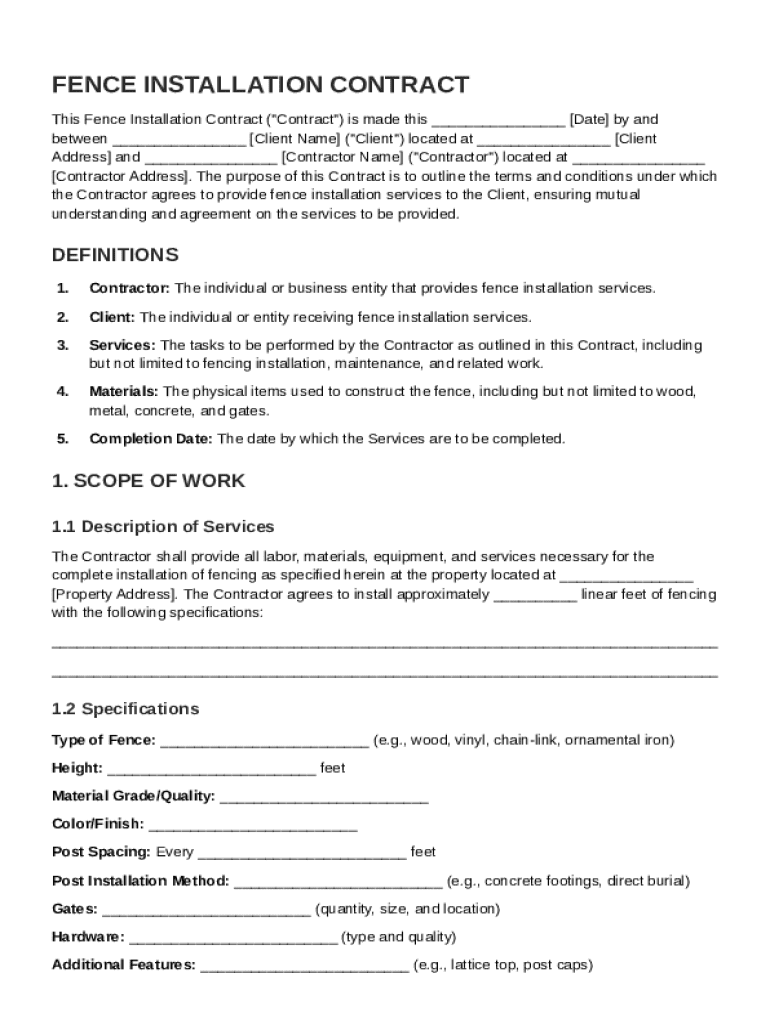
The Fence Contract Template is a legal document that outlines the arrangement between a client and a contractor for the installation of fencing services. This template serves as a structured agreement ensuring mutual understanding and clarity regarding the scope of work, payment terms, and obligations of each party involved. The contract aims to cover several critical aspects, including the responsibilities of both the client and the contractor, warranties, and conditions for modification and termination. By utilizing this template, both parties can ensure a legally sound and comprehensive agreement that helps prevent disputes and misunderstandings.
How to Use the Fence Contract Template
To effectively use the Fence Contract Template, follow these steps:
-
Review the Template: Begin by thoroughly reading through the entire document to understand each section and its relevance.
-
Customize the Details: Fill in specific details such as names, addresses, and contact information of both the client and the contractor. Ensure that the scope of work to be performed is clearly defined.
-
Specify Payment Terms: Clearly outline the payment schedule, including amounts, due dates, and accepted payment methods. This section should also define terms for any advance payments or deposits.
-
Include Warranties and Liabilities: List any warranties provided by the contractor regarding the quality of materials and workmanship. Define liabilities and indemnity clauses to protect both parties from potential legal issues.
-
Outline Responsibilities: Specify the duties and responsibilities of both parties, including the expected completion date and any necessary permits or approvals.
-
Finalize and Sign: Once all sections are completed, both parties should carefully review the agreement. Any modifications or clauses specific to the agreement should be added before signing. The final document should be signed and dated by both the client and the contractor to validate the agreement.
Steps to Complete the Fence Contract Template
Completing the Fence Contract Template involves several key steps to ensure accuracy and legality:
-
Initial Details: Begin by entering the basic information such as the names, addresses, and contact numbers of both the client and the contractor.
-
Work Description: Provide a detailed description of the work to be completed, including the type of fencing material, height, length, and any special features or requests.
-
Timeline and Deadlines: Clearly define the project start date and the expected completion date. Include provisions for delays or extensions, if applicable.
-
Payment Schedule: Break down the payment terms, including the total cost of the project, payment frequency (e.g., upfront, upon completion, in installments), and methods of payment acceptable to both parties.
-
Warranties and Guarantees: Outline any warranties offered by the contractor for materials and workmanship, detailing the duration and conditions of these warranties.
-
Legal Clauses: Incorporate essential legal clauses covering indemnity, liability, confidentiality, dispute resolution, and termination conditions.
-
Finalize Documentation: Ensure the contract is signed and dated by both parties with any witnesses or notarization if required by local laws.
Key Elements of the Fence Contract Template
The Fence Contract Template comprises several critical elements to ensure comprehensiveness:
-
Parties Involved: Identification of the client and contractor, along with detailed contact information.
-
Scope of Work: A concise and thorough description of the fencing project, including specifications and expected outcomes.
-
Payment Details: Complete financial terms including project cost, payment schedule, and conditions for deposits and final payments.
-
Warranties and Liabilities: Outline the assurances both parties provide, ensuring accountability for materials and construction.
-
Termination and Modification Clauses: Conditions under which the agreement can be terminated or modified, protecting both parties' rights in case of unforeseen circumstances.
-
Legal Framework: Indemnity, liability clauses, and dispute resolution processes to provide a legal backbone for the contract.
Legal Use of the Fence Contract Template
The Fence Contract Template acts as a binding agreement recognized in a legal context. It adheres to U.S. contract law principles, making it enforceable in court if any disputes arise. Legal counsel is recommended to ensure all provisions meet state-specific legal requirements and to include additional clauses specific to the nature of the contractual relationship or project scope. The template can serve as a foundational tool for creating a robust contract that safeguards both parties' interests.
State-Specific Rules for the Fence Contract Template
Each state may have unique regulations that impact fencing projects:
-
Licensing Requirements: Some states require contractors to hold specific licenses to legally undertake fencing projects.
-
Permitting and Zoning Laws: Regulations surrounding permits and zoning vary by state and municipality. Contracts should address who is responsible for obtaining necessary approvals.
-
Consumer Protection Laws: These laws may dictate contract terms, including cancellation rights and required disclosures.
It is essential for users to consult regional laws and possibly legal professionals to conform the template to local legal stipulations.
Examples of Using the Fence Contract Template
Practical applications of the Fence Contract Template include:
-
A homeowner uses the template to formalize an agreement with a contractor for a new privacy fence, specifying both parties' expectations and obligations.
-
A property management company employs the template to define terms with a fencing contractor for multiple properties, utilizing the document's detailed specifications section to outline varied fencing needs for each location.
-
A small business owner secures the template for a permanent display fence at their commercial premises, ensuring warranties and maintenance are clearly addressed in the contract.
These examples demonstrate the flexibility and utility of the template across different settings and projects.
Who Typically Uses the Fence Contract Template
This contract template is predominantly utilized by:
-
Homeowners seeking to install, repair, or upgrade fencing on their properties.
-
Contractors and Subcontractors specializing in fencing, to provide clients with a structured agreement.
-
Real Estate Developers and Property Managers who require defined terms for fencing installations across large developments or rental properties.
The template serves as a reliable tool for any individual or entity engaging in fencing projects requiring a clear, legally sound agreement.