






Definition and Purpose of the Library Contract Template
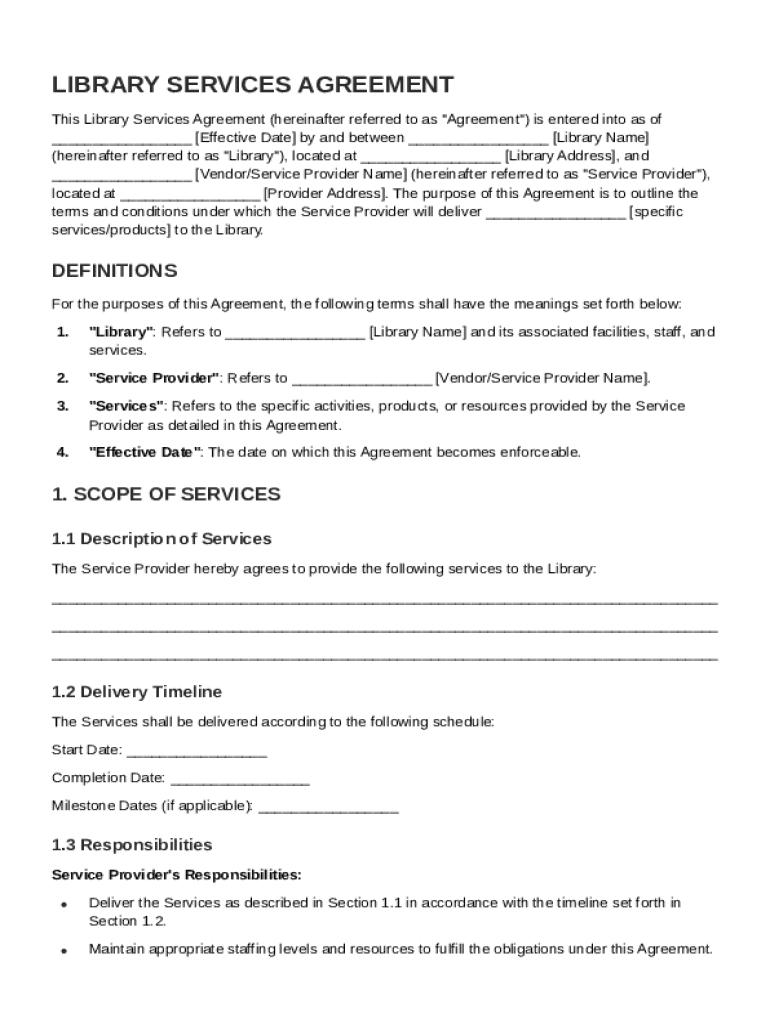
A Library Contract Template is designed to establish a formal agreement between a library and a service provider for the delivery of specific services. This template outlines the terms and conditions that govern the relationship between the two parties, providing a structured framework to handle operations effectively. The contract typically includes various sections such as definitions, scope of services, responsibilities, compensation and payment terms, duration, termination clauses, and confidentiality obligations. It ensures both parties have a clear understanding of their roles, resulting in a smoother operational relationship.
Key Elements of the Library Contract Template
The template encompasses key elements vital for a comprehensive agreement.
- Definitions: Clarifies terms to avoid confusion.
- Scope of Services: Outlines the services provided by the service provider.
- Responsibilities: Details the obligations of each party involved.
- Compensation Terms: Sets out how and when payments will be made.
These elements are crucial for ensuring all parties are on the same page and that expectations are met.
How to Use the Library Contract Template
Utilizing the template effectively begins with understanding its structure and contents.
- Download the Template: Access it from an online platform like DocHub.
- Review Each Section: Familiarize yourself with its contents.
- Customize the Template: Adjust specific sections to suit your needs.
This process helps in tailoring the document to better fit specific requirements, ensuring practical and legal accuracy.
Steps to Complete the Library Contract Template
Completing the template requires attention to detail and precision. Follow these steps:
- Fill in Basic Information: Include names and addresses of both parties.
- Specify Services: Define the services to be provided.
- Outline Payment Terms: Clearly set out payment conditions and timelines.
- Include Signatures: Both parties must sign to validate the contract.
These steps ensure that the agreement is legally binding and reflects the agreed terms accurately.
Who Typically Uses the Library Contract Template
Various types of users can benefit from this template:
- Public Libraries: To formalize partnerships with vendors.
- University Libraries: For establishing terms with educational service providers.
- Private Service Providers: To clearly outline terms with library clients.
These examples demonstrate the template's versatility across different library environments and service interactions.


Legal Use of the Library Contract Template
When using the Library Contract Template, ensure compliance with relevant legislation.
- Follow State Laws: Adapt the template according to state-specific legal requirements.
- Consult Legal Counsel: Seek advice to ensure legal soundness.
Understanding and applying these guidelines safeguards against potential legal issues, providing a legally secure framework for operations.
Software Compatibility for the Library Contract Template
Ensuring the template works with your preferred software is crucial for effective use.
- DocHub Integration: Easily edit and sign documents.
- Google Workspace: Seamless integration with Google Drive and Gmail.
- Other Tools: Works with Microsoft Office and other document editing software.
This compatibility enhances flexibility, allowing users to work within their existing technological ecosystems.
State-Specific Rules for the Library Contract Template
Be aware that different states might impose varying rules on contract agreements.
- Variations in Law: Adjust the template to comply with local regulations.
- Potential Requirements: Some states may have unique disclosure or tax regulations.
Adapting the template to state-specific requirements ensures compliance enhances operational efficiency, and reduces legal risks.
Versions or Alternatives to the Library Contract Template
Explore different versions or alternatives suitable for various needs.
- Customized Versions: Tailor made for specific types of libraries or partnerships.
- Alternative Contracts: For different service agreements outside typical library services.
These variations allow flexibility in choosing the most appropriate contractual framework for varying partnership needs.