






Definition & Meaning
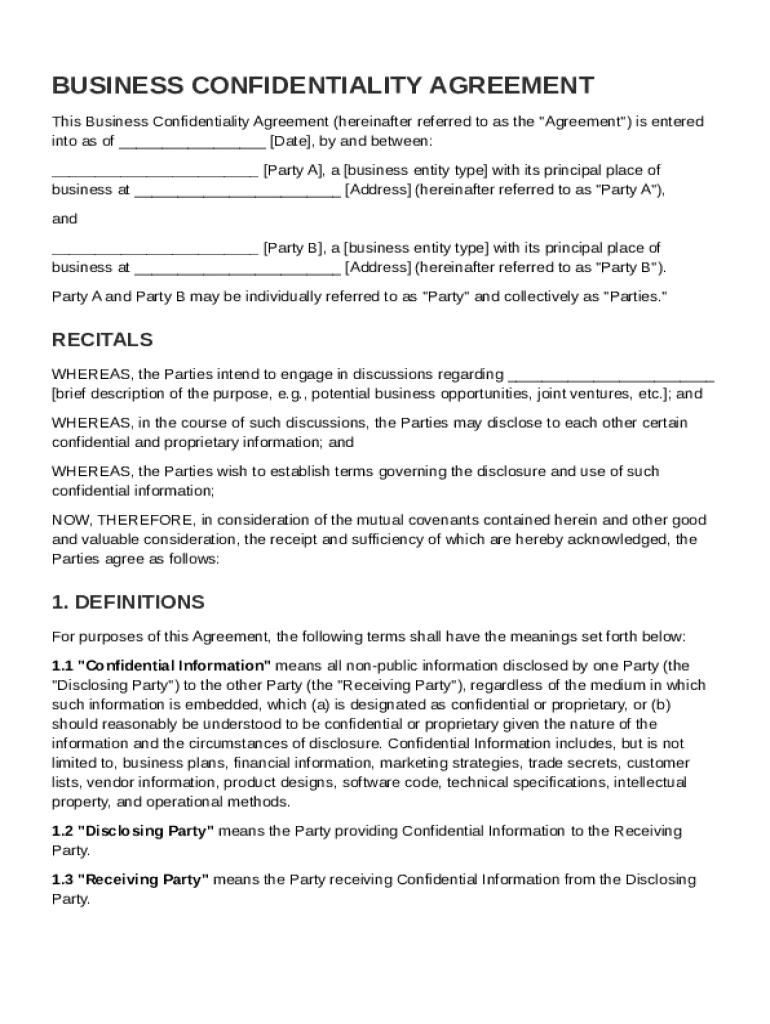
The Business Confidentiality Agreement Template is a legal document used to formalize the terms under which two parties, typically referred to as Party A (the discloser) and Party B (the recipient), agree to protect confidential information shared during business discussions. It sets parameters for confidentiality, outlining what constitutes 'Confidential Information' and laying out the obligations of the receiving party to prevent unauthorized disclosure. By establishing clear guidelines, the template helps prevent the misuse of sensitive data, thereby preserving competitive advantages and maintaining trust between involved parties.
Key Components
- Confidential Information: This section defines what data or details are considered confidential under the agreement, such as trade secrets, business plans, or proprietary technology.
- Obligations: Specifies the responsibilities of the receiving party to maintain confidentiality and protect the disclosed information from unauthorized access or sharing.
- Exclusions: Identifies any information that is not considered confidential, such as publicly known facts or data already in the recipient's possession without restrictions.
How to Use the Business Confidentiality Agreement Template
Leveraging the Business Confidentiality Agreement Template typically involves filling out specific sections with customized details to suit the particular needs of the parties involved. This process requires carefully reviewing the template to ensure it comprehensively addresses the nature of the confidential information being shared and aligns with the unique requirements of each party.
Steps for Effective Use
- Identify Parties Involved: Clearly specify the names and roles of each party within the agreement, ensuring clarity regarding who will be the disclosing and receiving entities.
- Detail Confidential Information: Clearly articulate what constitutes confidential information, using specific examples where possible to minimize ambiguity.
- Define the Term of Agreement: Set a time frame for which the confidentiality obligations remain in force, detailing any conditions for renewal or termination of the agreement.
- Specify Permitted Disclosures: Outline conditions under which information may be shared with third parties, such as legal obligations or consent from both parties.
Key Elements of the Business Confidentiality Agreement Template
A comprehensive Business Confidentiality Agreement Template should incorporate several critical elements to ensure it effectively protects sensitive information.
Fundamental Components
- Term: Defines the duration of the agreement, providing clarity on how long confidentiality obligations are expected to last.
- Return or Destroy Clause: Instructions regarding the return or destruction of confidential information once the agreement concludes.
- Governing Law: Identifies the legal jurisdiction that will govern any disputes arising from the agreement.
- Exclusivity: Optional clauses that may define the exclusivity of the information sharing, preventing the recipient from engaging with competing parties under similar information terms.
Legal Use of the Business Confidentiality Agreement Template
The legal use of the template involves ensuring that it adheres to all applicable laws and provides enforceable terms. This entails aligning the document with jurisdiction-specific legislation and including provisions that support legal enforceability.
Legal Essentials
- Legally Binding Clauses: Ensure that all terms are expressed in clear, legally enforceable language, with particular attention to definitions and obligations.
- Dispute Resolution Mechanisms: Outline methods for resolving any potential disputes, such as arbitration or mediation procedures.
- Compliance with State Laws: Verify that the agreement complies with specific state laws and regulations that may influence its enforceability.
Who Typically Uses the Business Confidentiality Agreement Template
This template is utilized by a diverse range of individuals and entities engaged in business dealings that necessitate the sharing of sensitive information.


Common Users
- Businesses and Corporations: Often used when two companies are considering a merger or partnership and need to share proprietary information.
- Startups and Entrepreneurs: Utilize the agreement to protect innovative ideas when seeking investors or partners.
- Freelancers and Contractors: May employ the template to safeguard client data when entering into work agreements.

State-Specific Rules for the Business Confidentiality Agreement Template
When using a Business Confidentiality Agreement Template, it is crucial to consider state-specific rules that may affect its legality and enforceability.
State Regulations
- Varying Statutes: Different states may have unique statutes affecting non-disclosure agreements, particularly concerning employment relations and trade secrets.
- Legal Precedents: Understanding court rulings in specific states can offer insights into how effectively your agreement might be enforced in those jurisdictions.
- Registration Requirements: Some states might require registration or formal filing of confidentiality agreements to be valid or enforceable.
Examples of Using the Business Confidentiality Agreement Template
Real-world scenarios serve to illustrate how the Business Confidentiality Agreement Template can be effectively employed in diverse situations.
Practical Applications
- Technology Partnership: A tech firm and a software developer collaborate to create a new application; they use the template to protect their respective contributions.
- Franchise Arrangements: A franchisor shares proprietary business methods with a franchisee, ensuring the strategies remain confidential through a well-structured agreement.
- Consultant Engagement: A consultant working on a company's internal process improvements signs an agreement to keep sensitive data confidential during and after the project.
Important Terms Related to Business Confidentiality Agreement Template
Understanding specific key terms related to the template is vital for ensuring clarity and precision within the agreement.
Essential Terminology
- Non-Disclosure Agreement (NDA): Often used interchangeably with business confidentiality agreements, NDAs specifically mandate the non-disclosure of shared information.
- Proprietary Information: Refers to data and details exclusive to an organization, providing a competitive edge.
- Trade Secret: Information that confers a business advantage over competitors who do not know or use it, often covered extensively in the agreement.
This detailed coverage ensures users understand the technical aspects and practical usage of the "Business Confidentiality Agreement Template," equipping them with the knowledge to effectively utilize the form in a variety of business contexts.