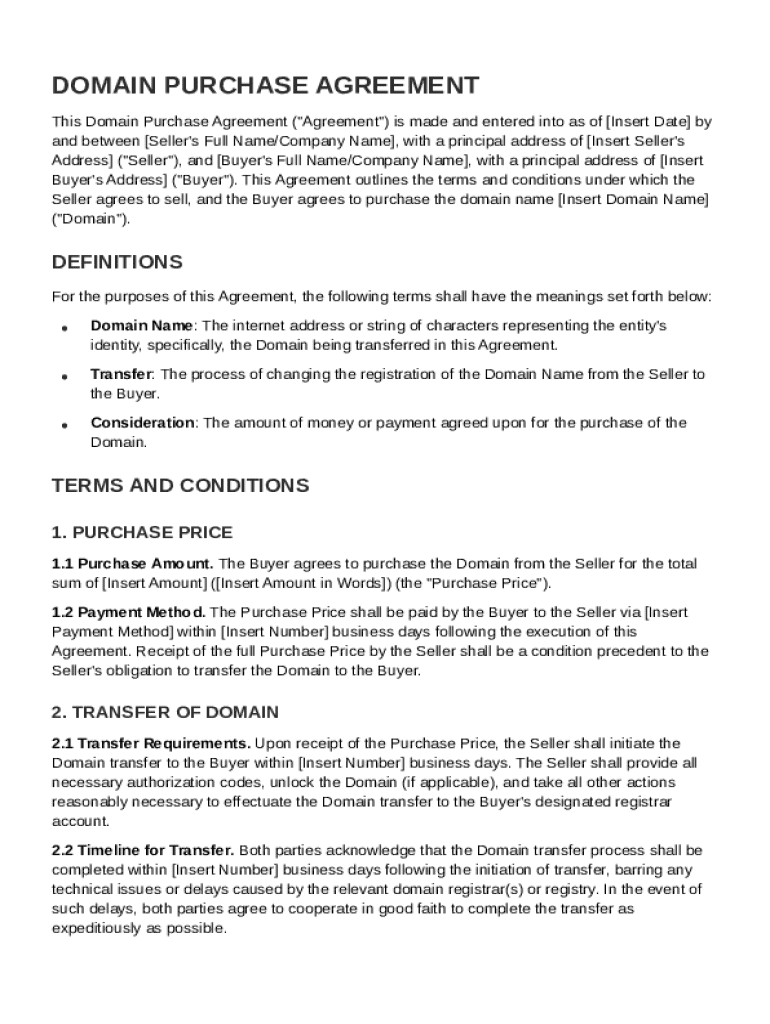







Definition & Meaning
The Domain Purchase Agreement Template is a structured document that outlines the contract details between a domain seller and buyer. It ensures a clear understanding of the transaction, defining responsibilities and expectations for both parties. This template encompasses various legal and financial elements, centered on the sale and transfer of a domain name. It includes sections like the purchase price, transfer requirements, and contractual obligations, ensuring the seller’s ownership rights and limiting liabilities for potential future issues. Key elements include terms and conditions, warranties from the seller, dispute resolution procedures, and governing law specifications.
Key Elements of the Domain Purchase Agreement Template
The template contains several critical elements that secure a fair and transparent transaction:
- Purchase Price and Payment Methods: Specifies the agreed price for the domain and acceptable payment methods.
- Warranties from the Seller: Ensures that the seller legally owns the domain and that it is free from encumbrances.
- Transfer Requirements: Outlines procedures for transferring domain rights from the seller to the buyer.
- Governing Law: Identifies which state laws apply to the agreement.
- Dispute Resolution: Details steps to be taken if there are disagreements, potentially including mediation or arbitration.
- Miscellaneous Provisions: Covers any additional terms or conditions not explicitly stated in other sections.
Each component contributes to mitigating risks and establishing clear communication between the involved parties.
How to Use the Domain Purchase Agreement Template
Utilizing this template involves several steps to customize and complete the agreement according to specific requirements:
- Review All Sections: Familiarize yourself with each part of the template to understand requirements and obligations.
- Fill in Specific Details: Input accurate information about the buyer, seller, domain name, and price.
- Customize Payment Terms: Adjust clauses related to pricing and payment schedules to match the negotiated terms.
- Include Additional Clauses if Necessary: Add any extra conditions or terms necessary to protect both parties.
- Consult Legal Professionals: Engage with a lawyer to review the document for legal compliance and adequacy.
Completing these steps ensures the agreement reflects the transaction’s unique details while maintaining legal integrity.
Important Terms Related to Domain Purchase Agreement Template
Understanding specific terminology is crucial for the clear interpretation of the agreement:
- Domain Name: The unique web address being purchased.
- Buyer/Seller: The parties involved in the transaction.
- Escrow Service: A neutral third party holding payment until all conditions of the sale are fulfilled.
- Registrar: The entity responsible for managing the domain name record and ensuring transfer accuracy.
These terms are integral to processing and finalizing the domain purchase transaction.
Legal Use of the Domain Purchase Agreement Template
The template qualifies as a legal instrument when used correctly, highlighting responsibilities and protections for both seller and buyer:
- Valid Contracts: Each completed agreement represents a legally binding contract when signed by both parties.
- Enforceability: Provides a basis for enforcing the terms outlined should disputes arise.
- Legal Recourse: Outlines options for resolving disagreements, including possible legal actions if the terms are violated.
Using the template in line with applicable laws ensures that the transaction is enforceable and protects against future disputes.
Examples of Using the Domain Purchase Agreement Template
Several scenarios reveal how the template functions within different contexts:
- Startups acquiring a web presence: A new company purchasing a domain from an individual seller to establish its brand.
- Corporate acquisitions: A business acquiring multiple domains during a merger to align its digital assets with its new identity.
- Individuals reselling domains: Private owners selling domains to other collectors or avid internet entrepreneurs.
These examples illustrate the template’s versatility and importance across varied transaction circumstances.
Software Compatibility
DocHub’s platform ensures that the Domain Purchase Agreement Template is easily manageable, offering compatibility with various file types such as PDF, DOCX, and more:
- Import and Export: Seamless integration with Google Workspace allows files to be imported directly from Drive and exported back after completing.
- Editing Tools: Comprehensive annotation and editing tools available within DocHub facilitate real-time collaboration and signature collection.
- Formats: The template can be saved in multiple formats, ensuring seamless workflow and accessibility across different systems.
This compatibility, combined with DocHub’s broad reach, enhances productivity and editing ease for users.
State-Specific Rules for the Domain Purchase Agreement Template
The agreement must align with specific state laws, as regulations can vary significantly across the U.S.:
- State Laws and Governing Law Clause: Each agreement should specify the governing state laws, aligning with both buyer and seller jurisdiction requirements.
- Compliance with Local Regulations: Ensure adherence to any specific criteria mandated by the states involved in the transaction.
Recognizing state differences helps minimize legal complexities, ensuring that the agreement's execution respects local legislation.
Who Typically Uses the Domain Purchase Agreement Template
Various groups utilize the template due to its comprehensive approach to domain transactions:
- Startups and Small Businesses: Establishing an online presence with a unique domain name.
- Domain Brokers: Facilitating the sale and purchase of domain names between parties.
- Legal Firms: Assisting clients in the execution of domain name transactions by providing legal guidance and completing agreements.
These entities rely on the template to simplify the transaction process and maintain clear legal standards.