






Definition & Meaning
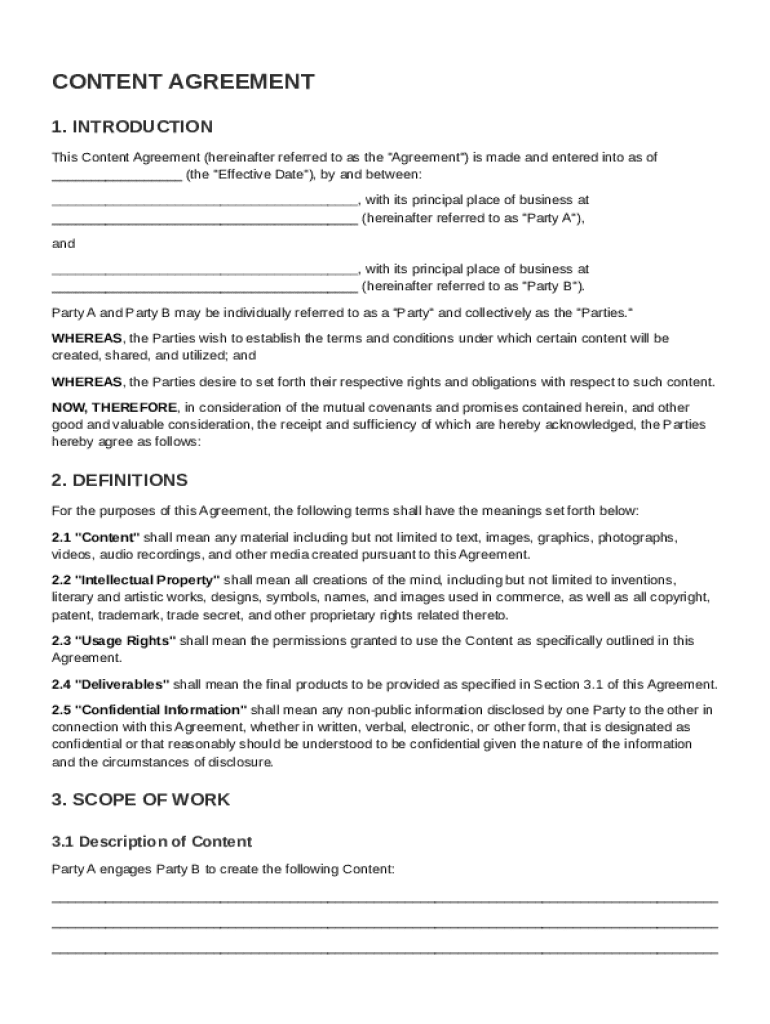
A Content Agreement Template serves as a foundational document that outlines the terms between two parties regarding content creation, usage, and ownership. This template is typically crafted to regulate how content is developed, distributed, or altered, ensuring that both parties clearly understand their responsibilities and rights. Key terms defined within the template include 'Content,' 'Intellectual Property,' and 'Confidential Information,' offering precise definitions to prevent any potential misunderstandings. The underlying purpose of such a template is to formalize arrangements concerning the creation and exchange of content, whether it involves text, images, videos, or other forms of media, thus safeguarding both parties' interests.
Key Elements of the Content Agreement Template
The Content Agreement Template comprises several crucial sections that clearly lay out the framework for collaboration:
- Parties Involved: This section identifies the entities or individuals entering into the agreement, often referred to as Party A and Party B.
- Scope of Work: Defines the type of content to be created, including any specific requirements or guidelines each party must adhere to during the development process.
- Ownership and Intellectual Property Rights: Details the assignment of rights over the created content, specifying who retains ownership after completion. This typically includes provisions on how intellectual property is shared or transferred.
- Compensation and Payment Terms: Outlines the financial remuneration for the content creation, including payment schedules, methods, and conditions under which payments will be made.
- Confidentiality Obligations: Covers the requirement for keeping any shared confidential information secure, outlining what constitutes confidential data and how it should be protected.
- Dispute Resolution: Establishes the process to be followed in case of a disagreement between the parties, often specifying mediation or arbitration as means of resolution.
How to Use the Content Agreement Template
Using a Content Agreement Template involves several precise steps to ensure the document is tailored to the specific needs of the parties involved:
- Review and Customize: Start by thoroughly reading the template to understand its structure and content. Adapt sections according to the project's unique requirements, ensuring that all aspects are relevant to your agreement.
- Define Terms and Conditions: Clearly articulate the obligations of both parties, specifying deliverables, deadlines, and any performance metrics that need to be achieved.
- Agreement Negotiation: Engage in discussions with the other party to negotiate terms that are mutually acceptable. This may involve amending clauses to better fit both parties' expectations.
- Finalize and Execute: Once both parties agree on the terms, finalize the document with signatures from the authorized representatives. Ensure that all signed copies are distributed and stored securely.
Steps to Complete the Content Agreement Template
Completing this template involves a systematic approach to ensure all necessary details are accurately filled:
- Identification of Parties: Begin by filling in the names and contact details of the contracting parties.
- Term Specifications: Input specific dates regarding the term and duration of the agreement's validity.
- Detail Content Scope: Describe the nature and purpose of the content to be produced, ensuring alignment with agreed objectives.
- Payment Information: Clearly list the compensation model, including any milestones or phases associated with payment releases.
- Signatures and Dates: Ensure all parties sign and date the agreement to signify their consent to the outlined terms.
Important Terms Related to Content Agreement Template
Understanding the terminology within the Content Agreement Template is crucial to interpreting its conditions accurately:
- Content: This refers to the material (text, images, videos, etc.) produced or modified under the agreement.
- Intellectual Property: A legal term that grants ownership rights to the creator or owner of the content.
- Confidential Information: Any non-public data disclosed during the agreement that must be kept secret by both parties.
- Compensation: The financial or other forms of remuneration provided in exchange for content creation services.
- Warranty: A formal guarantee that the produced content will meet certain quality or performance standards.
Legal Use of the Content Agreement Template
The legal validity of a Content Agreement Template hinges on its compliance with established laws and regulations regarding contract creation and content rights:
- Compliance with ESIGN Act: If digital signatures are used, ensure they adhere to the Electronic Signatures in Global and National Commerce Act to be recognized as legally binding.
- Jurisdictional Consideration: Specify the state or federal laws governing the contract, which can affect enforceability and interpretation.
- Confidentiality Clauses: Ensure these are consistent with the legal definitions of trade secrets and privacy laws.
- Dispute Resolution Mechanisms: Clearly outline how conflicts will be resolved, using recognized legal formats like mediation or arbitration, ensuring that these processes conform to relevant legal standards.
Examples of Using the Content Agreement Template
Real-world scenarios where a Content Agreement Template proves beneficial include:
- Freelance Content Creation: A freelance writer creating blog posts or articles for a company can use the agreement to delineate ownership rights and payment terms.
- Collaborative Projects: Multiple contributors working on a shared project, such as a multi-author book or a co-produced video series, can use the template to outline contributions and share of revenue.
- Outsourcing Content: Businesses outsourcing content development, such as brochures or marketing materials, can define expectations and intellectual property rights using this template.
Who Typically Uses the Content Agreement Template
A variety of entities find the Content Agreement Template essential for their operations:
- Businesses and Corporations: Utilize the template to formalize contracts with content creators and freelancers, ensuring alignment with brand guidelines and legal compliance.
- Freelancers and Independent Contractors: Rely on this document to secure clear agreements with clients, stipulating deliverables and payment arrangements.
- Creative Agencies: Use content agreements to manage relationships with clients and subcontractors, safeguarding intellectual property rights and ensuring consistent quality in deliverables.