
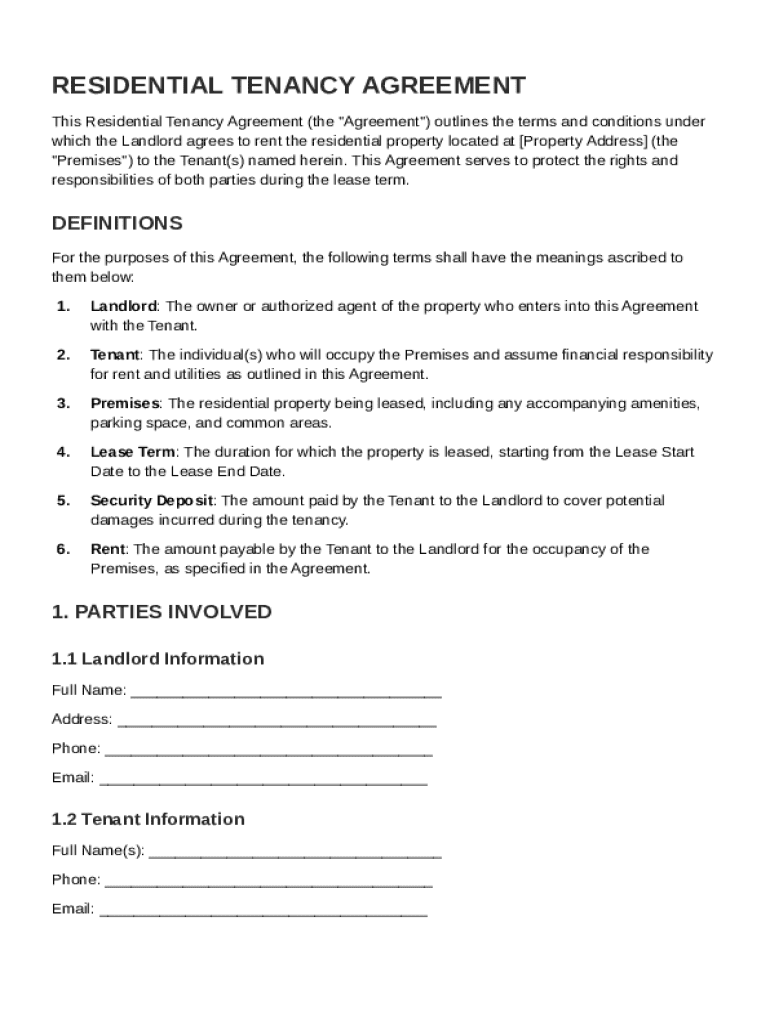







Definition and Purpose of a Tenancy Agreement Template
A Tenancy Agreement Template serves as a standardized document that outlines the terms and conditions of renting a property. It provides a framework for both landlords and tenants, ensuring there is a clear understanding and agreement on various aspects of the rental arrangement. This document includes definitions of key terms, stipulations about the premises, and detailed information about responsibilities and rights of both parties involved. The template streamlines the process of drafting rental agreements by providing a pre-structured format that can be customized according to specific needs.
Examples of Usage
- Used by landlords to formalize rental arrangements with tenants.
- Tenants review the agreement to understand their obligations and rights.
- Property managers utilize the template for ensuring tenant compliance.
Key Elements of the Tenancy Agreement Template
The Tenancy Agreement Template includes several crucial components that form the basis of the rental contract. These elements are designed to protect the interest of both landlords and tenants by laying out clear guidelines and expectations.
Essential Components
- Lease Terms: Duration of the lease, including start and end dates.
- Rent Details: Amount, due date, and payment methods.
- Security Deposits: Terms regarding the handling and refunding of deposits.
- Premises Description: Detailed description of the property being rented.
- Tenant Responsibilities: Maintenance and usage conditions.
- Landlord Responsibilities: Maintenance of common areas and repair duties.
Real-World Scenarios
- Landlords can enforce rules regarding the maintenance of shared spaces.
- Tenants can ensure deposits are refunded as per the agreement's stipulations.
Steps to Complete the Tenancy Agreement Template
Completing a Tenancy Agreement Template involves several stages that both the landlord and tenant need to carefully follow. These steps ensure all the necessary components are accurately captured and agreed upon.
- Identify Parties: Include detailed information about the landlord, tenant, and any agents involved.
- Detail the Property: Provide a thorough description of the rental property.
- Define Lease Terms: Specify the length, start, and end date of the lease.
- Agree on Rent and Deposits: Determine the rent amount, payment schedule, and security deposit terms.
- Outline Responsibilities: Clearly define the maintenance responsibilities of both landlord and tenant.
- Include Provisions: Add any additional clauses relevant to the rental arrangement.
Practical Considerations
- Ensure that both parties review the agreement thoroughly before signing.
- Amend the template to include any state-specific legal requirements.
Legal Use of the Tenancy Agreement Template
A Tenancy Agreement Template must adhere to legal standards to be enforceable. This involves ensuring the document complies with relevant federal, state, and local housing laws.
Compliance Measures
- Verify that the agreement covers essential legal disclosures, such as lead paint information.
- Ensure that the document does not include illegal provisions, such as discriminatory clauses.
- Regular updates to the template are necessary to reflect changes in housing laws.
Consequences of Non-Compliance
- Invalid agreements can lead to legal disputes.
- Non-compliance with housing laws can result in penalties for landlords.
State-Specific Rules for the Tenancy Agreement Template
Rental agreements must account for variances in property laws by state. Each state may have different requirements that can impact how a tenancy agreement is structured.
State Variance Examples
- California: Requires specific disclosures about asbestos and pest control.
- New York: Imposes rent control laws in certain areas.
- Texas: Has no limit on the amount landlords can specify for the security deposit.
Importance of Local Law Compliance
- Avoid legal disputes by customizing the template to state laws.
- Enhance tenant security and landlord protection by adhering to state-specific requirements.
Who Typically Uses the Tenancy Agreement Template
The Tenancy Agreement Template is a practical tool for a variety of users involved in property rental arrangements.


Typical Users
- Individual Landlords: Utilize the template for personal property leasing.
- Property Management Companies: Implement the form for multiple clients to ensure standardized processes.
- Tenants: Review the template to confirm understanding of their rights and obligations.
Benefits of Template Use
- Streamlines rental processes by providing a ready-to-use format.
- Reduces the time and cost associated with drafting agreements from scratch.
Important Terms Related to the Tenancy Agreement Template
Understanding the terminology within the Tenancy Agreement Template is crucial for both landlords and tenants to ensure all parties are on the same page.
Key Terms Explained
- Premises: Refers to the property being rented.
- Lessee: The tenant who occupies the rental property.
- Lessor: The landlord or property owner.
- Security Deposit: A sum held in trust by the landlord to cover potential damages.
Contextual Usage
- Clear definitions prevent misinterpretations that could lead to disputes.
- Educated tenants and landlords can negotiate terms more effectively.
Versions or Alternatives to the Tenancy Agreement Template
The Tenancy Agreement Template can vary depending on the type or specific needs of a rental arrangement. Knowing the different versions or alternatives ensures users choose the right format for their needs.
Types of Agreements
- Residential Agreement: For renting living spaces such as apartments or houses.
- Commercial Lease: Used for business property rentals.
- Month-to-Month Agreements: Provides flexibility with no fixed-term lease.
Selection Criteria
- Evaluate the purpose and duration of the lease.
- Consider legal obligations distinctive to each type of agreement.




