






Definition and Meaning of Property Ownership Agreement Template
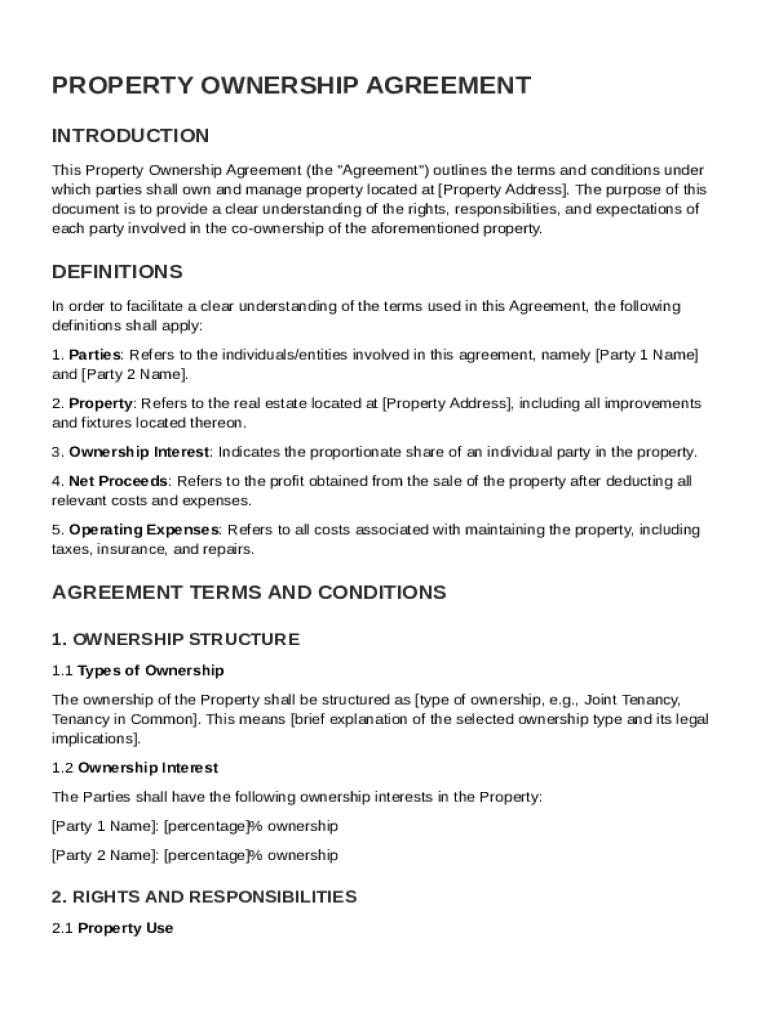
The Property Ownership Agreement Template serves as a legally binding document that outlines the terms and conditions under which two or more parties share ownership of a property. This agreement clarifies the roles, responsibilities, and financial commitments of each party involved. It includes detailed definitions of terms and provides an understanding of how ownership is structured, encompassing the decision-making processes, dispute resolution methods, and conditions for termination. By establishing clear regulations and mutual understanding, this template helps co-owners effectively manage their property and financial obligations.
Key Elements
- Ownership Structure: Defines the percentage of ownership each party holds.
- Financial Contributions: Details initial investments and ongoing financial responsibilities.
- Decision-Making Processes: Outlines how decisions related to the property will be made.
- Dispute Resolution: Provides methods for resolving disagreements between co-owners.
- Termination Conditions: Specifies conditions under which the agreement can be dissolved.
How to Use the Property Ownership Agreement Template
Using the Property Ownership Agreement Template involves several steps to ensure it suits the specific co-ownership arrangement. Users start by carefully reviewing the template to understand the default provisions and clauses.
Step-by-Step Instructions
- Initial Review: Understand the terms and identify areas that require customization.
- Customization: Modify sections to reflect the unique co-ownership arrangement, such as altering the financial contribution clause based on party input.
- Consultation: Engage a legal professional to clarify any complex legal language and ensure that all potential scenarios are covered.
- Agreement & Signatures: Once customized, co-owners should thoroughly review the document before signing to ensure consensus and clarity.
- Archiving: Safely store the signed agreement, both digitally and in physical form, for future reference.
Steps to Complete the Property Ownership Agreement Template
Completing the Property Ownership Agreement Template demands attention to detail and an understanding of each section's implications for co-ownership. The process includes gathering essential information and structured input from all parties involved.
Detailed Completion Guide
- Gather Information: Collect data about each party's ownership percentage, contact details, and financial contributions.
- Complete Sections: Fill in all predefined sections, ensuring accuracy in the legal details and financial numbers.
- Incorporate Specific Clauses: Add any unique agreements or additional clauses necessary for your specific situation, such as usages or maintenance schedules.
- Review & Revise: Evaluate the agreement as a group to confirm all terms meet the expectations and requirements of each party.
- Finalize with Signatures: Each party should sign the document to formalize the agreement, ensuring a mutual understanding and commitment.
Who Typically Uses the Property Ownership Agreement Template
The Property Ownership Agreement Template is primarily used by individuals and entities engaging in co-ownership arrangements. This includes friends, family members, or business partners investing together in real estate.


Typical Users
- Couples: Joint property purchasers like newlyweds or long-term partners.
- Family Members: Siblings or relatives co-owning family property.
- Business Associates: Partners or investor groups co-owning commercial real estate.
- Real Estate Investors: Clients working with investment entities sharing properties.
Important Terms Related to the Property Ownership Agreement Template
Understanding key terms within the Property Ownership Agreement Template is essential for smooth communication and efficient management of the co-owned property.
Key Terms
- Tenancy in Common: A type of co-ownership where parties may hold unequal shares.
- Joint Tenancy: An ownership model that provides equal shares and rights for all owners.
- Right of Survivorship: A clause often part of joint tenancy that allows a surviving owner to inherit a deceased owner’s share.
- Equity Investment: The financial contribution made by each owner toward the property purchase.
Legal Use of the Property Ownership Agreement Template
The Property Ownership Agreement Template adheres to legal standards to ensure enforceability while providing a framework for shared property ownership.
Legal Considerations
- Enforceability: The agreement is a legally binding document when signed and witnessed.
- Compliance: Must adhere to state-specific property ownership laws and regulations in the U.S.
- Dispute Resolution: Incorporates legal procedures for resolving disputes to avoid litigation.
State-Specific Rules for the Property Ownership Agreement Template
While the template aims to provide a universally applicable structure, specific elements may vary based on state laws and regulations. It’s crucial for co-owners to adjust the template to comply with these jurisdictional requirements.
State Variations
- Community Property States: Ownership laws differ significantly and require specific clauses.
- Property Tax Regulations: Vary across states and may affect financial contributions and responsibilities.
- Local Real Estate Laws: Influence requirements for disclosure and registration of ownership.
Examples of Using the Property Ownership Agreement Template
Real-world scenarios where the Property Ownership Agreement Template is applied can illustrate its practical benefits and how it resolves potential issues among co-owners.
Practical Use Cases
- Joint Investments: A group of investors purchasing a rental property use the agreement to define revenue sharing and maintenance responsibilities.
- Inheritances: Siblings inheriting a family home utilize the template to organize shared use and responsibilities.
- Shared Primary Residences: Couples use the template to outline terms related to property improvement contributions and ownership rights upon separation.