Definition and Meaning of a Professional Agreement Template
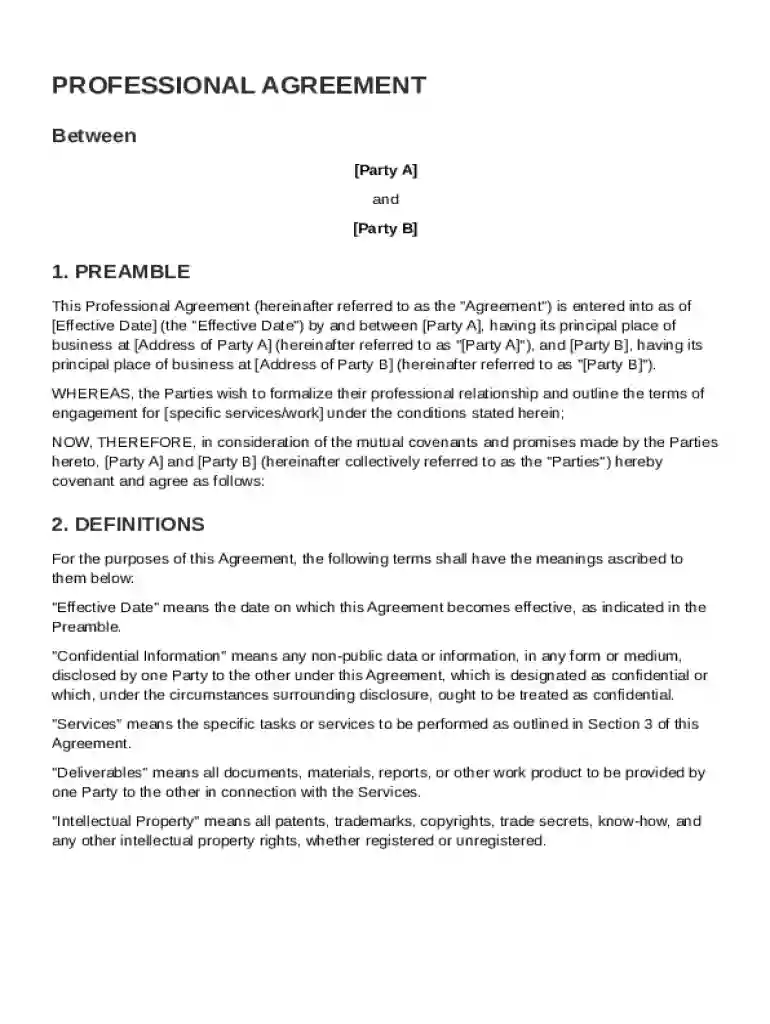
A Professional Agreement Template serves as a premade form designed to outline the terms and conditions of a professional relationship between two or more parties, typically referred to as Party A and Party B. This template helps in setting clear expectations around service provision, scope, and responsibilities. It typically includes clauses covering compensation, confidentiality, intellectual property, termination conditions, and dispute resolution mechanisms. By offering a structured framework, these templates aim to prevent misunderstandings and disputes, ensuring all parties are aligned on their rights and obligations.
For instance, in a business consultancy context, a professional agreement might delineate the consulting services to be provided, the payment schedule, and the confidentiality obligations regarding trade secrets. Such templates are instrumental for streamlining contract creation, providing a cost-effective and efficient option for professionals who regularly enter into contractual agreements.
Key Elements of the Professional Agreement Template
A complete Professional Agreement Template usually consists of several critical components tailored to suit the nature of the engagement. These components ensure that all pertinent details are covered:
- Parties Involved: Clearly identify who the participating parties are, along with their contact details.
- Scope of Services: Outline precisely what services will be provided, any deliverables expected, and deadlines.
- Compensation Terms: Specify how and when the payments will be made. Include any retainer or invoicing requirements.
- Confidentiality Clauses: Defines the handling of sensitive information, ensuring it remains protected and private.
- Intellectual Property: Determine ownership of any IP resulting from the professional relationship.
- Termination and Renewal: Set conditions under which the agreement can be terminated or renewed.
- Governing Law: Indicate which state laws will govern the agreement and any legal proceedings.
These elements help prevent disputes and facilitate a smooth working relationship by providing a clear reference point for all parties involved.
Steps to Complete the Professional Agreement Template
Filling out a Professional Agreement Template involves a sequential and methodical approach to ensure all necessary information is included and agreed upon. Here are the steps to effectively complete the template:
- Identify the Parties: Start by entering the full legal names and contact information of all parties involved.
- Define Services and Obligations: Clearly describe the services to be performed and assign obligations and expectations to each party.
- Agree on Compensation: Detail the payment terms, including methods, schedules, and conditions for any financial exchanges.
- Confidentiality Agreement: Establish the requirements concerning the confidentiality of shared information.
- Specify Intellectual Property Rights: Clearly state who will own any developed IP during the agreement period.
- Outline Termination Conditions: Describe under what circumstances the agreement can be terminated or renewed.
- Choose Governing Law: Select the appropriate jurisdiction that will oversee the terms of the agreement.
Completing these steps ensures that the template accurately reflects the agreement's terms, minimizing potential conflicts or misunderstandings later in the professional relationship.
Who Typically Uses a Professional Agreement Template
Professional Agreement Templates are extensively utilized across various industries and roles. Typical users include:
- Freelancers: Graphic designers, writers, and other freelancers use these templates to formalize work agreements with clients.
- Consultants: Business consultants and management advisors often engage in client agreements using these templates.
- Agencies: Marketing, advertising, and PR agencies leverage these agreements to establish clear service terms with clients.
- Legal and Financial Advisors: Lawyers and financial advisors use such templates to outline service terms and confidentiality with clients.
- Partnerships and Joint Ventures: Businesses entering joint efforts highlight each party’s responsibilities and expectations.
These templates serve as a time-efficient and reliable tool for professionals to manage their business relationships and protect their interests.
State-Specific Rules for Professional Agreement Templates
While a Professional Agreement Template provides a broad structure for agreements, state-specific rules can affect how they are implemented. Key considerations include:
- Governing Law: The choice of jurisdiction can impact contract interpretation due to variations in state law.
- Usury Laws: States have different maximum interest rates that can be charged on overdue payments.
- Non-Compete Clauses: The enforceability of non-compete clauses varies across states.
- Licensing Requirements: Certain professional services may require specific state licenses or certifications.
Users should ensure that their templates comply with state regulations to avoid legal complications. Consulting with a legal expert familiar with local laws can provide further assurance of compliance.
Legal Use of the Professional Agreement Template
A Professional Agreement Template offers legally binding documentation when properly completed and signed by all parties. To ensure legal enforceability:
- Mutual Consent: All parties must willingly agree to the terms.
- Consideration: An exchange of value, such as monetary compensation or services, must occur.
- Capacity: Parties must have the legal capacity to enter a contract, free from duress or undue influence.
- Legal Purpose: The agreement must comply with all applicable laws and regulations.
Well-drafted clauses in professional agreements protect against breaches of contract and provide a legal framework for resolving any disputes.
Examples of using a Professional Agreement Template
Professional Agreement Templates find varied applications across sectors. Here are some examples illustrating their use:
- Consulting Agreement: A management consultancy uses a template to detail project scope, timelines, and fees.
- Creative Services Contract: A graphic designer engages in an agreement with a client, specifying design deliverables and payment milestones.
- Partnership Agreement: Two businesses enter a joint venture, using a template to outline profit-sharing, business strategies, and responsibilities.
- Service Agreement: An IT service provider contracts with a client to provide regular maintenance and support services.
These examples underscore the versatility of Professional Agreement Templates in formalizing diverse professional relationships and transactions.
How to Obtain a Professional Agreement Template
Several channels exist for acquiring a Professional Agreement Template:
- Document Creation Platforms: Online services like DocHub provide customizable templates tailored to various needs.
- Legal Software: Many legal software packages offer template libraries catering to common business agreements.
- Law Firms and Legal Advisors: Some law firms offer template services tailored to industry-specific requirements.
- Online Resources: Websites often provide downloadable templates, ranging from basic to industry-specific agreements.
When selecting a source, ascertain that the template aligns with your specific requirements and complies with pertinent legal standards.