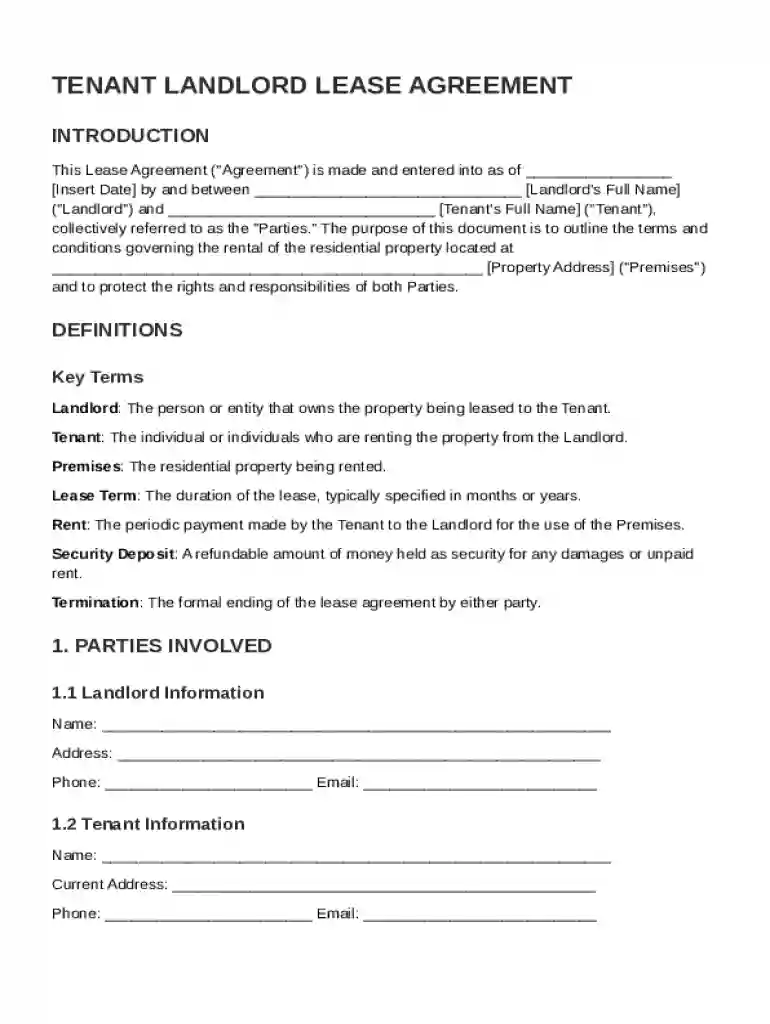
Definition of Tenant Landlord Lease Agreement Template
A Tenant Landlord Lease Agreement Template serves as a standardized legal document outlining the terms and conditions under which a landlord rents a residential property to a tenant. This document includes specific terms such as the identities of both parties, the property address, duration of the lease, payment terms, and other pertinent details that ensure both parties understand their rights and obligations. This template serves as the foundation for creating a binding lease agreement that can be customized to fit the individual needs of a landlord and tenant.
Key Elements of the Tenant Landlord Lease Agreement Template
The template is structured to cover essential components that safeguard both landlords and tenants. Critical elements typically include:
- Identification of Parties: Names and contact details of both landlord and tenant.
- Property Description: Detailed information about the rental unit, including address and unit number.
- Lease Term: Specific start and end dates of the tenancy.
- Rent Payment Instructions: Amount due, due dates, acceptable payment methods, and late fee policies.
- Security Deposit Conditions: Amount required, conditions for its return, and any applicable state laws governing deposits.
- Maintenance and Repairs Obligations: Responsibilities for property upkeep and repair protocols.
- Use Restrictions: Specified usage limitations, such as pet policies or business operations.
- Termination Provisions: Methods for lease termination, notice requirements, and penalties for early termination.
- Miscellaneous Clauses: Other specific conditions such as renewal options or property improvements.
Steps to Complete the Tenant Landlord Lease Agreement Template
Filling out the lease agreement template involves several organized steps:
- Download the Template: Obtain a digital copy from a reputable source, such as DocHub, for customizing.
- Review Template's Clauses: Understand each section of the template to ensure compliance with applicable laws and personal preferences.
- Input Details: Enter all relevant personal and property information in the designated fields.
- Adjust Legal Terms as Necessary: Modify specific clauses to conform with state regulations and unique rental circumstances.
- Add Signatures: Both parties must sign and date the document, which can be done electronically through platforms supporting digital signatures.
- Distribute Copies: Provide electronic or printed copies to all parties and retain a copy for personal records.
Legal Use of the Tenant Landlord Lease Agreement Template
Using a lease agreement template is legally permissible as long as it complies with state-specific rental laws. It creates a legally binding contract when completed and signed by all involved parties. This document becomes enforceable in a court of law, protecting both landlords and tenants by clearly delineating the terms of the rental relationship. It's important to update templates to reflect any changes in real estate law to maintain their legal validity.
Important Terms in the Tenant Landlord Lease Agreement Template
A lease agreement includes several essential terms that must be clearly defined to avoid ambiguities. These terms often include:
- Premises: The specific rental property in question.
- Lease Term: The duration of the rental agreement, whether fixed or month-to-month.
- Rent: Payment amount, schedule, and acceptable payment methods.
- Security Deposit: Funds held by the landlord as protection against damages or unpaid rent.
- Utility Responsibilities: Allocation of responsibility for payment of water, electricity, internet, etc.
- Prohibited Conduct: Activities that are not permitted on the premises, maintaining property order and safety.
State-Specific Rules for the Tenant Landlord Lease Agreement Template
Lease agreements must conform to state-specific regulations, which dictate various terms such as:
- Maximum Security Deposit Limits: States often cap the amount landlords can demand for deposits.
- Notice Requirements for Lease Termination: Varies by state depending on the lease duration; for example, a 30-day notice might be standard for month-to-month leases.
- Rent Control Laws: Certain areas have regulations on how much rent can increase annually.
- Eviction Procedures: States dictate how landlords can legally evict tenants, including required notices and court proceedings.
Examples of Using the Tenant Landlord Lease Agreement Template
Practical scenarios showcasing the template’s application include:
- First-Time Landlords: Using the template as a baseline for creating their initial lease agreements.
- Long-Term Tenancy Renewals: Modify the template for renewing existing leases with updated terms.
- Short-Term Rental Properties: Adapting the lease for vacation homes or short-term rentals ensuring compliance with local laws.