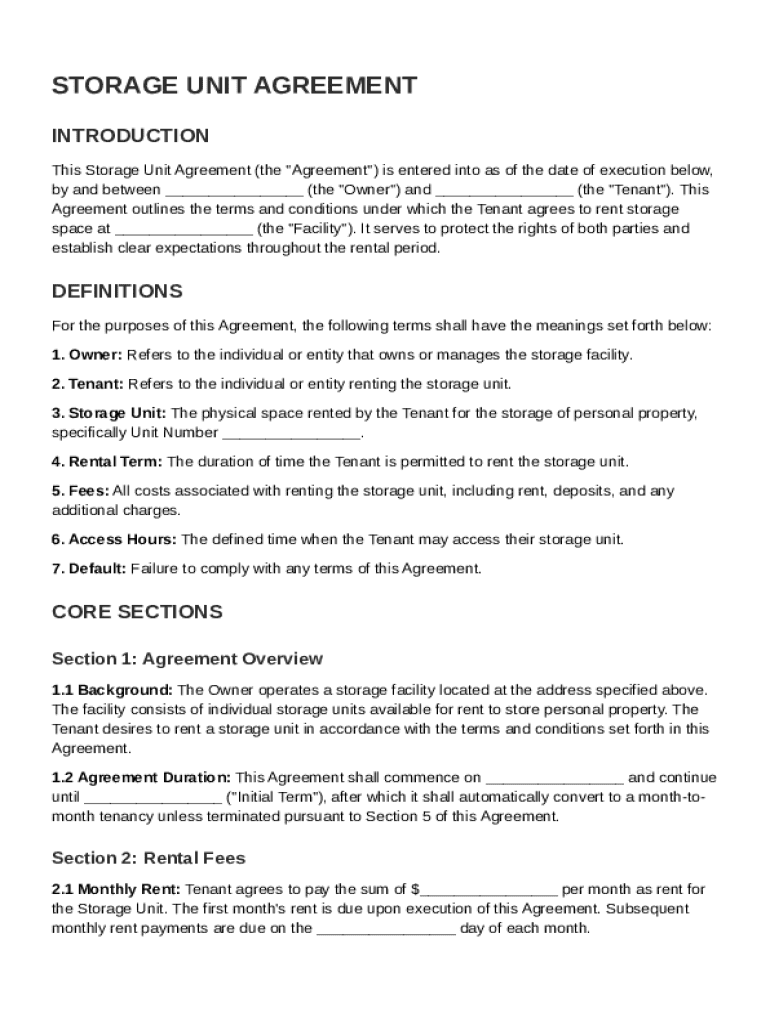







Definition & Meaning
The Storage Unit Agreement Template serves as a legally binding framework outlining the terms and responsibilities between the owner of a storage unit and the tenant. This agreement specifies the conditions under which the storage space is rented, safeguarding both parties by clearly delineating expectations and obligations. Commonly, this template includes sections on rental terms, fees, permitted uses, and conditions of access. It establishes the parameters for the use of the storage facility, detailing security measures and procedures for termination. By formalizing these elements, the agreement aims to mitigate disputes and ensure a clear understanding of rights and responsibilities.
Key Elements of the Storage Unit Agreement Template
The Storage Unit Agreement Template typically comprises several crucial components that form the foundation of the rental arrangement:
- Rental Fees and Payment Schedule: Specifies the cost of renting the unit, payment methods, and due dates.
- Permitted Uses: Details acceptable items and activities within the unit, ensuring compliance with property regulations.
- Access and Security Measures: Outlines tenant access rights and owner security protocols, including operating hours and security systems.
- Termination Procedures: Describes the process for ending the rental agreement, requirements for notice, and conditions for deposit return.
- Liability Disclaimers: Specifies owner and tenant responsibilities regarding damages or losses, establishing accountability.
- Miscellaneous Provisions: Additional clauses, such as alterations, subletting, or insurance requirements, tailored to specific rental arrangements.
How to Use the Storage Unit Agreement Template
Utilizing the Storage Unit Agreement Template efficiently involves a series of strategic steps to ensure its effective deployment:
- Review and Customize: Examine the template thoroughly, adapting sections to reflect specific rental circumstances and legal requirements.
- Fill in Key Details: Input essential information, such as parties' names, unit location, and financial terms, ensuring accuracy and completeness.
- Add Annotations if Needed: Use platforms like DocHub to annotate sections that require further clarification or additional information.
- Review for Compliance: Ensure all elements conform to local regulations and legal standards to prevent potential disputes.
- Seek Legal Advice: Consider consulting a legal professional to review the completed document for additional assurance.
Important Terms Related to the Storage Unit Agreement Template
Understanding key terms associated with the Storage Unit Agreement Template is essential to navigating the document effectively:
- Tenant: The individual or entity renting the storage unit.
- Owner: The party providing the storage space for rent.
- Rent: The monetary compensation paid by the tenant to the owner for the use of the unit.
- Lease Term: The duration for which the unit is rented, typically detailed in the agreement.
- Security Deposit: Funds held by the owner as protection against damages or default, refundable under specified conditions.
Legal Use of the Storage Unit Agreement Template
The legal application of the Storage Unit Agreement Template involves adhering to applicable laws and industry best practices. Parties must ensure that the agreement is comprehensive, transparent, and compliant with state-specific statutes regarding landlord-tenant relationships. Using e-signature tools like DocHub ensures that the document is executed with legally binding intent, conforming to the ESIGN Act. It is recommended to remain informed of updates or changes within local legal frameworks to maintain the contract’s validity.
State-Specific Rules for the Storage Unit Agreement Template
The rules governing storage unit agreements can vary significantly from state to state. Each jurisdiction may have specific statutes addressing tenancy laws, lien procedures for unpaid rent, and consumer protection regulations. It is crucial for both parties to familiarize themselves with these state-specific rules to ensure compliance and protect their interests. For instance, the procedures for handling abandoned property or executing a lien sale may differ, necessitating inclusion in the template based on the state of rental.
Examples of Using the Storage Unit Agreement Template
Real-world applications of the Storage Unit Agreement Template illustrate its utility in diverse scenarios:
- Residential Storage: Individual renters use the template to secure seasonal items or personal belongings during transitions.
- Commercial Use: Businesses leverage these agreements to store inventory or equipment, with tailored terms addressing commercial needs.
- Short-term Rentals: Individuals needing temporary storage during relocations often engage these contracts for brief periods.
Alternatives to the Storage Unit Agreement Template
While the Storage Unit Agreement Template is comprehensive, alternatives or supplemental documents may be suitable in certain contexts. For instance:
- Month-to-Month Agreements: Useful for more flexible, short-term storage needs with adjustable terms.
- Long-Term Lease Contracts: Applied when securing storage for extensive durations, often with negotiated lower rates.
- Custom Agreements: Tailored contracts specifically drafted by legal professionals to address unique circumstances or nuanced legal requirements.
Benefits for Business Users
Businesses, particularly those needing to manage goods or equipment, find value in these agreements:
- Inventory Management: Provides a secured space for excess stock, mitigating overcrowding.
- Cost Efficiency: Offers a cost-effective solution compared to expanding physical business premises.
- Operational Flexibility: Facilitates adjustments based on business demands, with options to upscale or downscale storage usage.