




01. Edit your form online
Type text, add images, blackout confidential details, add comments, highlights and more.

Type text, add images, blackout confidential details, add comments, highlights and more.

Draw your signature, type it, upload its image, or use your mobile device as a signature pad.

Send it via email, link, or fax. You can also download it, export it or print it out.
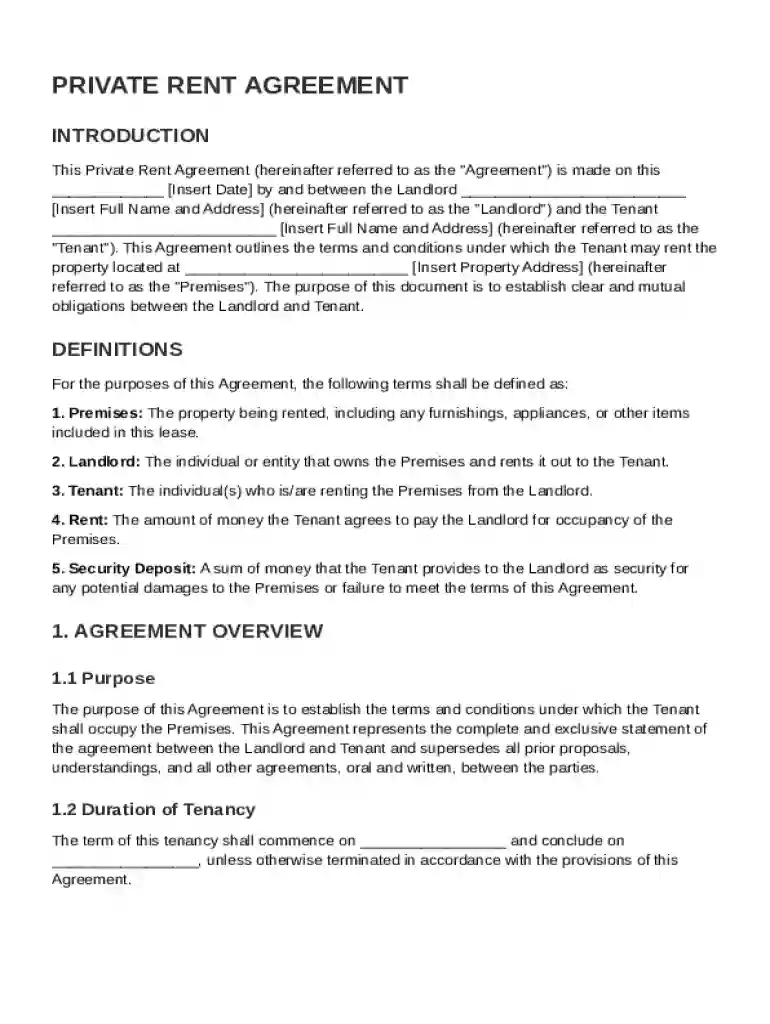
A Private Rent Agreement Template is a standardized document designed to outline the terms and conditions governing the rental of a property between a landlord and a tenant. This agreement provides a structured framework for detailing the obligations, rights, and responsibilities of both parties involved in a rental transaction. Use of such a template ensures clarity and consistency in rental agreements, facilitating smoother transactions and minimizing potential disputes.
Key Components: The template typically includes sections on rental payment schedules, security deposits, duration of tenancy, and procedures for termination. It also defines important terms and covers miscellaneous provisions to address various aspects of the landlord-tenant relationship.
Purpose: Utilizing a template helps both landlords and tenants avoid omissions and ambiguity, creating a legally sound agreement that is enforceable and clear to all involved parties.
A comprehensive Private Rent Agreement Template consists of several critical sections that ensure all aspects of the rental arrangement are covered comprehensively. Each element is crucial for establishing a clear understanding between the tenant and the landlord.
Rental Amount and Payment Schedule: This section outlines the agreed-upon rental amount, due dates, acceptable payment methods, and any applicable late fees.
Security Deposit Terms: Details the amount of the security deposit, conditions for its return, and any deductions that might be made upon lease termination.
Property Maintenance Responsibilities: Specifies the responsibilities of both the tenant and landlord concerning property upkeep and maintenance.
Termination and Renewal Conditions: States the circumstances under which the lease may be terminated or renewed, including notice periods required by both parties.
Obtaining a Private Rent Agreement Template is a straightforward process that can be accomplished through several channels, ensuring convenience and accessibility for users.
Online Platforms: Websites offering legal forms, such as DocHub, provide access to downloadable and customizable rent agreement templates that can be adapted to individual needs.
Legal Assistance: Consulting with a legal professional can provide access to specialized templates tailored to specific circumstances or jurisdictions.
Property Management Companies: These organizations often have standardized forms aligned with current legal standards available for landlords and tenants.
Completing a Private Rent Agreement Template requires attention to detail to ensure that all necessary information is accurately recorded and that the document is legally binding.
Gather Information: Collect all necessary details, including the names of the landlord and tenant, property address, and lease terms.
Fill in Rental Terms: Specify the rental amount, payment schedule, security deposit, and any other financial conditions.
Define Responsibilities: Clarify maintenance obligations and other relevant responsibilities of the landlord and tenant.
Review and Sign: Both parties should thoroughly review the document for accuracy before signing to confirm their understanding and agreement.
Retain Copies: Ensure that both parties have copies of the signed agreement for their records.
Using a Private Rent Agreement Template benefits both landlords and tenants by ensuring all parties are fully aware of their rights and obligations, thereby reducing the likelihood of disputes.
Consistent Documentation: Provides a structured format that ensures no critical information is omitted from the agreement.
Legal Protection: Creates a legally binding document that can serve as evidence in court should any disputes arise.
Clarity in Communication: Enhances communication between the landlord and tenant by clearly defining expectations and responsibilities.
A Private Rent Agreement Template is a legal tool that, once completed and signed, becomes a binding contract between the landlord and tenant. It is important to ensure the template complies with state and federal laws.
Compliance with Local Laws: The template must adhere to the rental laws of the state where the property is located, including rules about security deposits, notice periods, and tenant rights.
Legal Enforcement: The agreement provides a framework for resolving disputes legally, offering a clear record of agreed terms.
Rental laws can vary significantly by state, making it vital to ensure that your Private Rent Agreement Template complies with local regulations.
Security Deposits: States have differing regulations regarding the maximum amount that can be charged as a security deposit and conditions for its return.
Notice Requirements: The amount of notice required for lease termination or rent increases may vary by state.
Tenant Rights: Ensure the agreement respects tenant rights, such as the right to habitable conditions and privacy.
Seeing how the Private Rent Agreement Template is applied in real-world scenarios can provide valuable insight into its practical uses and benefits.
First-time Tenant: A new tenant using the template can clearly understand their obligations and rights, making the rental process less daunting.
Landlord Managing Multiple Properties: A landlord can use the template for consistency across multiple rental properties, ensuring all agreements are standardized.
By utilizing a Private Rent Agreement Template, landlords and tenants can streamline the rental process, ensuring clarity, consistency, and legal compliance in all rental transactions.
At DocHub, your data security is our priority. We follow HIPAA, SOC2, GDPR, and other standards, so you can work on your documents with confidence.


