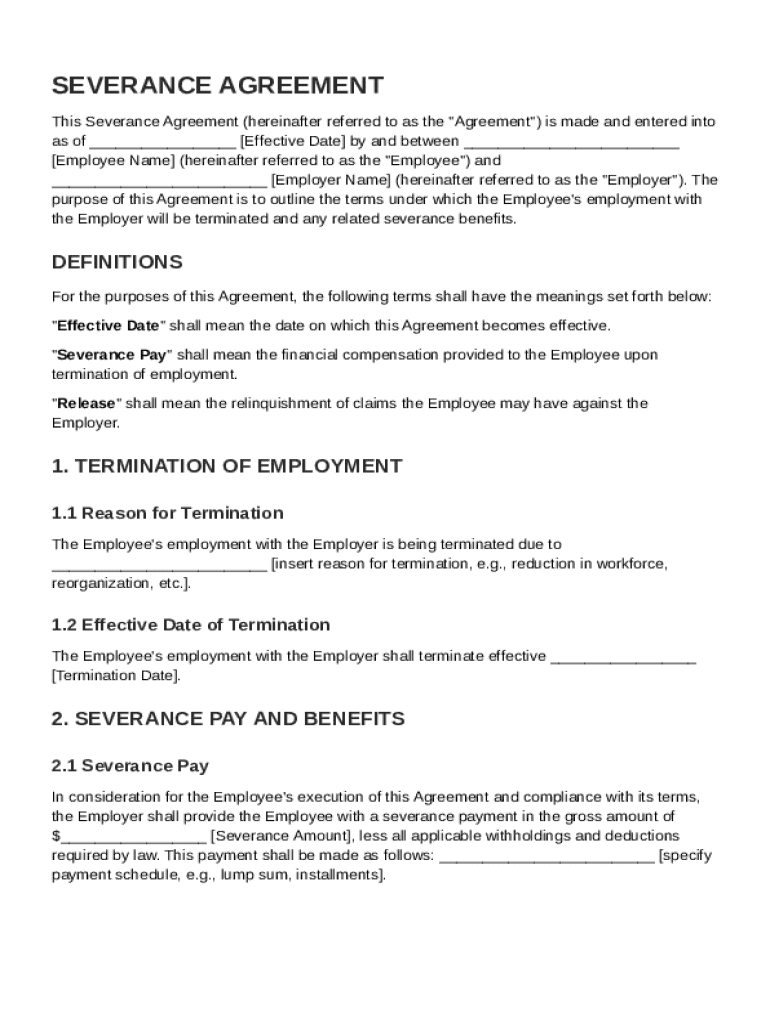







Definition & Meaning
A Severance Agreement Template is a structured document that outlines the terms and conditions under which an employee and an employer part ways. This template provides a comprehensive framework to specify compensation details such as severance pay, continuation of benefits, and the release of legal claims against the employer. Typically included are confidentiality requirements, non-disparagement clauses, procedures for returning company property, and the governing law to be followed. By clarifying these elements, the agreement ensures both parties understand and acknowledge their rights and responsibilities upon the termination of employment. This document serves to mitigate misunderstandings and potential legal disputes, offering a clear path to a mutual separation.
How to Use the Severance Agreement Template
Utilization of a Severance Agreement Template demands understanding its purpose and components. Initially, review all sections to ensure they align with the specific situation and legal requirements. Customize fields such as employee details, termination date, and severance pay amount. Tailor the agreement to reflect any unique clauses relevant to the situation, such as non-compete agreements or specific benefits continuations. Ensure legal compliance by having the agreement reviewed by an attorney who can offer insights into any potential issues or amendments needed. Finally, conduct a thorough review with involved parties to confirm mutual understanding and agreement before execution.
Steps to Complete the Template
-
Gather Information: Collect essential employee details, employment terms, and company policies regarding severance.
-
Customize Sections: Edit standard clauses to reflect company-specific policies, such as severance amount and benefits coverage.
-
Include Legal Provisions: Ensure clauses on confidentiality, non-disparagement, and legal jurisdiction are precise.
-
Review with Legal Counsel: Before finalization, consult an attorney to verify legal compliance and to address any potential legal issues.
-
Finalize and Implement: Confirm agreement from both sides, ensuring signatures are collected and stored securely.
Why Use the Severance Agreement Template
The rationale for utilizing a Severance Agreement Template is grounded in its capacity to standardize and streamline the termination process while minimizing disputes. By utilizing a pre-structured template, companies significantly reduce the time spent drafting unique agreements. This aids in ensuring consistency across all severance agreements, thus maintaining equitable treatment of departing employees. Furthermore, the template provides a mechanism for safeguarding the company from potential litigation by ensuring all legal bases are covered, including the release of claims and confidentiality assurances. This structured approach is pivotal to mitigating risks associated with employment terminations.
Key Elements of the Severance Agreement Template
The Severance Agreement Template encompasses several critical components that are essential for its efficacy:
-
Compensation Details: Specifies the severance pay package including payment schedule and structure.
-
Benefits Continuation: Details any ongoing benefits such as health insurance and their duration post-termination.
-
Legal Release: A release statement wherein the employee agrees not to pursue legal claims against the employer.
-
Confidentiality Clause: Mandates the confidentiality of sensitive company information post-employment.
-
Non-Disparagement: Prevents the employee from making negative statements about the company.
Examples of Using the Severance Agreement Template
-
For Corporate Layoffs: A company implementing a series of layoffs may use the template to ensure every departing employee receives a standardized offer.
-
For Mutual Separations: When an employee and employer agree on a mutual departure, the template clarifies terms amicably.
State-Specific Rules for the Severance Agreement Template
Severance agreements may be subject to varying state laws which can affect enforceability and content. For instance, states like California have specific requirements around non-compete clauses and privacy regulations. Consult local legal expertise to adapt the template for state-specific compliance issues. For employers operating in multiple states, it becomes imperative to incorporate provisions that address these variant legal landscapes.
Legal Use of the Severance Agreement Template
Legal utilization of the Severance Agreement Template involves adherence to federal regulations like the Age Discrimination in Employment Act (ADEA) and the Older Workers Benefit Protection Act (OWBPA), which require specific language to protect employees over 40. The template should be used in good faith to provide fair compensation and should not be crafted to circumvent any legal employee rights. Discourse with a legal advisor is crucial to secure compliance with applicable statutes and to incorporate necessary legal language.
State-by-State Differences
While the basic structure of severance agreements is consistent, variations may arise in terms of enforceability of specific clauses, such as those regarding non-compete and confidentiality. Some states may impose additional requirements or limit certain provisions. It is essential to modify the base template to reflect these state-specific considerations to ensure legal compliance and enforceability.