






Definition and Meaning
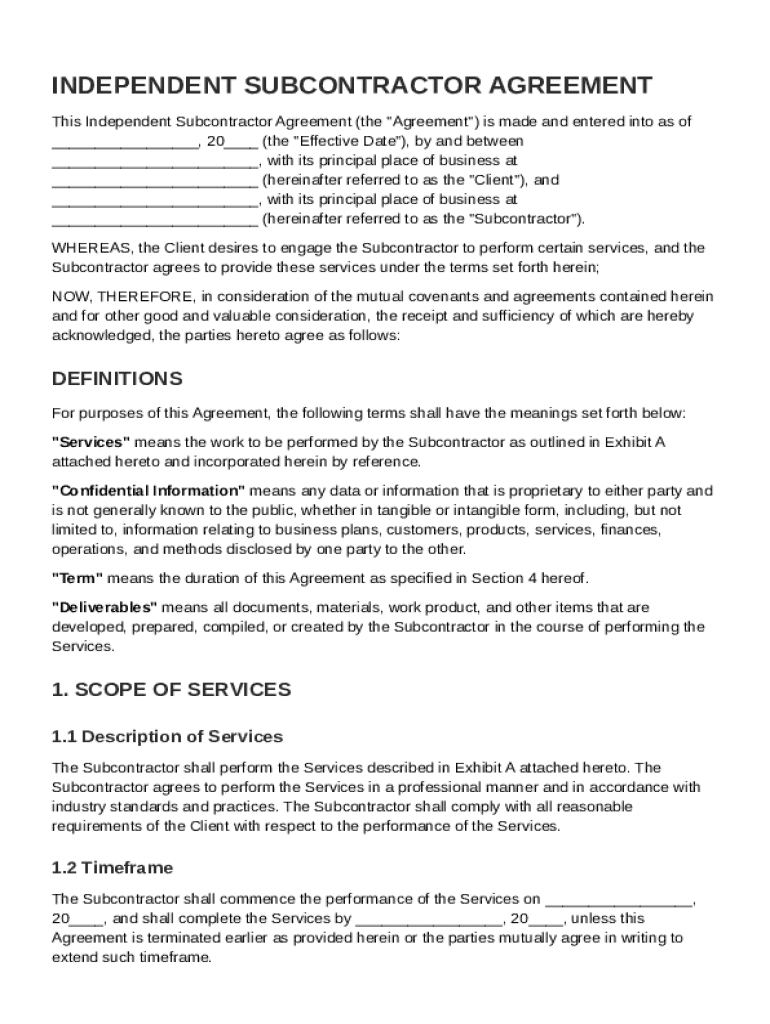
The Independent Subcontractor Agreement Template is a formal document that outlines the specific terms and conditions under which a subcontractor will provide services to a client. This agreement functions as a legally binding contract that defines the roles and responsibilities of both parties. The primary purpose of the template is to distinguish the subcontractor as an independent entity and not an employee of the client. It sets clear expectations regarding deliverables, payment terms, confidentiality, and other critical aspects of the working relationship.
Key Components
- Scope of Services: This section specifies the exact services to be performed by the subcontractor, ensuring both parties have a mutual understanding.
- Compensation Structure: Details on how, when, and under what conditions payments will be made for services rendered.
- Independent Contractor Status: Emphasizes the subcontractor's status as an independent entity, detailing the non-employment relationship.
Key Elements of the Independent Subcontractor Agreement Template
The Independent Subcontractor Agreement Template is comprised of several vital sections that ensure a comprehensive understanding between the client and the subcontractor. These sections collectively provide clarity and mitigate potential disputes.
Primary Elements
- Confidentiality Obligations: Guidelines on how sensitive information should be protected by the subcontractor.
- Indemnification Clauses: Conditions under which the subcontractor agrees to indemnify and hold the client harmless from claims related to the services.
Additional Provisions
- Governing Law: Defines which state’s laws will govern the agreement.
- Miscellaneous Provisions: Covers any additional terms that are unique to the project or relationship.
How to Use the Independent Subcontractor Agreement Template
Implementing an Independent Subcontractor Agreement Template requires a systematic approach to ensure all sections are tailored to the specific needs of the project.
Steps to Utilize the Template
- Review and Customize: Carefully review the template, customizing sections such as the scope of services, compensation, and confidentiality to fit the specific project.
- Legal Review: It is advisable to have the document reviewed by a legal professional to ensure compliance with pertinent laws and regulations.
- Execution: Both parties should sign the agreement to formalize the understanding.
Practical Tips
- Ensure that all necessary appendices or exhibits are attached to the agreement.
- Amend the template to include any project-specific clauses that may not be covered in a generic form.
Legal Use of the Independent Subcontractor Agreement Template
The Independent Subcontractor Agreement Template is a legal document that highlights key aspects of the independent contracting relationship. Its legal use is paramount for setting clear boundaries and expectations.
Compliance and Legal Requirements
- Adherence to IRS Guidelines: Ensure classification as an independent contractor aligns with IRS rules to avoid misclassification.
- State Variances: Check for any state-specific requirements that might affect the legal enforceability of the agreement.
Ensuring Validity
- Legally binding signatures are necessary for the completion of the agreement.
- Consider including an arbitration clause to prevent costly disputes.
Who Typically Uses the Independent Subcontractor Agreement Template
The template is commonly used across various industries and business types. Understanding who typically employs this template can help tailor its use effectively.


Popular Users
- Small Business Owners: Often engage subcontractors to provide specialized services without committing to full-time employment.
- Freelancers and Consultants: Use the template when offering their services to businesses to formalize the terms of engagement.
Business Entity Applications
- LLCs and Corporations: Utilize the agreement to manage temporary or project-based work efficiently.
State-Specific Rules for the Independent Subcontractor Agreement Template
Compliance with state laws is crucial when applying an Independent Subcontractor Agreement Template. Variations can significantly impact the nature of the agreement.
Considerations By State
- Some states have stricter laws regarding worker classification and might require additional clauses concerning labor laws.
- It's important to acknowledge whether the state mandates specific language within the agreement, such as clauses about worker's compensation.
State Laws and Their Impact
- California: The ABC test is applied to determine independent contractor status, emphasizing the need for compliance with stringent state-specific requirements.
Important Terms Related to Independent Subcontractor Agreement Template
Understanding the terminology within the template is crucial for ensuring both parties are fully aware of their rights and obligations.
Common Terms
- Non-Disclosure Agreement (NDA): Often included to protect sensitive information exchanged during the project.
- Termination Clause: Outlines conditions under which the agreement can be terminated by either party.
Definitions That Matter
- Force Majeure: Describes unforeseeable circumstances under which parties are excused from fulfilling contractual obligations.
Examples of Using the Independent Subcontractor Agreement Template
Real-world scenarios illustrate how the Independent Subcontractor Agreement Template can be employed effectively across different contexts.
Case Studies
- Tech Consultancy: A small IT firm uses the agreement to hire a specialist for a cybersecurity audit, specifying deliverables and security protocols.
- Creative Projects: A marketing agency contracts a freelance designer using the template to outline project timelines, payment schedules, and creative rights.
Lessons Learned
- Ensuring all expectations are documented upfront can prevent misunderstandings and enhance business relationships.