






Definition & Meaning
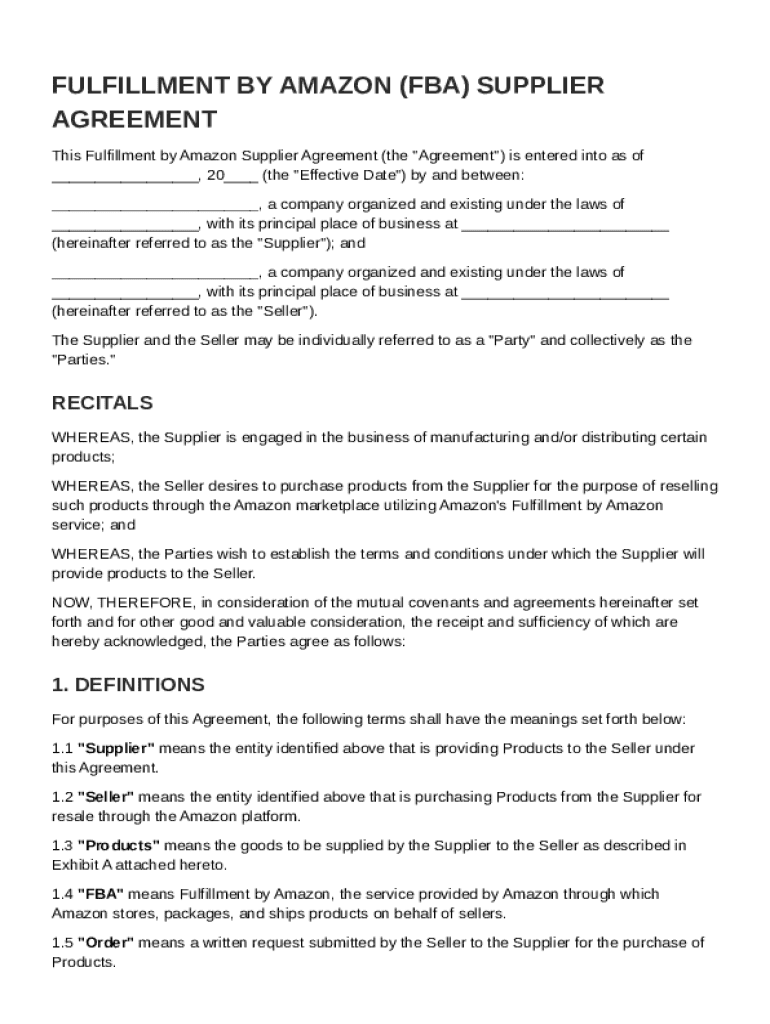
In the context of e-commerce, the FBA Supplier Agreement Template outlines the essential terms and conditions governing the relationship between a Supplier and a Seller who utilizes Amazon's Fulfillment by Amazon (FBA) services. This agreement ensures that both parties are clear on the expectations related to product specifications, order processes, and other operational aspects of selling on Amazon's platform. It often includes details on payment terms, delivery obligations, warranties, confidentiality, indemnification clauses, and dispute resolution. Understanding the definition and purpose of this template is crucial for parties looking to engage in seamless and lawful business transactions on Amazon.
Key Elements of the FBA Supplier Agreement Template
For a comprehensive FBA Supplier Agreement, several elements must be included:
- Product Specifications: Clear descriptions and quality standards required for the products.
- Order Processes: Procedures for placing orders, including timelines and communication protocols.
- Payment Terms: Details on payment schedules, methods, and penalties for late payments.
- Delivery Obligations: Specifics about shipping responsibilities, including timelines and handling procedures.
- Warranties and Returns: Conditions under which products can be returned and warranties offered.
- Confidentiality Agreements: Protection measures for sensitive information shared between parties.
- Indemnification Clauses: Provisions that describe how liabilities and legal issues are managed.
- Dispute Resolution: Outlines methods for resolving conflicts, such as arbitration or mediation.
Each element is designed to minimize misunderstandings and protect the interests of both parties.
Steps to Complete the FBA Supplier Agreement Template
Crafting an FBA Supplier Agreement involves several key steps:
- Identify the Parties: Clearly state the names and contact information of the Supplier and the Seller.
- Define the Products: Include detailed descriptions of the products covered by the agreement.
- Specify Payment Terms: Outline payment methods, due dates, and penalties for delays.
- Detail Delivery Requirements: Provide instructions for packaging, shipping, and delivery timelines.
- Incorporate Legal Provisions: Add clauses on confidentiality, indemnification, and dispute resolution.
- Review Warranties and Returns: Specify conditions under which returns are accepted and guarantees provided.
- Seek Legal Consultation: Have the agreement reviewed by a legal expert to ensure compliance with applicable laws.
Completing these steps thoroughly ensures a robust agreement that meets both legal and operational needs.
How to Use the FBA Supplier Agreement Template
Effectively using this template involves a few strategic actions:
- Review the Template: Familiarize yourself with all sections to understand the scope and requirements.
- Customize for Your Needs: Adapt the content to fit your specific business situation, including any unique terms.
- Communicate with the Other Party: Discuss modifications and ensure mutual understanding and agreement.
- Finalize and Sign: Once both parties agree on the terms, finalize the document with signatures for legal validity.
Using the template correctly can enhance your business relationships and operational efficiency.
Legal Use of the FBA Supplier Agreement Template
Legal considerations are critical in the FBA Supplier Agreement:
- Compliance with Laws: Ensure the agreement adheres to U.S. laws and any specific state regulations.
- Legally Binding: The contract should be formed with intent, consideration, and capacity to be enforceable.
- Use of Electronic Signatures: Leveraging platforms like DocHub for electronic signatures can streamline execution and promote legal validity under the ESIGN Act.
Regular consultations with legal professionals can enhance the legal robustness of your agreement.
Examples of Using the FBA Supplier Agreement Template
To understand its application, consider these scenarios:
- Scenario One: A small electronics manufacturer uses the template to define terms with an Amazon seller, standardizing aspects such as product specs and return policies.
- Scenario Two: An apparel brand collaborates with multiple suppliers through customized agreements to streamline order and payment processes.
Each case demonstrates the template's flexibility and utility in varied situations across industries.
Who Typically Uses the FBA Supplier Agreement Template
The template is primarily used by:
- E-commerce Businesses: Online sellers leveraging Amazon's marketplace for product distribution.
- Suppliers and Manufacturers: Companies seeking to establish clear terms with Amazon sellers.
- Retailers: Physical stores expanding into online marketplaces via FBA services.
The agreement acts as a foundational tool for anyone expanding their sales channels through FBA.


Business Types That Benefit Most from FBA Supplier Agreement Template
The template is particularly beneficial for:
- Small to Medium-sized Enterprises (SMEs): Allows for structured yet scalable agreements.
- Production Companies: Ensures product consistency and quality control through defined specifications.
- Online Retailers: Enhances operational clarity and efficiency in Amazon's competitive landscape.
These businesses find value in the structured terms and provisions the template offers.
Software Compatibility with FBA Supplier Agreement Templates
For ease of management, the agreement can interact with various software tools:
- DocHub: Offers efficient editing, signing, and sharing functionalities for document handling.
- Google Workspace: Integration allows seamless import and export between applications like Google Drive.
- QuickBooks: Utilized for accounting processes related to the financial transactions specified in the agreement.
Software compatibility ensures streamlined management and accessibility of the template across platforms.