






Definition & Meaning
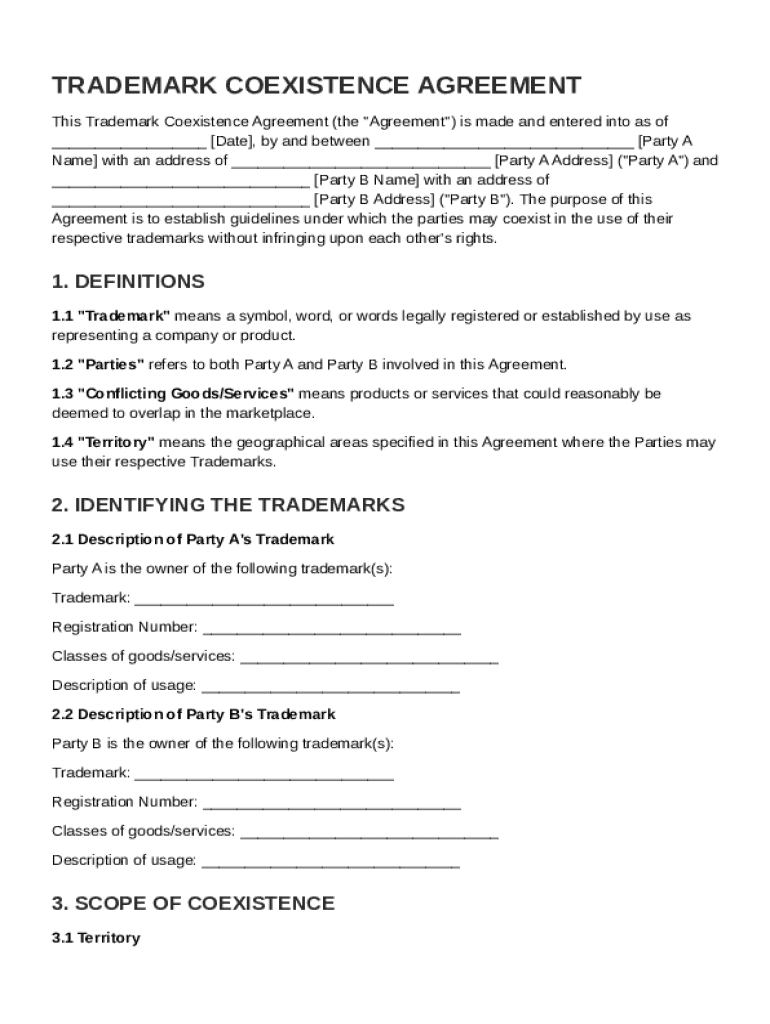
A Trademark Coexistence Agreement is a legal document that establishes the terms under which two entities can use their respective trademarks without infringing on each other's rights. This agreement serves both preventive and cooperative purposes by outlining specific boundaries on the use of the trademarks to avoid future conflicts. It includes descriptions of the relevant trademarks, usage guidelines, designated territories, and responsibilities for each party regarding trademark use and infringement notification. The agreement ensures both parties retain distinctiveness in the marketplace while working collaboratively to prevent misunderstandings. Furthermore, it clarifies procedures for resolving disputes and sets terms for terminating the agreement if necessary.
Key Elements of the Trademark Coexistence Agreement Template
This agreement contains several essential elements to safeguard the interests of both parties. Key components include:
- Definitions and Descriptions: Clearly define each trademark and specify the rights attached to them.
- Usage Guidelines: Detail how each trademark may be utilized and any limitations on use within specified jurisdictions.
- Territorial Scope: Specify the geographic areas where each party can use their trademark without causing infringement.
- Infringement Notification: Outline protocols for notifying the other party if perceived infringement occurs.
- Dispute Resolution: Set forth procedures for resolving any disputes that arise from trademark usage.
- Termination Conditions: Detail the conditions under which the agreement can be terminated by either party.
Each element ensures a mutual understanding and cooperative expectation between the parties involved, protecting their intellectual property rights.
Steps to Complete the Trademark Coexistence Agreement Template
Completing this template involves several steps to ensure accuracy and completeness:
- Identify the Parties: Clearly state the full legal names of both entities involved.
- Outline Trademark Details: Provide detailed descriptions and registration numbers (if applicable) for the trademarks in question.
- Establish Terms: Define usage rights, territories, and guidelines for each trademark.
- Set Infringement Protocols: Detail procedures for how each party should respond to trademark infringement notices.
- Dispute Resolution Terms: Include agreed-upon methods for resolving conflicts, such as mediation or arbitration.
- Include Termination Clauses: Specify conditions under which the agreement may be terminated or amended.
- Review and Finalize: Ensure both parties review the agreement for compliance with their expectations, then sign and date the document.
A step-by-step approach ensures all critical aspects are addressed, reducing potential legal issues later.
Legal Use of the Trademark Coexistence Agreement Template
The Trademark Coexistence Agreement is legally binding, provided it follows state and federal laws and is executed correctly. Legal enforceability requires:
- Compliance with Laws: Ensure the terms align with both the Lanham Act and relevant state trademark laws.
- Mutual Consent: Both parties must willingly consent to the terms and conditions outlined.
- Signatures: Obtain signatures from authorized representatives of each party, indicating acceptance and understanding.
- Consideration: Clearly state any consideration, such as licensing fees, if applicable.
Consult with legal professionals to review the agreement for legal accuracy and safeguard all parties' interests.
Examples of Using the Trademark Coexistence Agreement Template
These agreements are common in industries where similar products or services are offered under brands that might otherwise conflict. For example:
- Retail: Two clothing brands agree on different pricing tiers, preventing customer confusion while expanding market reach.
- Technology: Software companies decide on varied functionalities under similar brand names to avoid infringement.
- F&B Industry: A beverage brand permits a related company to use a similar trademark in a non-competing product line.
Each scenario capitalizes on coexistence agreements to maintain competitive advantage while respecting trademark rights.
Important Terms Related to Trademark Coexistence Agreement Template
Understanding certain legal terms is crucial for interpreting coexistence agreements:
- Infringement: Unauthorized use of a trademark that could create confusion about the source of products or services.
- Distinctiveness: A characteristic that sets a trademark apart from others, essential for legal protection.
- Goodwill: The positive reputation that a trademark holds, often an invisible asset in agreements.
- Dilution: Weakening of a trademark's distinctiveness through unauthorized use, which such agreements aim to prevent.
These terms form the foundation of understanding and executing a robust agreement.
Who Typically Uses the Trademark Coexistence Agreement Template
Such templates are widely used by:
- Large Corporations: To manage broad trademark portfolios across different markets and regions.
- Small Businesses: Seeking to coexist without expensive litigation costs.
- Franchises: Aiming to maintain brand integrity while allowing local variations.
- Legal Professionals: Drafting documents that ensure compliance with intellectual property laws.
The diverse application of these agreements highlights their importance in maintaining brand integrity across industries.


State-Specific Rules for the Trademark Coexistence Agreement Template
Trademark laws can vary based on jurisdictional scope, and compliance with state laws is necessary. Key considerations include:
- State Registration Requirements: Understanding local trademark registration if coexistence involves state law protections.
- Jurisdiction Clauses: Specifying which state's laws govern the agreement to prevent legal ambiguities.
- Variations in Dispute Resolution: Accounting for differing state standards and preferences for handling disputes.
Consulting state-specific directives ensures that coexistence agreements are locally enforceable and legally sound.