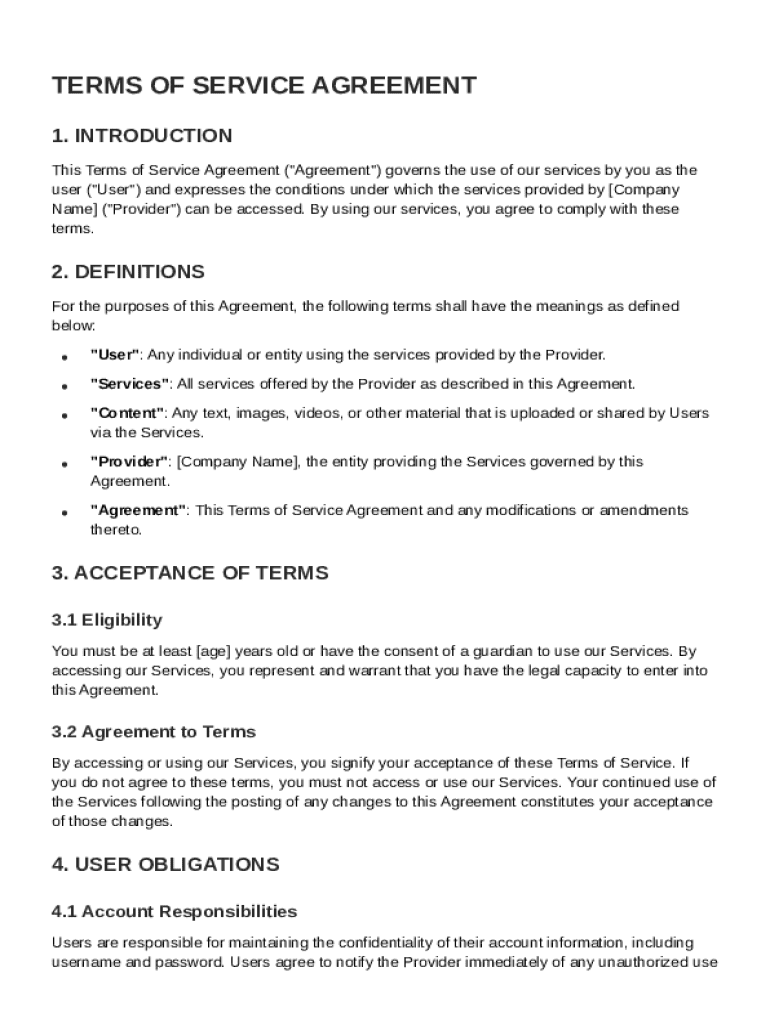







Definition & Meaning
A Terms of Service Agreement Template is a legal document that outlines the rules and guidelines for using a service or platform. It serves as a contract between the service provider and users, detailing their rights, responsibilities, and limitations when accessing and utilizing the service. The agreement ensures that both parties have a clear understanding of the expected conduct and the boundaries within which the service operates. Terms of Service agreements typically cover aspects such as user obligations, intellectual property rights, privacy policies, and processes for dispute resolution. They are essential for protecting both the provider's interests and the user's rights, offering a framework to handle potential issues and liabilities.
Key Components of the Agreement
- User Obligations: Responsibilities users must adhere to, such as proper use of the service and compliance with applicable laws.
- Dispute Resolution: Procedures for handling conflicts, including arbitration and jurisdiction information.
- Intellectual Property Rights: Details on ownership of content created or shared on the platform.
- Termination Clauses: Conditions under which the service can be revoked or restricted.
- Liability Limitations: Clauses that limit service provider responsibility for damages or losses.
How to Use the Terms of Service Agreement Template
Utilizing a Terms of Service Agreement Template involves customizing it to fit the specific needs of a business or service. This process begins by reviewing the template to understand its structure and the standard clauses it includes. The customization phase requires tailoring sections to reflect the organization's unique operations, such as modifying user obligations or inserting specific privacy policies. It is vital to ensure the language remains clear and legally compliant to avoid potential misunderstandings or disputes.
Customization Steps
- Review the Template: Understand the template structure and standard provisions.
- Identify Unique Needs: Determine what specific terms need alteration or addition.
- Modify Clauses: Adjust user obligations, privacy policies, and dispute resolution methods according to your service.
- Legal Compliance: Consult with legal professionals to ensure compliance with relevant laws and regulations.
- Review and Finalize: Carefully examine the final document to ensure clarity and enforceability.
Steps to Complete the Terms of Service Agreement Template
Completing a Terms of Service Agreement Template involves a structured approach to ensure all necessary legal aspects are covered comprehensively. Start by filling in the essential information about the service or platform being provided. Include specific terms that pertain to user conduct, data privacy, and intellectual property. Each section of the template should be tailored to the particular circumstances of the service being offered.
Completion Process
- Service Details: Input the basic information including service name, description, and scope.
- User Conduct Rules: Define acceptable behaviors and prohibited actions for service users.
- Data Privacy Terms: Specify how user data is collected, used, and protected.
- Intellectual Property: Detail ownership rights of content shared or generated using the service.
- Final Checks: Validate the agreement for completeness and legal soundness.
Key Elements of the Terms of Service Agreement Template
A well-constructed Terms of Service Agreement Template should incorporate several key elements that define the legal and operational boundaries of the service. These elements ensure that the agreement covers every critical aspect necessary to protect both the service provider and the user.
Essential Components
- Agreement Scope: Defines the extent of services provided and limitations.
- User Guidelines: Clear instructions on how users should interact with the service.
- Service Modifications: Provisions for future changes to service offerings or policies.
- Governing Law: Identifies the legal jurisdiction that governs the agreement.
- Indemnification Clauses: Specifies user responsibilities in shielding the service provider from legal liability due to user actions.
Who Typically Uses the Terms of Service Agreement Template
Terms of Service Agreement Templates are widely used by various types of businesses and organizations offering services or products to the public. They are particularly critical for online platforms, software providers, and digital service companies, but they can be employed by any entity requiring structured engagement terms with its users.


Common Users
- E-commerce Businesses: Define purchase terms and user responsibilities.
- SaaS Companies: Outline subscription terms and service access protocols.
- Content Platforms: Establish content ownership and sharing guidelines.
- Mobile App Developers: Specify app usage boundaries and data handling practices.

Legal Use of the Terms of Service Agreement Template
Deploying a Terms of Service Agreement Template legally involves ensuring the document complies with local, state, and federal laws. It's important to maintain transparency, ensuring the terms are understandable and accessible to all users. Addressing all relevant legal aspects guards against potential disputes.
Legal Considerations
- Compliance with Laws: Adherence to consumer protection, privacy laws, and digital regulations.
- Transparency: Terms must be clear, visible, and not intentionally misleading.
- Consent: Users must explicitly agree to the terms, often through a checkbox or digital signature.
- Updates and Notifications: Users should be informed and consented to any changes in terms.
State-Specific Rules for the Terms of Service Agreement Template
State-specific rules can influence how a Terms of Service Agreement Template is drafted and enforced. Regulations may differ, affecting liabilities, consumer rights, and data privacy requirements. It's crucial to incorporate these geographic variations into the template to ensure comprehensive legal protection and adherence.
Regional Variations
- Privacy Laws: Additional data protection measures may be required for states like California under CCPA.
- Electronic Signatures: Varying acceptance or additional requirements for electronic agreements.
- Dispute Resolution: Different state laws may influence arbitration or court location clauses.
- Consumer Rights: Extended rights for returning products or canceling services in specific jurisdictions.
Business Types That Benefit Most from the Terms of Service Agreement Template
Various business types derive significant benefits from employing a Terms of Service Agreement Template. These businesses typically involve direct user interaction or transactions, requiring documented terms to manage expectations and responsibilities effectively.
Benefitting Industries
- Digital Service Providers: Protects intellectual property and service functions.
- Online Marketplaces: Offers structured rules for buyer and seller interactions.
- Subscription Services: Clarifies billing cycles, renewals, and cancellations.
- Tech Startups: Shield against liabilities during initial growth phases by providing clear terms.