






Definition and Meaning
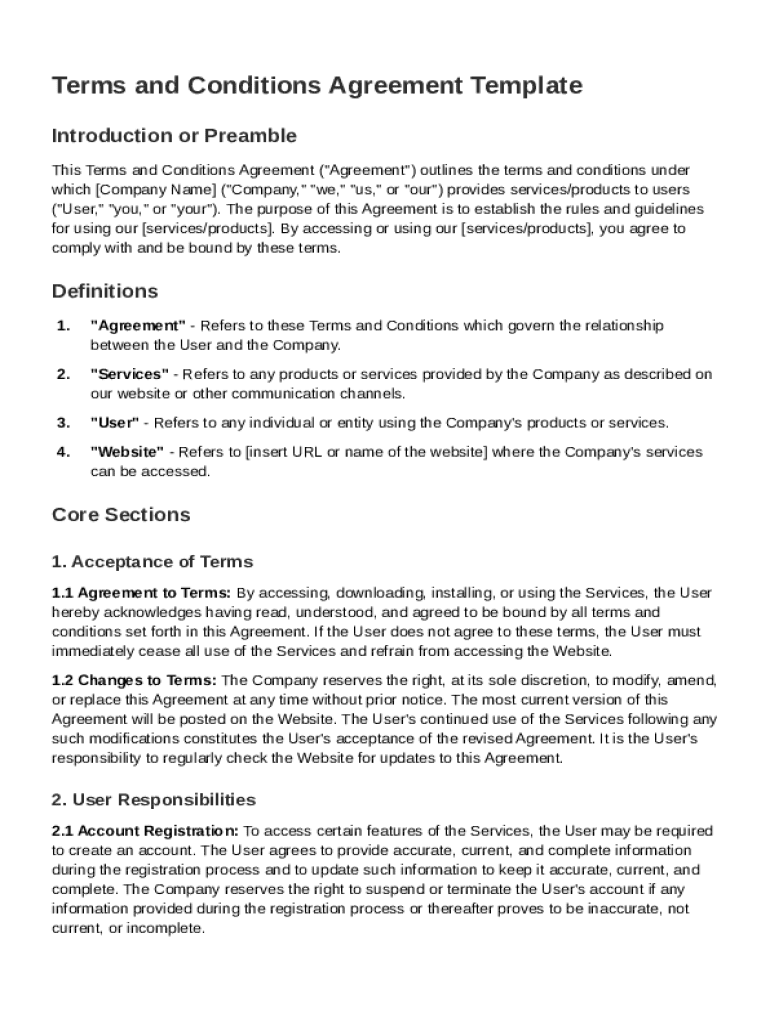
A Terms and Conditions Agreement Template serves as a comprehensive contract drafted to outline the rules and guidelines users must follow to access services or products offered by a company. The document establishes the legal relationship between the business and its users, detailing the terms under which services will be provided. It addresses critical areas such as user responsibilities, service descriptions, and the legal obligations of both parties. This structure not only protects businesses from potential legal disputes but also sets clear expectations for users, ensuring a mutual understanding of the service framework.
Key Elements of the Terms and Conditions Agreement Template
The primary components of a Terms and Conditions Agreement typically include:
- Acceptance of Terms: Explains how users consent to the agreement, often through continued use of the services or a digital signature.
- User Responsibilities: Details obligations users have to ensure compliance, such as maintaining account security and adhering to pertinent laws.
- Service Descriptions: Offers a detailed account of the services provided, including any limitations or conditions tied to usage.
- Payment Terms: Covers aspects of transaction processes, including billing cycles, refunds, and payment methods.
- Intellectual Property Rights: Outlines the ownership and usage rights related to the content, trademarks, and logos of the company.
- Limitation of Liability: Specifies the extent to which the company is liable for damages arising from the use of its services.
How to Use the Terms and Conditions Agreement Template
Utilizing a Terms and Conditions Agreement Template effectively involves several key steps:
- Customization: Tailor the template to suit the specific needs of your business, adjusting language, currency, and legal stipulations to align with your industry and services.
- Clear Language: Ensure that the document is written in plain, understandable language while maintaining legal integrity to avoid any ambiguity.
- Integration: Embed the agreement within user interfaces, such as during account registration or at checkout for e-commerce, to ensure users are aware and agree to the terms prior to proceeding.
- Regular Updates: Revise the agreement regularly to reflect changes in services, legal requirements, or business processes, ensuring ongoing compliance and relevancy.
Legal Use of the Terms and Conditions Agreement Template
Using a Terms and Conditions Agreement Template legally requires adherence to local, state, and federal laws. The agreement must comply with legislation related to consumer rights, online contracts, and electronic transactions. For businesses operating across different jurisdictions, it is crucial to adapt the template to meet the specific legal requirements of each location. Incorporating a "Severability Clause" is advisable, as it ensures that if any part of the agreement is deemed invalid by a court, the remaining provisions will still be enforceable.
Who Typically Uses the Terms and Conditions Agreement Template
The Terms and Conditions Agreement Template is widely used across various sectors, including:
- E-commerce Platforms: To manage transactions, returns, and customer interactions.
- Software Companies: For detailing software licenses, user limitations, and intellectual property rights.
- Service Providers: To stipulate service commitments, billing arrangements, and limitations of liability.
- Community Platforms: To outline user conduct, content policies, and data protection measures.
These users leverage the template to establish legal clarity and operational guidelines within their digital and physical interactions.


Steps to Complete the Terms and Conditions Agreement Template
- Identify Essential Clauses: Determine which standard clauses are required, such as liability limitations or service descriptions.
- Draft Custom Sections: Add industry-specific sections, such as data protection for tech companies or return policies for retailers.
- Consult Legal Counsel: Before finalizing, have a legal expert review the document for compliance and effectiveness.
- Implement and Communicate: Make the agreement accessible to users, ensuring clear communication channels for questions or disputes.
State-Specific Rules for the Terms and Conditions Agreement Template
While the core structure of a Terms and Conditions Agreement remains consistent, specific state regulations may necessitate variations:
- California: Must comply with the California Consumer Privacy Act (CCPA) for businesses that collect personal data.
- New York: Entails specific disclosure requirements on auto-renewal billing practices.
- Texas: Requires adherence to state-specific e-commerce laws regarding digital contracts and consumer rights.
These differences highlight the need for a versatile template that can be adjusted to fit varying regulatory landscapes.
Business Types That Benefit Most from the Terms and Conditions Agreement Template
Businesses that gain substantial benefits from using a Terms and Conditions Agreement Template include:
- Tech Startups: To delineate software usage rights and user responsibilities.
- Online Retailers: For stipulating return policies, payment terms, and customer service protocols.
- Freelancers and Consultants: To outline service delivery expectations, payment schedules, and disclaimers.
For these entities, the template acts as a foundational legal document that supports transparent, fair, and structured interactions with clients and users.
Software Compatibility
The Terms and Conditions Agreement Template can be efficiently managed and distributed using document management systems like DocHub. Compatible with major software like Google Workspace, users can seamlessly import, edit, and store the template without file conversion, ensuring that all revisions and updates are accessible and secure across multiple platforms. Such integration simplifies the cross-functional management of legal documents, particularly within tech-savvy businesses and modern work environments.