






Definition & Meaning
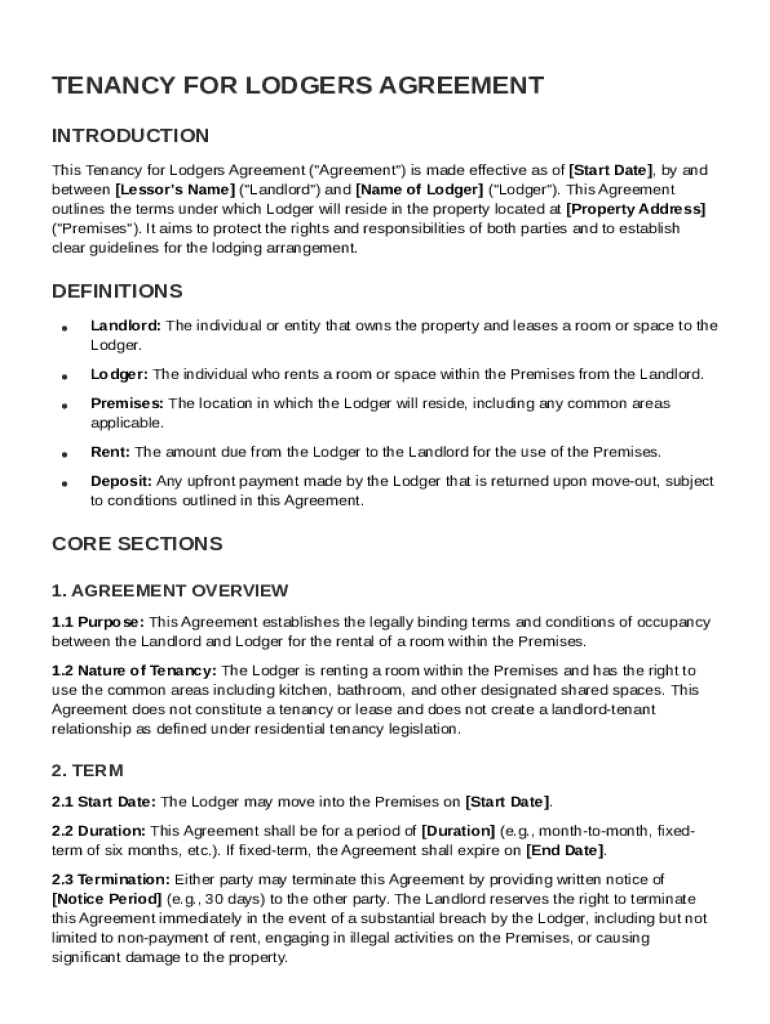
The Tenancy for Lodgers Agreement Template outlines the fundamental terms and conditions under which a lodger rents a room within a property owned by a landlord. This template serves as an essential guide to formalize the lodging arrangement, highlighting roles, obligations, and expectations from both parties. Unlike a traditional lease agreement, this template does not establish a landlord-tenant relationship but sets the groundwork for a mutually agreed occupancy arrangement. For instance, it typically covers aspects such as rent payment schedules, house rules, and dispute resolution processes. By using this form, both lodgers and landlords can ensure that their legal and personal obligations are clearly defined and understood.
Key Elements of the Tenancy for Lodgers Agreement Template
A comprehensive Tenancy for Lodgers Agreement Template includes several critical elements that both the lodger and the landlord should consider:
- Rent and Payments: The agreement will specify the rent amount, due dates, and acceptable payment methods, ensuring clarity around financial responsibilities.
- Security Deposit: Details concerning the security deposit's amount, its purpose, and circumstances leading to its return or forfeiture are outlined.
- Maintenance Responsibilities: Information on who is responsible for maintenance tasks (e.g., lawn care, minor repairs) and what processes are in place for addressing larger maintenance issues.
- Termination Conditions: Conditions under which the agreement can be terminated prematurely by either party, including notice period required.
- Privacy and Access: Provisions describing the landlord's rights to access the lodger's living area and what notice must be given before such access.
- House Rules: Code of conduct covering noise levels, guest policies, and shared area usage to set expectations for communal living.
Including these elements ensures both parties have a mutual understanding and agreement on how the shared space will be managed and lived in.
How to Use the Tenancy for Lodgers Agreement Template
Utilizing the Tenancy for Lodgers Agreement Template effectively requires following specific steps to customize the document to the unique needs of the landlord and lodger:
- Download the Template: Access the template from a reputable source to ensure it includes all necessary sections.
- Customize Information: Input relevant personal and property details such as parties' names, property address, rent amount, and deposit information.
- Review Terms and Conditions: Both parties should review the standard terms pre-inserted in the template and agree on any amendments tailored to their specific arrangement.
- Sign the Agreement: Ensure both parties sign the document, which can be done electronically using tools like DocHub to validate the agreement’s legitimacy.
- Store Securely: Keep a securely stored copy of the signed document digitally or in hard copy for future references or disputes.
Steps to Complete the Tenancy for Lodgers Agreement Template
Completing the Tenancy for Lodgers Agreement Template requires careful attention to detail to ensure all sections are accurately filled out:
- Enter Basic Information: Start by filling in the lodger's and landlord's names, addresses, and contact details as referenced in the template.
- Define Rent and Payment Details: Clearly specify the amount of rent, payment schedule, and preferred payment method to prevent any future misunderstandings.
- Specify Maintenance Obligations: Define responsibilities for maintenance and repairs, whether they fall under the lodger or landlord's purview.
- Clarify House Rules: Establish clear rules regarding the use of shared facilities, noise regulations, and the hosting of guests.
- Set the Termination Clause: Articulate the notice period required for termination and any fees applicable upon premature termination by either party.
- Signature and Date: Finalize the document by obtaining signatures from both parties, complemented with dates to confirm when the agreement takes effect.
Important Terms Related to the Tenancy for Lodgers Agreement Template
Understanding key terminology within the Tenancy for Lodgers Agreement Template is important for clarity and enforcement:
- Lodger: A person who rents a room in another individual's home and shares common facilities with the host.
- Landlord: The property owner renting out a part of their home to the lodger.
- Premises: The property within which the lodger resides, typically including shared areas and the lodger's private quarters.
- Rent: The monetary compensation paid by the lodger for occupancy of the room.
- Security Deposit: A refundable amount collected by the landlord at the start of the tenancy to cover potential damage or unpaid rent.
By familiarizing oneself with these terms, both parties can have a better understanding of their rights and obligations under the agreement.
Legal Use of the Tenancy for Lodgers Agreement Template
The Tenancy for Lodgers Agreement Template serves a crucial legal function by:
- Formalizing the Lodging Arrangement: Provides a legally recognized framework that offers protection to both parties in case of disputes.
- Highlighting Legal Compliance: Ensures that all stipulations comply with state and local laws, particularly concerning occupancy and privacy rights.
- Establishing Legal Recourse: Offers a basis for legal action should either party fail to meet their obligations as per the agreement.
- Documentation for Dispute Resolution: Serves as tangible evidence of agreed-upon terms in any legal proceedings or mediation.
Proper use of the template ensures that both parties are aware of and adhere to legally binding conditions, offering a layer of security and understanding.
Who Typically Uses the Tenancy for Lodgers Agreement Template
This agreement is commonly used by:
- Homeowners: Individuals who wish to rent a part of their home to earn additional income while living in the same premises.
- Students and Professionals: Lodgers who seek affordable housing options in shared accommodations for temporary or academic purposes.
- Property Managers: Professionals tasked with managing shared accommodations for homeowners who do not wish to actively oversee lodgers.
By understanding the common users of this agreement, it is easier to tailor the template to meet their specific situational requirements.


Examples of Using the Tenancy for Lodgers Agreement Template
The Tenancy for Lodgers Agreement Template finds applicability in various scenarios:
- Urban Areas: In cities where housing is at a premium, homeowners often rent out spare rooms to contribute to urban living affordability.
- College Towns: Property owners near universities frequently offer lodger agreements to students seeking temporary residency during their studies.
- Elderly Hosts: Seniors may offer lodging to provide companionship and security, facilitating mutually beneficial arrangements.
- Temporary Employment: Professionals on short-term assignments may use such agreements to secure temporary housing without committing to long leases.
These examples illustrate the diverse applications and suitability of the template in different living arrangements and contexts.