




Definition and Meaning
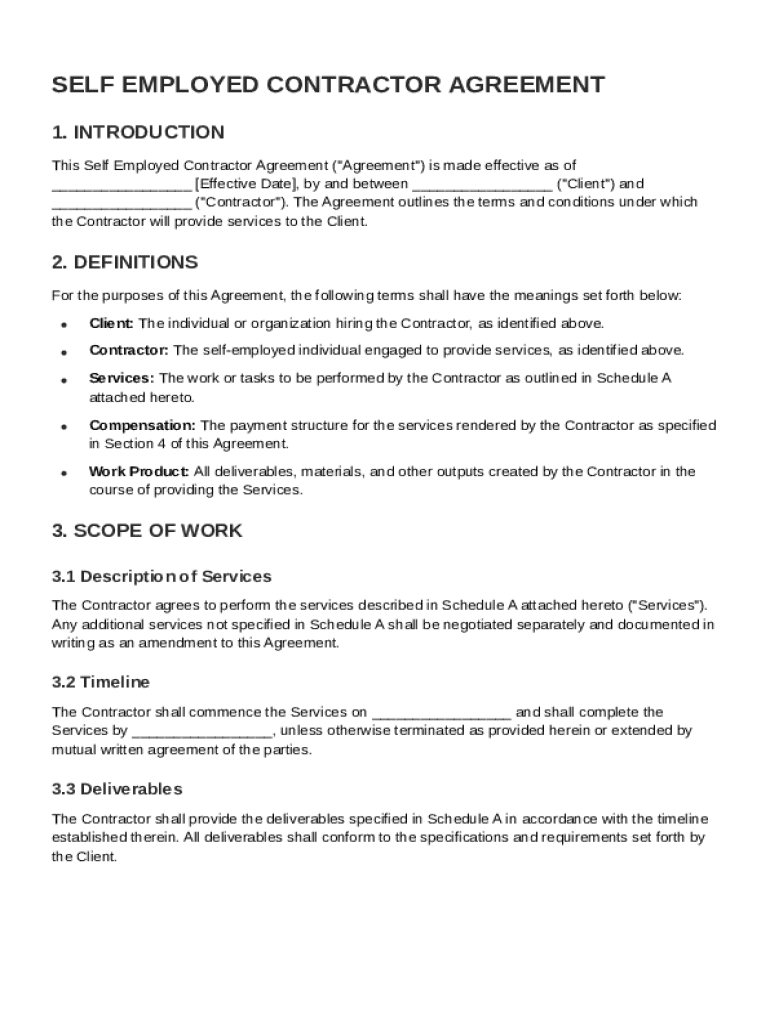
The Self Employed Contractor Agreement Template is a legal document that formalizes the working relationship between a client and an independent contractor. It outlines the terms and conditions related to the provision of services, ensuring clarity and mutual understanding between both parties. This template typically includes key elements such as scope of work, compensation terms, confidentiality obligations, and termination clauses. It establishes the contractor's independence and addresses how intellectual property will be handled.
How to Use the Self Employed Contractor Agreement Template
To effectively use the Self Employed Contractor Agreement Template, begin by filling in the specific details of the agreement. This includes identifying the parties involved, defining the services to be rendered, and setting the duration of the contract. Carefully outline the compensation structure, whether it is hourly, project-based, or a flat fee, and specify payment schedules. It is also important to highlight any confidentiality agreements, intellectual property rights, and provisions for early termination. Review the entire document for completeness and have it signed by both parties.
Practical Example
For instance, if a graphic designer is contracted to create a branding package, the agreement would detail the specific deliverables, deadlines, and payment terms. It would also clarify ownership of the designs upon completion, ensuring all parties understand their rights and obligations.
Key Elements of the Self Employed Contractor Agreement Template
Key elements of this template include a clear definition of the scope of work, which describes in detail what the contractor is expected to deliver. Compensation details should specify not just how much and when the contractor will be paid, but also any expenses that will be reimbursed. Other important elements include clauses addressing confidentiality, intellectual property rights, and terms under which the contract can be terminated. Governing law should also be specified, detailing which state’s laws will apply in case of a dispute.
Detailed Breakdown
- Scope of Work: Defines the tasks and responsibilities of the contractor.
- Compensation: Details payment structure and reimbursable expenses.
- Confidentiality: Ensures sensitive information remains protected.
- Termination Clauses: Outlines conditions under which the agreement can be ended.
Steps to Complete the Self Employed Contractor Agreement Template
- Identify Parties Involved: Clearly list the names and contact information of both the contractor and the client.
- Define the Scope of Work: Describe in detail the tasks the contractor is expected to perform.
- Set Compensation Terms: Outline how much the contractor will be paid and when.
- Include Confidentiality Agreements: Specify how confidential information will be handled.
- Outline Termination Conditions: Detail how and when either party can terminate the agreement.
Legal Use of the Self Employed Contractor Agreement Template
This template provides a legal framework that protects both the contractor and client by clearly establishing their rights and responsibilities. It ensures compliance with labor laws by maintaining the contractor's independent status and helps avoid potential legal disputes by specifying terms around confidentiality and intellectual property. It is vital for both parties to understand that this agreement does not create an employer-employee relationship, preserving the contractor's autonomy.
Software Compatibility
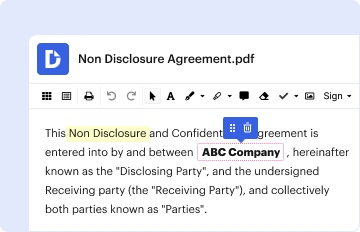
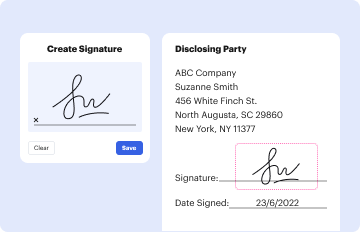
The Self Employed Contractor Agreement Template is compatible with various software, making it accessible and easy to complete. It can be edited using PDF editors, word processors compatible with DOC/DOCX files, and can also be filled out digitally using tools like DocHub. This compatibility ensures users can seamlessly integrate this template into their document workflow irrespective of the software ecosystem they use, whether on desktop or mobile devices.
Important Terms Related to the Self Employed Contractor Agreement Template
Some critical terms include "Independent Contractor," which underscores the contractor's freedom from the client's control over how the work is performed, and "Confidential Information," which refers to any sensitive data that must be protected. "Termination" refers to the conditions under which the agreement can be ended, and "Indemnification" sets forth obligations of the contractor to protect the client from any potential legal liabilities arising from the contractor's actions.
State-Specific Rules for the Self Employed Contractor Agreement Template
While the template provides a comprehensive structure, users must ensure that it aligns with state-specific laws governing independent contractor agreements. For example, states like California have strict criteria for determining independent contractor status under the ABC test. Users may need to adjust specific clauses to comply with local regulations, which may involve consulting with a legal professional to ensure full compliance with state-specific labor laws.