
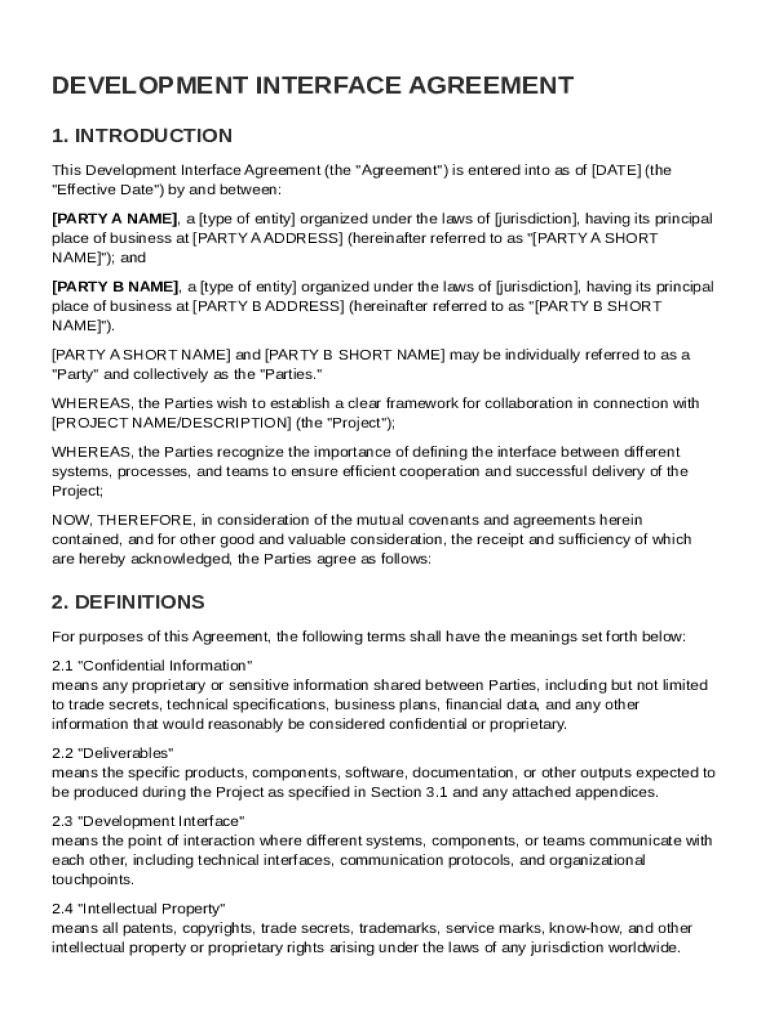







Definition & Meaning
The Development Interface Agreement Template serves as a comprehensive document detailing the framework for collaboration between two parties in a specific project. This template defines the roles, responsibilities, technical specifications, intellectual property rights, confidentiality obligations, and dispute resolution processes. The agreement outlines a structured process for communication and cooperation, ensuring successful project delivery by maintaining clarity and organization in all critical aspects of the partnership.
Key Elements of the Development Interface Agreement Template
The Development Interface Agreement Template includes several key elements that must be carefully addressed to create a robust agreement:
- Roles and Responsibilities: Clearly defines each party's duties, outlining what is expected to prevent any ambiguities.
- Technical Specifications: Lists requirements that need to be met for the project to ensure both parties have aligning objectives and a mutual understanding.
- Intellectual Property Rights: Establishes the ownership rights for any creations or inventions developed during the project, protecting both parties' interests.
- Confidentiality Obligations: Ensures that sensitive information shared between the parties remains confidential and secure.
- Dispute Resolution Processes: Provides a clear method for resolving any disagreements that may arise, including mediation or arbitration.
Steps to Complete the Development Interface Agreement Template
- Identify Parties: Begin by accurately listing the names and contact information of all parties involved.
- Define Scope of Work: Clearly outline the objectives, deliverables, and timelines of the project to ensure mutual understanding.
- Specify Technical Requirements: Include detailed technical specifications and standards that the project must adhere to.
- Determine Intellectual Property Rights: Clarify ownership and usage rights for any inventions or works created under the agreement.
- Address Confidentiality: Detail the confidentiality measures both parties will undertake to protect sensitive information.
- Outline Dispute Resolution Procedures: Provide a structured approach for handling potential disputes through established mechanisms.
Legal Use of the Development Interface Agreement Template
Legal use of the Development Interface Agreement Template involves complying with the relevant contractual laws applicable in the United States. Such agreements are legally binding, meaning they enforce accountability and protect both parties' interests. For legal enforceability, the agreement should be signed by authorized representatives of each party. Moreover, involving legal counsel in drafting or reviewing the agreement is highly advisable to ensure it adheres to all applicable laws and addresses the specific needs of the project adequately.
Who Typically Uses the Development Interface Agreement Template
The Development Interface Agreement Template is primarily used by businesses and organizations engaged in joint projects or partnerships. This includes:
- Technology Firms: Collaborating on software development or IT infrastructure projects.
- Engineering Companies: Engaging in large-scale construction or manufacturing projects.
- Research Institutions: Partnering on scientific studies or exploration initiatives.
- Marketing Agencies: Coordinating creative campaigns involving multiple stakeholders.
These entities rely on the template to formalize their collaborative projects, ensuring clarity and structured planning from inception to completion.


Business Types that Benefit Most from Development Interface Agreement Template
Several business types derive significant advantages from employing the Development Interface Agreement Template:
- Startups: When partnering with larger companies for technology development.
- Multinational Corporations: Engaging in global projects requiring precise and binding agreements.
- Joint Ventures: Between businesses aiming to combine resources for a common goal.
- Government Contractors: Working on public sector projects involving multiple subcontractors.
These businesses benefit by mitigating risks, streamlining processes, and ensuring successful project outcomes through clear guidelines and expectations provided by the template.
How to Use the Development Interface Agreement Template
Utilizing the Development Interface Agreement Template involves several essential steps to ensure its effectiveness:
- Customization: Tailor the template to fit the specific needs and requirements of the project. Customization should include all relevant technical and legal details specific to the collaboration.
- Collaboration: Engage all parties in reviewing and commenting on the draft to ensure consensus and address any potential concerns or modifications.
- Finalization: Finalize the document by incorporating agreed-upon changes. Ensure the document is thoroughly reviewed for compliance with legal standards.
- Execution: Once finalized, all parties should sign the agreement, and each party should retain a copy for their records.
By following these steps, parties ensure the agreement comprehensively addresses project needs and protects mutual interests.
Important Terms Related to Development Interface Agreement Template
Understanding several critical terms is essential when using the Development Interface Agreement Template:
- Deliverables: Specific outputs or results that the project is expected to achieve.
- Milestones: Key points or stages of progression within the project timeline.
- Arbitration: A method of dispute resolution where a neutral third party provides a binding decision.
- Indemnification: A provision ensuring that one party compensates another for any losses or damages incurred.
- Force Majeure: A clause relieving parties from fulfilling contractual obligations due to unforeseen events beyond their control.
These terms help clarify various aspects of the agreement, ensuring all parties have a mutual understanding of their meanings within the contract's context.




