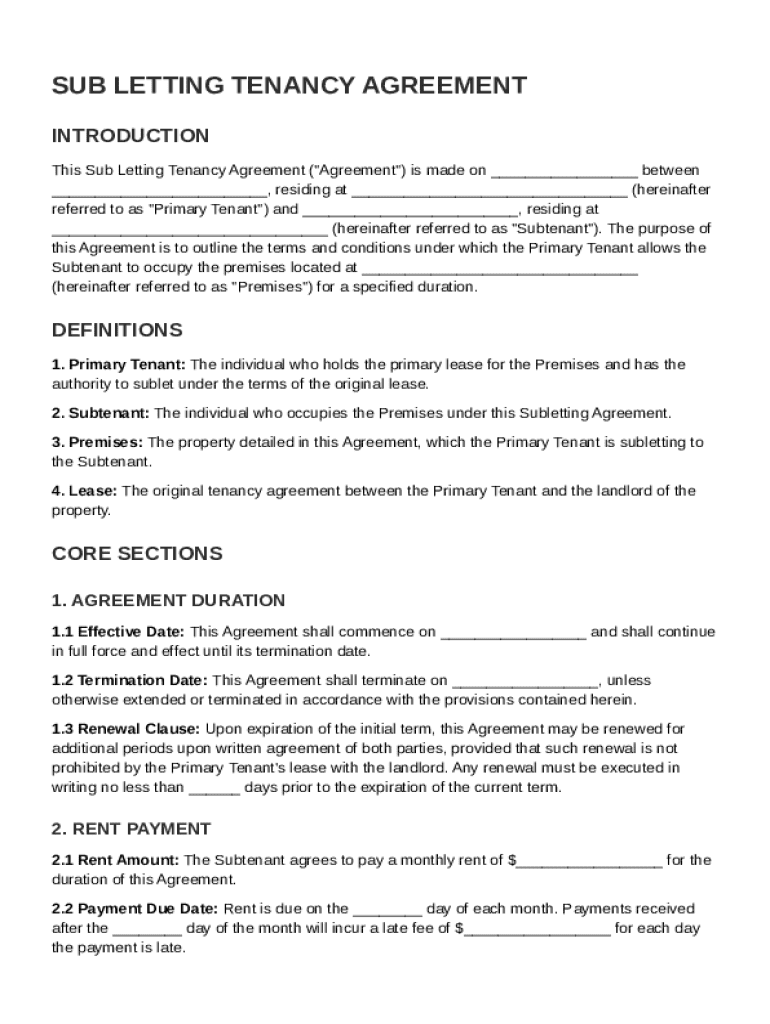







Definition & Meaning
A Sub Letting Tenancy Agreement Template is a legal document that outlines the arrangement between a primary tenant and a subtenant. It permits the subtenant to occupy a property that the primary tenant rents from a landlord. This agreement is essential when the original tenant (sublessor) needs to vacate the premises temporarily and wishes to sublet the property to another individual (sublessee). The document clarifies the responsibilities and rights of each party, including duration, rent, security deposits, and property maintenance, ensuring compliance with the terms of the primary lease.
The agreement provides a clear framework that addresses potential disputes and ensures that all parties understand their obligations and rights. Subletting can often occur in scenarios such as extended travel, work assignments, or educational pursuits, where the primary tenant wishes to maintain their lease but not occupy the premises. This arrangement must typically receive landlord approval, depending on the terms of the original lease.
Key Elements of the Sub Letting Tenancy Agreement Template
A comprehensive Sub Letting Tenancy Agreement should include several crucial elements to provide clarity and avoid disputes:
- Identities of Parties: The names and contact details of both the primary tenant (sublessor) and the subtenant (sublessee) must be included.
- Property Description: This should encompass the full address and any specific areas of the property included in the sublet.
- Term of Sublease: Clearly stated start and end dates for the sublease period.
- Rent Payment Details: Amount, due date, payment method, and any late fees should be outlined.
- Security Deposit: Any deposit required by the sublessor from the sublessee must be addressed along with stipulations for return conditions.
- Utility Responsibilities: Specify whether utilities are included in the rent or require separate payment.
- Maintenance and Repairs: Clarification regarding who handles maintenance, repairs, and associated costs.
- Use of Premises: Rules surrounding the use of the property, including restrictions on alterations or specific activities.
- Termination Conditions: Circumstances under which the agreement can be terminated by either party.
- Governing Law: Jurisdiction under which any legal disputes will be resolved is typically stated.
These elements ensure that both parties understand their responsibilities and commitments throughout the sublease period.
How to Use the Sub Letting Tenancy Agreement Template
Utilizing a Sub Letting Tenancy Agreement Template involves several steps to ensure that it is completed correctly and legally binding:
- Review Original Lease Agreement: Check the primary lease to verify that subletting is permitted and identify any conditions set by the landlord.
- Fill Out Personal Information: Enter the names and contact information of the sublessor and sublessee.
- Detail the Property: Describe the property accurately, ensuring that it corresponds with the description in the original lease.
- Set Terms and Conditions: Clearly outline the start and end dates of the sublease, rent details, and any specific rules about the property’s use.
- Discuss and Agree on Terms: Both parties should review the agreement, discuss any amendments, and reach mutual consent.
- Sign and Date the Document: Both parties need to sign the agreement to formalize it. Witnesses or notarization may be beneficial for added legal protection.
- Provide Copies to All Parties: Ensure both the sublessor and sublessee have signed copies of the agreement.
This process ensures that both parties have a clear, mutual understanding of their obligations during the sublease.
Steps to Complete the Sub Letting Tenancy Agreement Template
Achieving a complete and legally binding document involves the following detailed steps:
- Gather Information: Accumulate all necessary information regarding the identities of the involved parties and the property specifics.
- Review Original Lease: Assess restrictions and permissions related to subletting from the original lease.
- Draft the Agreement: Fill in the agreement template with precise details, including financial obligations and timeframes.
- Verify and Adjust Terms: Ensure that the terms are fair and legal; negotiate changes if any part is contentious between parties.
- Review Legislation: Confirm compliance with applicable state laws concerning subletting.
- Seek Legal Advice: Consider consulting a legal professional to verify that the document adheres to local regulations.
- Final Signatures: Once agreed upon, both parties should sign, with the option of having it witnessed for additional security.
- Distribute Final Document: Provide each party with a copy for their records.
Completing these steps meticulously can prevent future misunderstandings or legal complications.
Legal Use of the Sub Letting Tenancy Agreement Template
The legal standing of a Subletting Tenancy Agreement Template is dependent on adherence to both local real estate laws and the provisions of the initial lease agreement. Subletting without landlord consent, when required, could lead to eviction or legal action against the primary tenant.
- Landlord Approval: Many lease agreements require written permission from the landlord to proceed with a sublease.
- State Laws: Different states have specific regulations and requirements that must be followed to create a legally binding sublease.
- Compliance with Local Ordinances: Ensure compliance with municipal codes regarding occupancy limits, safety, and housing standards.
- Conflict Resolution: The agreement should outline procedures for resolving disputes, such as mediation or arbitration, instead of litigation.
Adhering to these legal considerations is crucial for the enforceability of the subletting agreement.
Important Terms Related to Sub Letting Tenancy Agreement Template
Understanding key terminology within the Subletting Tenancy Agreement is vital for both parties:
- Sublessor: The primary tenant who subleases the property to another individual.
- Sublessee: The secondary tenant who occupies the property temporarily through a sublease.
- Premises: The specific property designated for subtenancy.
- Security Deposit: A sum of money held by the sublessor as security for damages beyond standard wear and tear.
- Lease Term: The duration that the sublease is in effect.
- Consent to Sublease: Permission granted by the landlord allowing the primary tenant to sublease the property.
Grasping these terms helps in understanding the roles and responsibilities entailed in the agreement.
State-Specific Rules for the Sub Letting Tenancy Agreement Template
Subletting laws can vary significantly from one state to another, affecting how agreements should be drafted and enforced:
- Permission Requirements: Some states mandate landlord consent for all subleases, while others may allow oral agreements.
- Rent Control and Laws: Certain locations impose restrictions on rent increases and tenant protections that must be respected.
- Security Deposit Regulations: States often have specific rules on how deposits should be handled, returned, and contested.
- Notice Periods: Each state may dictate distinct timelines for providing notice to terminate a sublease.
- Documents and Forms: Certain state or local governments may require additional documentation or disclosures for a valid sublease.
Compliance with state-specific rules ensures that the subletting agreement is legally upheld.
Who Typically Uses the Sub Letting Tenancy Agreement Template
The users of Subletting Tenancy Agreements vary but usually include:
- College Students: Often sublet during summer internships or study-abroad programs.
- Professionals on Temporary Assignment: Individuals relocating temporarily for work but intending to return.
- Travel Enthusiasts: Tenants who frequently travel and wish to retain their lease in their absence.
- Seasonal Workers: Individuals occupying areas intermittently due to seasonal employment patterns.
- Tenants Seeking Financial Relief: Renters aiming to mitigate costs by subletting unused portions of their leased space.
Understanding the user base can inform the drafting of agreements to better meet the needs of these groups.