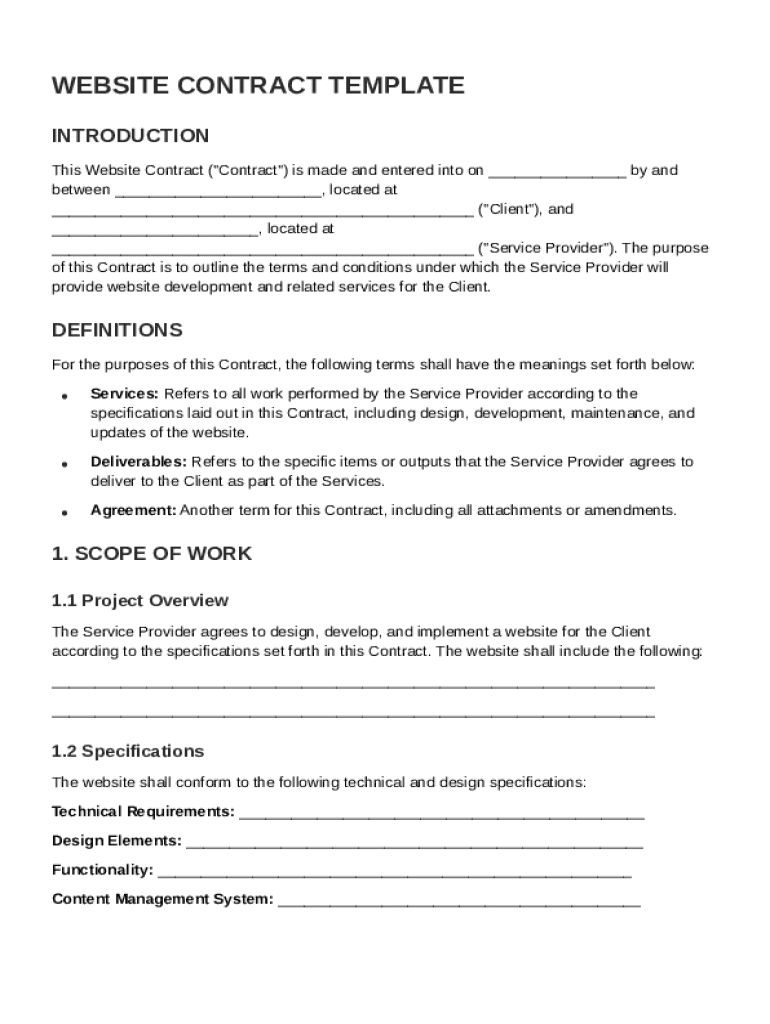







Definition & Meaning
A Website Contract Template is a standardized document that outlines the terms and conditions between a service provider and a client for the development of a website. The purpose of this template is to establish a clear framework for the project, ensuring both parties understand their responsibilities and expectations. It typically includes details such as the scope of work, payment terms, ownership rights, confidentiality agreements, warranties, and liability clauses. By using a structured template, clients and developers can avoid misunderstandings and ensure a smooth workflow throughout the project lifecycle.
Key Elements of the Website Contract Template
Understanding the essential components of a Website Contract Template is crucial for both clients and developers. This section describes the primary elements that are usually included in the agreement:
-
Scope of Work: This part defines the specific tasks and objectives of the website development project. It covers what the developer is expected to deliver and may include timelines, project milestones, and deliverable specifications.
-
Payment Terms: Outlines how and when payments will be made. This could involve an upfront payment, milestone-based payments, or a complete payment upon project completion. It should also specify any penalties for late payments.
-
Ownership Rights: Clarifies who will own the final website and its components, including design, content, and code, once the project is complete.
-
Confidentiality: Ensures that sensitive information shared during the project remains private. Both parties typically agree not to disclose any proprietary information to third parties.
-
Warranty and Liability: Provides assurances regarding the quality and performance of the website and details the extent of liability each party holds in case of problems or defects.
How to Use the Website Contract Template
Using a Website Contract Template effectively involves several steps to ensure that it meets the specific needs of the project and accurately reflects the agreement between both parties.
-
Customization: Start by tailoring the template to the specific needs of your project. Ensure that all sections, such as scope and payment terms, align with the discussions between the client and developer.
-
Review with Stakeholders: Share the customized template with all involved parties to gather feedback and ensure that everyone is on the same page. This step helps in identifying any potential issues early on.
-
Finalization: Once all parties agree on the content, make any final revisions and have both parties sign the document. It is vital to keep a signed copy for future reference in case of disputes.
Steps to Complete the Website Contract Template
Completing the template involves a series of steps to ensure all aspects of the agreement are clearly defined and legally sound.
-
Gather Information: Collect all necessary information regarding the project, including deadlines, technical requirements, and payment schedules.
-
Fill in the Template: Input the gathered information into the corresponding sections of the template. Be precise in detailing the scope, rights, and responsibilities.
-
Review Legal Terms: It might be necessary to consult a legal professional to verify that all legal terms are correctly stated, especially if the contractual obligation involves large sums or significant business stakes.
-
Sign and Store: Once the template is complete and agreed upon by both parties, ensure it is signed by all relevant stakeholders. Store the document in a secure location for easy access.
Why Use a Website Contract Template
Using a Website Contract Template provides numerous benefits, especially for ensuring clarity and legal protection.
-
Consistency: A template ensures that all essential elements are included every time, maintaining consistency across different projects.
-
Efficiency: Templates save time because you don't have to draft a contract from scratch for each new project.
-
Legal Assurance: A well-structured template can minimize legal risks by covering all bases and helping you comply with relevant laws and regulations.
Legal Use of the Website Contract Template
For the Website Contract Template to be legally binding, it must comply with laws and regulations pertinent to contractual agreements.
-
Compliance with ESIGN Act: Ensures that electronic signatures used within the document are legally recognized.
-
Understanding Jurisdiction: The contract should specify which state's laws govern the agreement's terms. This is particularly important if the client and provider are in different states.
-
Amendment Procedures: Outline how the contract can be amended. Usually, all changes must be agreed upon in writing by both parties.
Software Compatibility
A versatile Website Contract Template should be compatible with various document processing software to facilitate easy modifications and sharing.
-
Document Integration: The template should work seamlessly with commonly used software like Microsoft Word, Google Docs, and other popular document editors.
-
File Formats: Ideally, it should be available in multiple file formats like PDF, DOCX, and ODT to ensure broader compatibility with different operating systems and devices.
Business Types that Benefit Most from the Website Contract Template
Various business entities can take advantage of a Website Contract Template, from independent freelancers to large web development agencies.
-
Small Businesses: For startups and small businesses, a template provides a cost-effective way to ensure legal protection without investing heavily in lawyer fees.
-
Freelancers: Independent contractors can use the template to formalize projects and protect their rights and work.
-
Agencies: Web development agencies can streamline their workflow and maintain consistency across multiple projects with different clients through the use of a standardized template.