






Definition and Purpose of the Law Society Tenancy Agreement Template
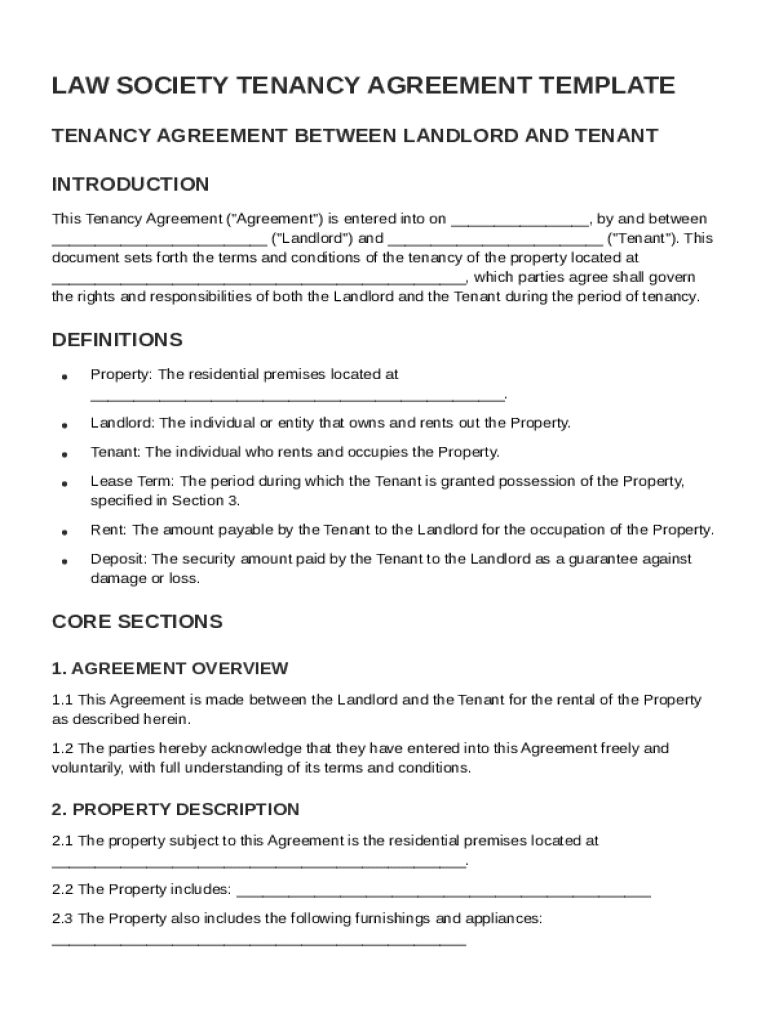
The Law Society Tenancy Agreement Template is a legal document designed to outline the terms and conditions of renting residential property between a landlord and a tenant. It serves as a comprehensive framework that includes vital information such as property details, lease terms, payment obligations, and responsibilities of each party. By clearly establishing the rights and obligations, this template aids in preventing future disputes and misunderstandings.
Key Provisions
- Property Description: Provides an explicit description of the premises being rented, including any furnished items.
- Lease Term: Details the duration of the tenancy agreement, whether fixed or periodic, outlining the start and end dates.
- Rent Payment: Specifies the rental amount, due date, and acceptable payment methods, ensuring clarity in financial transactions.
How to Use the Law Society Tenancy Agreement Template
To effectively utilize the Law Society Tenancy Agreement Template, follow these steps:
- Download the Template: Obtain the template in a compatible format (PDF, DOC) from a trustworthy source like a legal service provider.
- Customize the Document: Modify the sections to accurately reflect the specific rental arrangement. This includes inputting accurate dates, rent amounts, and property details.
- Review and Revise: Both parties should thoroughly review the completed document to ensure mutual agreement on all terms.
- Sign and Execute: Once all parties agree, affix signatures to formalize the contract. Consider using DocHub for secure electronic signatures.
Practical Tips for Customization
- Ensure Accuracy: Double-check personal and property details to avoid discrepancies.
- Consult an Attorney: If uncertain about any clause, seek professional legal guidance to safeguard both parties’ interests.
Key Elements of the Law Society Tenancy Agreement Template
The template includes essential components crucial to defining the landlord-tenant relationship.
- Security Deposit: Details the amount, use conditions, and return policy following the lease.
- Utilities and Maintenance: Specifies which party is responsible for utility payments and upkeep of the property.
- Termination Procedures: Outlines the processes for terminating the lease, including notice periods and conditions for early termination.
Additional Considerations
- Use of Property: Sets rules regarding permissible use, ensuring tenants use the property responsibly.
- Default Remedies: Specifies remedies in cases of breach, ensuring both parties understand consequences of failing to meet responsibilities.
Steps to Complete the Law Society Tenancy Agreement Template
Completing this template accurately is essential for establishing a legally binding agreement.
- Fill Out Property Information: Include the full address and specific details of the property.
- Enter Tenant and Landlord Details: Provide legal names, addresses, and contact information.
- Specify Financial Terms: Clearly indicate rent amount, due date, and payment method.
- Define Responsibilities and Rights: Cover who is responsible for maintenance, repairs, and payments such as utilities.
- Include Legal Clauses: Ensure clauses related to dispute resolution and governing law are included.
Completion Checklist
- Verify completeness of all sections.
- Ensure all fillable fields are correctly completed.
- Review all clauses for compliance with local laws.
Legal Use of the Law Society Tenancy Agreement Template
Understanding how to legally use this template is crucial to ensure enforceability.
- Conformity with Local Laws: The agreement must adhere to state-specific landlord-tenant laws.
- Enforceability: Signed copies of the agreement should be retained by both parties, with adherence to any local compliance requirements.
- Resolving Disputes: Clearly defined procedures within the template can help in amicably resolving disputes.
Legal Considerations
- Keep abreast of changes to landlord-tenant laws within your state.
- Inclusion of an arbitration or mediation clause can reduce litigation risks.
State-Specific Rules for the Law Society Tenancy Agreement Template
Understanding state-specific nuances is vital for compliance.
- Security Deposit Limits: Some states cap the amount landlords can charge as a security deposit.
- Notice Periods: Vary by state for lease termination or rent increase notifications.
- Tenant Rights: States may have unique provisions regarding tenant privacy and habitability requirements.
Notable State Variations
- California, for example, has stringent regulations on disclosures and habitability.
- Texas mandates specific clauses concerning late fees and lease termination conditions.
Important Terms Related to the Law Society Tenancy Agreement Template
Being familiar with key terms within the agreement ensures all parties are aligned.
- Subletting Clause: Specifies whether the tenant is allowed to sublet the property.
- Holdover Tenant: Addresses scenarios where a tenant remains after lease expiration.
- Quiet Enjoyment: Guarantees tenants the right to undisturbed use of the property.
Glossary of Terms
- Leasehold: The interest or rights a tenant possesses regarding a property.
- Indemnity: Protection against losses or damages articulated within the lease.
Examples of Using the Law Society Tenancy Agreement Template
Practical scenarios illustrate the versatility of the template.
Residential Leasing
- A young professional rents an apartment in a large city. The agreement details rental payment terms and noise restrictions.
Shared Housing
- Students sharing a house use the agreement to allocate utility responsibilities and communal spaces.
Long-Term Tenancy
- Families entering a multi-year lease use the document to negotiate pet policies and garden maintenance responsibilities.
By adopting the Law Society Tenancy Agreement Template with careful attention to detail, landlords and tenants can establish a robust foundation for their rental relationship.