






Definition and Meaning
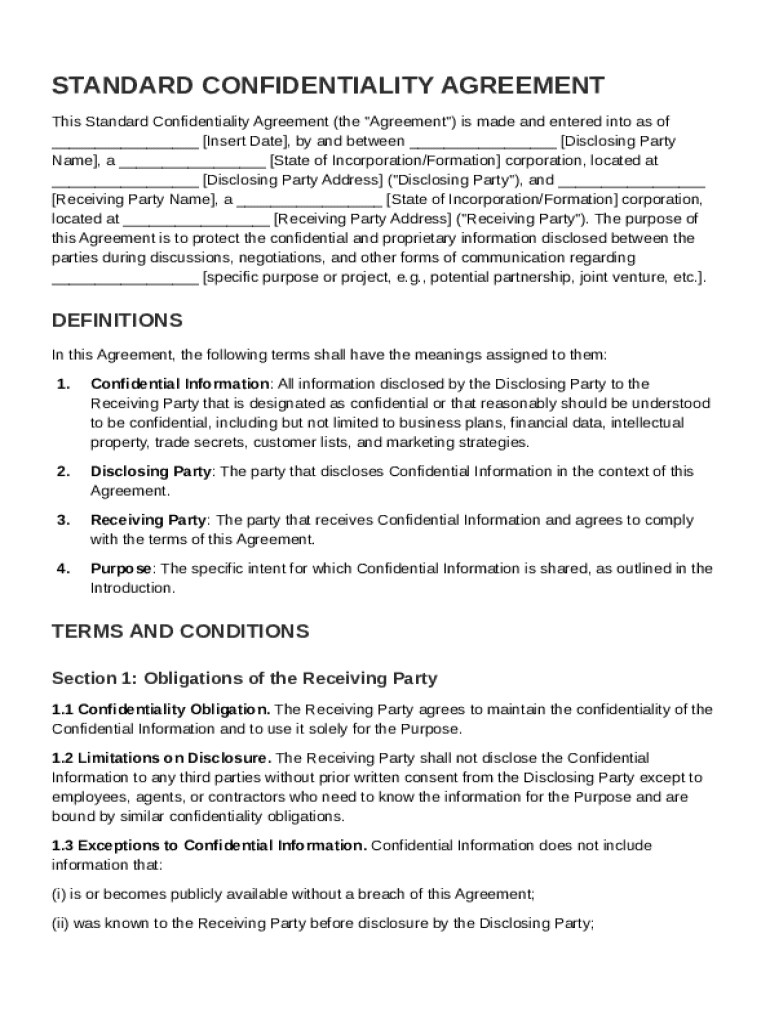
A Standard Confidentiality Agreement Template defines the terms under which confidential information is exchanged between the Disclosing Party and Receiving Party. This legally binding document establishes the frameworks necessary for managing sensitive information, ensuring both parties understand their rights and obligations. It typically includes conditions to protect trade secrets, proprietary information, and technical data, and stipulates any penalties for breaching these terms.
Key Features
- Confidential Information: Clearly defines what constitutes confidential information to prevent misunderstandings.
- Obligations: Outlines the responsibilities of both the Disclosing and Receiving Parties to maintain confidentiality.
- Exceptions: Specifies scenarios where confidential information might be disclosed, such as legal requirements.
- Duration and Termination: Details how long the agreement is valid and the circumstances under which it can be terminated.
How to Use the Standard Confidentiality Agreement Template
Using the Standard Confidentiality Agreement Template requires understanding its structure and purpose. It's essential to customize it to reflect the specific details of the parties involved and the information to be protected.
Steps to Utilize
- Personalization: Insert the names and addresses of the Disclosing and Receiving Parties.
- Detail Specifics: Customize the sections that describe the types of confidential information covered under the agreement.
- Review Obligations: Ensure that both parties understand their duties in terms of protecting confidential data.
- Sign and Store: Both parties must sign the agreement, and it should be stored securely, both digitally and physically.
Key Elements of the Standard Confidentiality Agreement Template
The template comprises critical sections that ensure comprehensive protection of information. Each section serves a unique function and collectively enforces confidentiality.
Core Components
- Identification of Parties: Clearly states who the parties involved are and their roles.
- Definition of Confidential Information: Outlines what information is considered confidential.
- Confidentiality Obligations: Specifies the actions the Receiving Party must take to safeguard the information.
- Permitted Disclosures: Lists situations where disclosures are legally permissible.
- Return or Destruction of Information: Describes the process of returning or destroying information once the agreement expires.
Important Terms Related to the Standard Confidentiality Agreement Template
Understanding terminology within the agreement is crucial for its effective implementation.
Common Terms
- Non-Disclosure Agreement (NDA): Another name for a confidentiality agreement.
- Disclosing Party: The owner of the confidential information.
- Receiving Party: The party receiving the confidential information.
- Trade Secrets: Specialized information providing a business advantage.
- Proprietary Information: Information owned by the Disclosing Party.
Legal Use of the Standard Confidentiality Agreement Template
The template adheres to legal standards to ensure enforceability. It’s drafted in compliance with U.S. laws to protect intellectual property rights.
Legal Considerations
- State Law Compliance: The agreement must comply with the specific laws of the state in which it is executed.
- Court Enforcement: Disputes arising from the agreement can be resolved in court if needed.
- Intellectual Property Laws: Protects company secrets under intellectual property laws, providing legal grounds for action against breaches.
Who Typically Uses the Standard Confidentiality Agreement Template
The template serves various industries and professionals who require confidentiality in their operations.


Users
- Businesses: For protecting trade secrets and operational methods.
- Consultants: To prevent the misuse of proprietary methodologies.
- Manufacturers: Ensuring supplier agreements maintain confidentiality of designs or processes.
- Healthcare Providers: Securing patient information within collaborative trials.
Examples of Using the Standard Confidentiality Agreement Template
Real-world applications of the template demonstrate its practicality and necessity.
Scenario Examples
- Startups: Sharing business plans with potential investors while ensuring confidentiality.
- Partnerships: Collaborating businesses use the agreement to protect shared market research data.
- Employment: Employees sign to protect employer’s strategic plans and production secrets.
State-Specific Rules for the Standard Confidentiality Agreement Template
While the template maintains a standard structure, certain states have specific requirements or deviations.
State Considerations
- California: Known for stricter controls on trade secret definitions within confidentiality agreements.
- New York: Requires explicit definitions of confidential information to ensure enforceability.
- Texas: Emphasizes the necessity for a clear distinction between confidential and publicly accessible information.
By understanding and adequately implementing the Standard Confidentiality Agreement Template, entities can effectively manage sensitive information, secure business interests, and comply with applicable legal standards.