






Definition and Meaning of the Landscaping Agreement Template
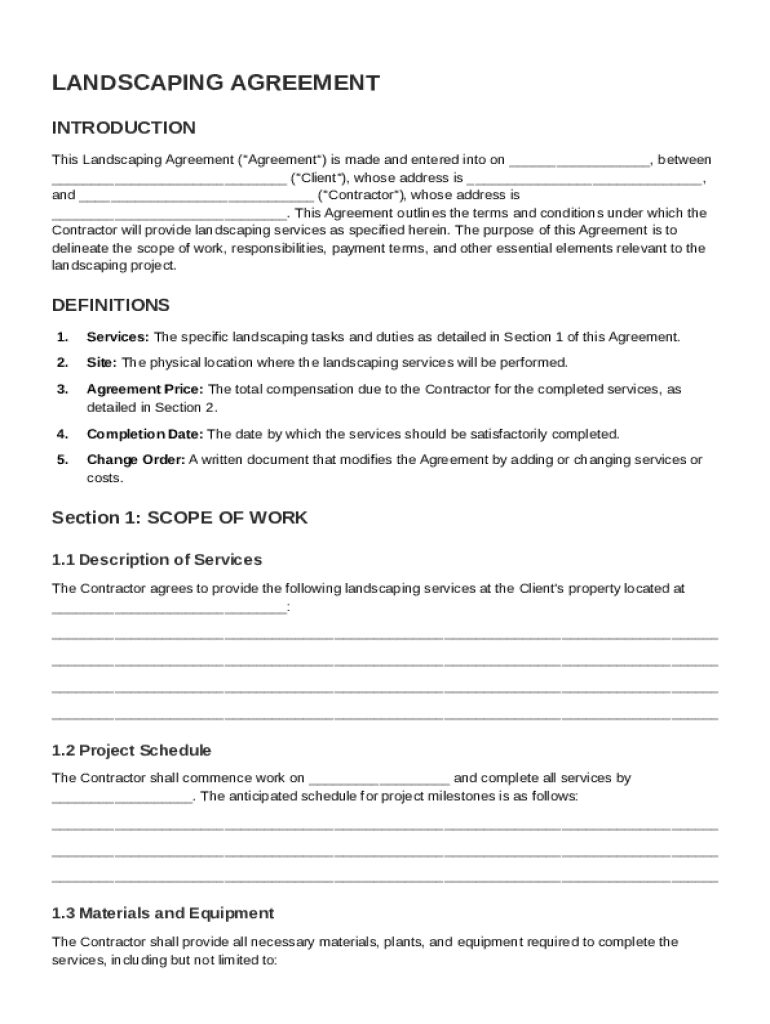
A Landscaping Agreement Template is a pre-structured document designed to formalize the terms and conditions between a client and a contractor for landscaping services. This template includes essential components such as the scope of work, payment terms, and responsibilities of the parties involved. It ensures clarity and mutual understanding, reducing the risk of disputes and serving as a legally binding contract.
Components of a Landscaping Agreement
- Scope of Work: Detailed description of the tasks to be performed.
- Payment Terms: Methods, schedule, and amount structure for payments.
- Responsibilities: Obligations and duties of both client and contractor.
- Change Orders: Procedures for modifications to the original agreement.
- Warranty Provisions: Guarantees provided by the contractor.
Examples of scenarios where a template is useful include routine maintenance contracts, large-scale landscaping projects, and seasonal service agreements. Each section outlines specific expectations and can be customized to fit the unique needs of a project or client.
How to Use the Landscaping Agreement Template
To effectively utilize a Landscaping Agreement Template, users should follow structured steps to customize it for their specific project.
- Download the Template: Obtain the template from a trusted source, ensuring it suits your jurisdiction if state-specific provisions are needed.
- Input Project Details: Modify sections to include the names of both parties, a detailed scope of work, start and completion dates, and specific services to be provided.
- Define Payment Details: Clarify the total contract amount, payment schedule, methods (e.g., checks, electronic transfer), and any upfront deposits required.
- Specify Responsibilities: Clearly outline who is responsible for materials, permits, or potential subcontractors.
- Include Legal Terms: Add or modify sections on indemnification, warranties, and termination clauses to fit the legal requirements of the project location.
For instance, if the project involves specialized plants, ensure that sourcing and warranty cover damage or replacement within a specific period after installation. Highlight any penalties for delays or incomplete work to secure your project's interests.
Key Elements of the Landscaping Agreement Template
Several critical components encapsulate the entire landscaping agreement, guiding project execution and legal compliance.
Essential Clauses
- Indemnification: Protect both parties from liabilities due to negligence or accidents.
- Termination Clause: Conditions under which either party can end the agreement.
- Governing Law: Specify the state's laws that will govern the contract’s terms.
- Confidentiality: Protect proprietary or sensitive information shared during the project.
Customization Options
Each element can be tailored to address project-specific details. For example, for a project involving eco-friendly landscaping, consider the environmental standards and compliance measures.
Who Typically Uses the Landscaping Agreement Template
This template is predominantly used by individuals and entities seeking landscaping services or contractors providing them.


Common Users
- Homeowners: For personal landscaping needs or garden maintenance.
- Commercial Real Estate Managers: To manage groundskeeping for office buildings or apartment complexes.
- Government Agencies: For public parks or municipal landscapes.
By defining the relationship legally, both clients and service providers ensure protection and clarity. For instance, a restaurant chain hiring a contractor to design and maintain outdoor dining areas would benefit from a clear agreement tailored to its specific needs.

Legal Use of the Landscaping Agreement Template
The template serves as a legally binding document when correctly filled out and executed. It complies with laws under the U.S. legal framework.
Compliance Factors
- Signatures: Ensure both parties sign the document.
- Witnesses: Some jurisdictions may require a witness or notary.
- Legal Review: Consider a lawyer's review for large-scale or complex projects.
These factors ensure that the agreement is enforceable and meets any state-specific legal requirements. Proper execution protects against potential liabilities or breaches of contract.
Examples of Using the Landscaping Agreement Template
Real-world examples illustrate the broad applicability of this template in diverse contexts, bringing clarity and enforceability to professional relationships.
Case Studies
- Residential Project: A homeowner contracts a gardener for monthly maintenance, detailing tasks and seasonal adjustments.
- Corporate Landscaping: A corporation outlines a two-year agreement for lawn care, including snow removal services in winter.
- Public Venue Maintenance: A city hires a contractor for park upkeep, specifying grass cutting, tree pruning, and irrigation management.
Each scenario requires the agreement to articulate clear expectations, project timelines, and precise legal terms, ensuring both parties understand their duties and rights.
Steps to Complete the Landscaping Agreement Template
Completing the Landscaping Agreement Template involves specific steps to ensure it covers all necessary aspects and is tailored correctly.
- Preliminary Review: Understand the template's structure and sections.
- Customization: Fill in the pertinent details—client, contractor, project specifics.
- Verification: Cross-check for omissions or errors in scope, timeline, and terms.
- Legal Adjustments: Where needed, seek legal advice for jurisdiction-specific clauses.
- Finalization: Both parties review, amend if necessary, and then sign the document.
These steps result in a comprehensive and legally secure agreement, safeguarding all parties involved.
Important Terms Related to the Landscaping Agreement Template
Terms within the template are crucial for clarity and understanding, with each having a specific purpose in the context of the agreement.
Term Breakdown
- Scope of Work: The defined tasks and responsibilities.
- Payment Schedule: Timelines and methods for financial transactions.
- Liability Insurance: Coverage for damages or injuries occurring during the project.
Understanding and clearly defining these terms helps minimize risks and misunderstandings, ensuring a seamless project delivery and a strong professional relationship between the client and contractor.