






Definition and Meaning
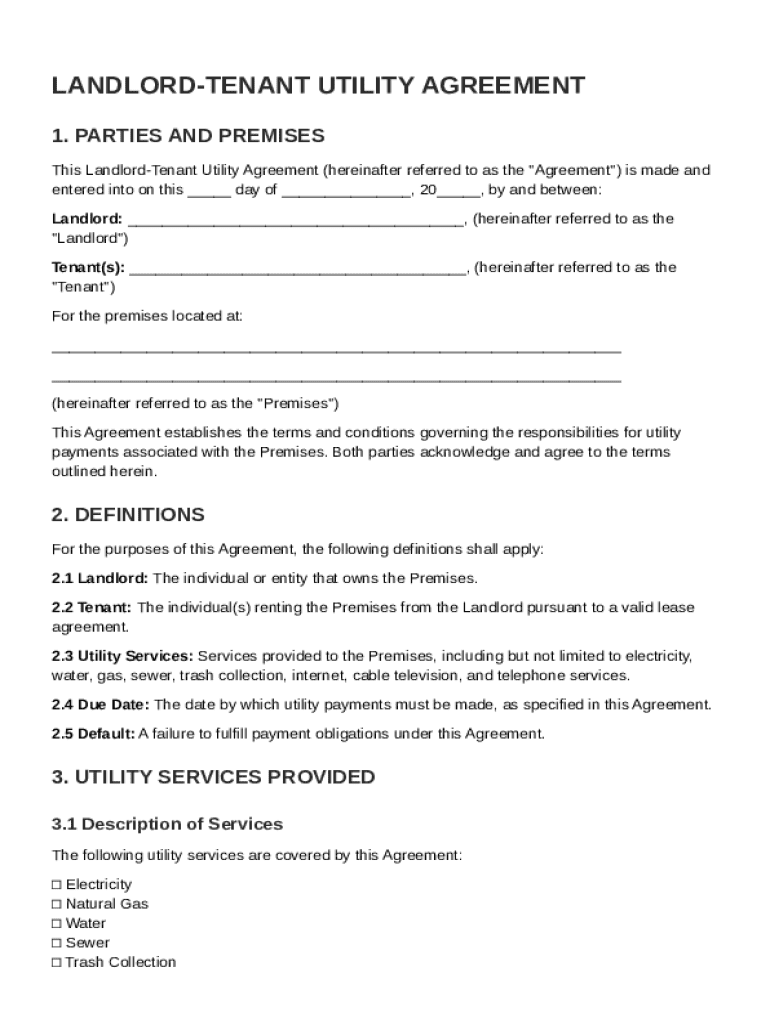
The Landlord-Tenant Utility Agreement Template is a legal document that outlines the responsibilities and obligations of both the landlord and the tenant regarding utility payments for a rental property. This agreement specifies which party is responsible for paying for services such as water, electricity, gas, and trash collection. The document also clarifies the procedures for payment, including the method, due date, and any applicable late fees. By establishing these details in a formal agreement, both parties can prevent future disputes and misunderstandings.
Key Elements of the Landlord-Tenant Utility Agreement Template
A comprehensive Landlord-Tenant Utility Agreement Template includes several critical elements to ensure that both parties understand their duties:
-
Utility Service List: Identifies all utilities covered by the agreement, such as water, gas, electricity, and internet.
-
Payment Responsibilities: Clearly states which party is responsible for each utility service, including any shared utilities.
-
Due Dates and Late Fees: Specifies the payment dates and any penalties for late payments by either party.
-
Access for Repairs: Outlines the conditions under which the landlord or their agents may enter the premises to maintain or repair utility services.
-
Termination Conditions: Describes the process for ending the agreement and transferring utility accounts.
-
Indemnification Clauses: Protects each party from certain liabilities related to utility services.
Steps to Complete the Landlord-Tenant Utility Agreement Template
-
Information Gathering: Collect necessary information, including the address of the rental property, the start date of the tenancy, and the names of both parties.
-
Define Terms: Clearly articulate all terms pertaining to utility payment responsibilities and conditions.
-
Insert Signatures: Include spaces for both the landlord and the tenant to sign, which legally binds them to the agreement.
-
Review and Finalize: Have both parties review the document for errors and clarity before signing.
Legal Use of the Landlord-Tenant Utility Agreement Template
In the United States, the Landlord-Tenant Utility Agreement Template is a legally enforceable document once signed by both parties. It complies with state and federal rental laws, ensuring that utility responsibilities are fairly assigned and upheld in legal situations. Tenants and landlords can rely on this document to maintain transparency and legal protection if disputes arise.
State-Specific Rules for the Landlord-Tenant Utility Agreement Template
Different states may have specific regulations regarding utility payments and landlord-tenant agreements. For example, states like New York and California have landlord-tenant laws that might set particular rules about utility responsibilities. Including a clause specifying adherence to state laws can prevent conflicts. Check local legal requirements to ensure compliance.
Who Typically Uses the Landlord-Tenant Utility Agreement Template
This agreement is primarily used by landlords and property managers who oversee rental properties. Residential tenants who rent homes, apartments, or condos also use this document to clarify their financial responsibilities for utilities. Additionally, real estate agents and attorneys might utilize this template during lease negotiations or legal consultations.


Examples of Using the Landlord-Tenant Utility Agreement Template
-
Single-Family Homes: In a single-family rental, the tenant might be responsible for all utilities, a situation that an agreement can clarify.
-
Apartment Complexes: In larger residential buildings, landlords might cover certain shared utilities while tenants pay for individual electricity, a setting where a utility agreement is vital.
-
Commercial Spaces: When leasing commercial properties, specific businesses may have unique utility needs that require a tailored agreement.
Why Use the Landlord-Tenant Utility Agreement Template
Creating a written agreement about utility responsibilities ensures that all parties are clear on financial obligations. It helps prevent conflicts over unpaid bills and provides legal recourse if either party violates the agreement. Ultimately, it fosters good landlord-tenant relationships by promoting transparency and fairness.
Digital vs. Paper Version
The template is available in both digital and paper formats. A digital version allows for easier edits and sharing, benefiting parties who prefer electronic document management. Paper versions offer a tangible record and fulfill locations without reliable digital access. DocHub's platform can facilitate the creation and sharing of digital templates, supporting a seamless and secure workflow.