






Definition and Purpose of the Vendors Contract Template
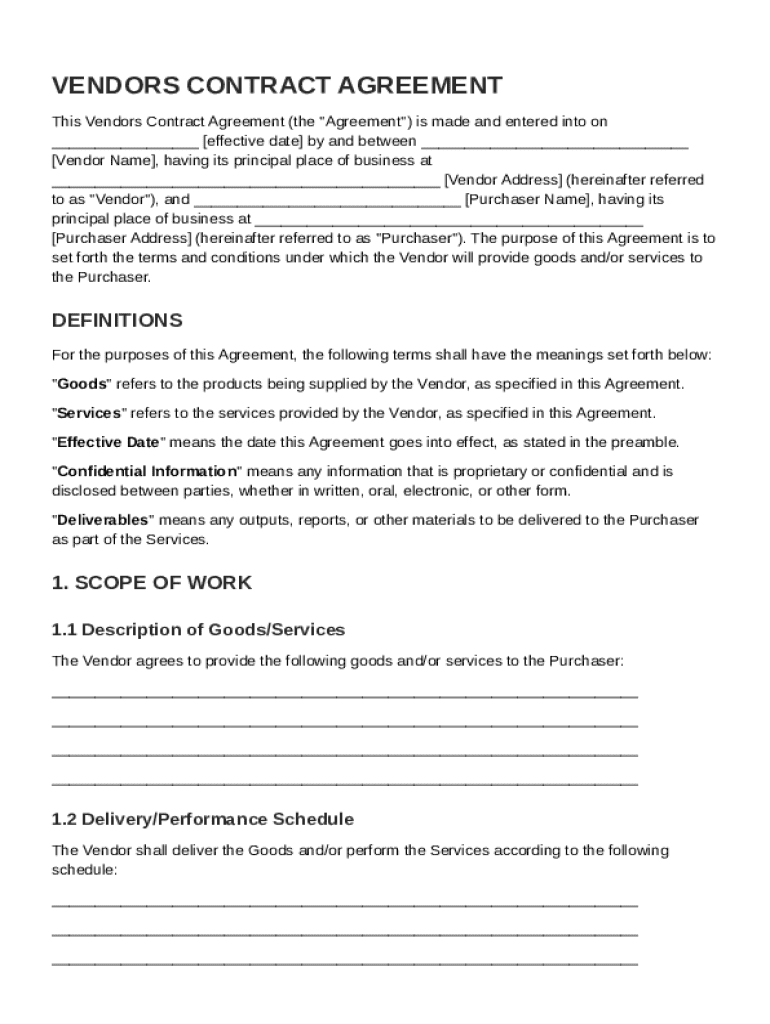
A Vendors Contract Template serves as a formal agreement outlining the terms under which a vendor provides goods or services to a purchaser. It is essential for establishing clear expectations and responsibilities between both parties involved. This document typically includes components such as definitions, scope of work, compensation details, confidentiality obligations, warranties, indemnification clauses, governing law, and dispute resolution processes. The structured nature of this template ensures that each party understands their obligations and rights, thus minimizing potential conflicts.
How to Use the Vendors Contract Template Effectively
To utilize the Vendors Contract Template effectively, users should begin by customizing the document to reflect the specific details of their transaction. This involves:
- Entering Basic Information: Start with the names and addresses of both the vendor and the purchaser.
- Defining the Scope of Work: Clearly outline the type of goods or services to be provided, including specifications, quality standards, and delivery schedules.
- Compensation Terms: Specify payment amounts, schedules, and methods. Include any penalties or interest for late payments.
- Confidentiality and Security: Outline confidentiality agreements to protect sensitive information, supported by legal clauses if necessary.
- Warranties and Liabilities: Define any warranties on goods/services and the extent of the vendor's liability for defects or non-performance.
By carefully filling out each section, parties can ensure the contract is tailored to meet their specific needs.
Key Elements of the Vendors Contract Template
The Vendors Contract Template includes several vital sections aimed at providing comprehensive coverage of the agreement. Important elements include:
- Definitions: Clear explanations of critical terms used within the contract.
- Scope of Work: Detailed description of what the vendor is expected to deliver.
- Compensation: Information about pricing, payment terms, and any conditions affecting financial transactions.
- Confidentiality: Terms that protect proprietary or sensitive information from unauthorized disclosure.
- Indemnification: Clauses that outline financial liability coverage in case of third-party claims.
- Dispute Resolution: Procedures for resolving disagreements, such as mediation or arbitration.
Each section should be reviewed and adapted to align with the specific requirements of the transaction.
Steps to Complete the Vendors Contract Template
Completing the Vendors Contract Template involves careful attention to detail. Here's a step-by-step guide:
- Review and Understand Each Section: Familiarize yourself with all parts of the contract, including any legal jargon.
- Fill in Parties’ Information: Input the legal names, addresses, and contact details of both the vendor and purchaser.
- Detail Product/Service Information: Provide a detailed description of the goods or services, including quantities and delivery timelines.
- Clarify Payment Details: Specify the total contract value, along with payment terms and conditions.
- Include Legal Protections: Ensure sections on confidentiality, warranties, and indemnification are complete and understood.
- Finalize and Sign: Once all parties agree on the terms, finalize the document with signatures. Ensure each party retains a copy.
By following these steps, users can ensure the template is complete and legally binding.
Who Typically Uses the Vendors Contract Template
The Vendors Contract Template is a versatile tool used by various entities, especially within the business sector. Common users include:
- Small and Medium Enterprises (SMEs): Businesses that frequently engage third-party vendors for products or services.
- Large Corporations: Companies with complex supply chains requiring formal agreements with multiple vendors.
- Independent Contractors and Freelancers: Individuals providing specialized services who need clear contractual terms.
- Nonprofit Organizations: Entities working with vendors for events, supplies, or services.
Each type of user can adapt the contract to suit their distinct circumstances, ensuring a mutual understanding and professional relationship.


Legal Usage and Compliance of the Vendors Contract Template
Legal compliance is a critical aspect of using the Vendors Contract Template. The document must adhere to applicable laws, such as:
- Contract Law: Ensuring the template fulfills elements of a legally enforceable contract—offer, acceptance, and consideration.
- UCC Compliance: Especially relevant to transactions involving the sale of goods, under the Uniform Commercial Code.
- State Laws: Adapting the contract to align with specific laws governing contractual obligations in different states.
- ESIGN Compliance: Ensuring that electronic signatures used in the template are legally binding.
Vendors and purchasers should consult legal professionals to verify compliance with all applicable regulations, preventing legal disputes and ensuring enforceability.
Business Types That Benefit Most From Vendors Contract Template
Various business types find particular advantage in using the Vendors Contract Template, including:
- Retailers and Wholesalers: Businesses dealing with numerous vendors for stock and inventory.
- Event Planners: Organizers who need contracts for services such as catering, entertainment, and logistics.
- Manufacturers: Companies sourcing raw materials or components from multiple suppliers.
- Technology Firms: Entities contracting software development or IT services.
These businesses benefit from clear terms that facilitate smooth transactions and protect their interests.
Examples of Using the Vendors Contract Template
Practical examples illustrate the diverse applications of a Vendors Contract Template:
- Event Management: An event planner contracts a caterer using the template to define menu options, delivery times, service staff requirements, and payment terms.
- Tech Services: A corporation engages an IT firm to develop software, including deliverables, timelines, intellectual property rights, and maintenance terms.
- Manufacturing Agreement: A manufacturer uses the template to specify the supply of raw materials, including quality standards, delivery schedules, and penalties for non-compliance.
Each example underscores the template’s ability to capture specific agreements, ensuring clarity and mutual understanding between parties.