Definition and Meaning of the REIQ Commercial Tenancy Agreement
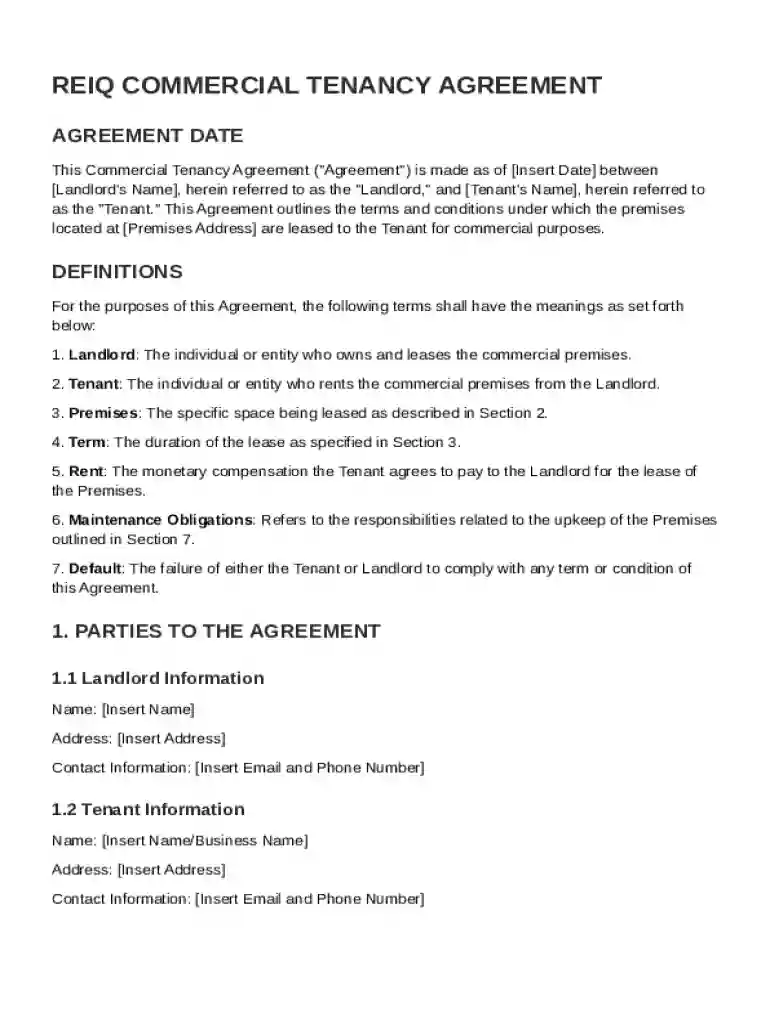
The REIQ Commercial Tenancy Agreement is a legal document designed to govern the leasing terms of commercial property between a landlord and a tenant. It provides a structured format to outline obligations, rights, and responsibilities, ensuring clarity and reducing potential disputes during the lease period. The agreement incorporates essential components such as the identification of involved parties, a detailed description of the premises, and lease conditions, including duration and rent terms.
Important Components of the Agreement
- Parties Involved: Details both the landlord's and the tenant's information, establishing the contract's legal framework.
- Premises Description: Clearly describes the physical space being leased, including any additional facilities available to the tenant.
- Lease Term: Specifies the duration of the lease agreement, including any renewal options, if applicable.
Key Elements of the REIQ Commercial Tenancy Agreement Template
The REIQ Commercial Tenancy Agreement Template is composed of various sections designed to provide comprehensive details about the leasing arrangement. Each section plays a critical role in setting clear expectations for both parties involved.
Main Sections Include:
- Rent Payment Details: Includes the amount, frequency, and method of rent payments. It may also address procedures for late payments or adjustments.
- Security Deposit Requirements: Outlines the amount required, conditions for return, and scenarios under which it may be withheld.
- Permitted Use of the Premises: Specifies how the tenant is allowed to use the property, ensuring compliance with zoning laws and tenant operations within designated limits.
- Maintenance and Repair Obligations: Defines the responsibilities of each party in maintaining the property and addressing repairs, preventing miscommunication and neglected maintenance.
- Default and Termination Clauses: Describes the conditions that lead to default or termination of the agreement, safeguarding both parties' interests by providing legal recourse.
- Insurance Obligations: Stipulates insurance requirements, ensuring both parties are protected from potential liabilities.
Steps to Complete the REIQ Commercial Tenancy Agreement Template
Completing the REIQ Commercial Tenancy Agreement requires careful attention to detail to ensure all legal and practical considerations are addressed.
- Review Key Terms: Begin by thoroughly examining each section of the agreement, including legal obligations, cost structures, and operational terms.
- Gather Required Details: Ensure you have all necessary information about the parties involved, property specifics, and any agreed-upon terms.
- Fill Out the Template: Complete each section of the template with accurate details, ensuring clarity for both parties.
- Seek Legal Advice: Consider consulting with a legal expert to review the completed agreement and ensure compliance with local and federal laws.
- Final Review and Signatures: Once both parties are satisfied with the terms, sign the agreement in the presence of witnesses, if required.
Legal Use of the REIQ Commercial Tenancy Agreement Template
The REIQ Commercial Tenancy Agreement Template serves as a legally binding contract that provides enforceable rights and obligations.
Legal Considerations Include:
- Conformance with State Laws: Ensure the agreement complies with applicable state laws and regulations to avoid invalidating any portion of the agreement.
- Compliance with Commercial Leasing Standards: Adhere to regulations concerning property use, safety standards, and zoning requirements.
- Enforcement and Dispute Resolution: Provisions within the agreement should detail processes for handling disputes, which may involve mediation, arbitration, or legal action.
Typical Users:
- Commercial Landlords: Property owners looking to lease space to businesses, ensuring they protect their interests and provide clear terms.
- Business Tenants: Companies or individuals renting commercial space who seek detailed agreements to support their business operations.
- Property Managers: Professionals managing multiple leasing arrangements on behalf of landlords, using standardized agreements for consistency and legal protection.
Software Compatibility for the REIQ Commercial Tenancy Agreement Template
Given the diverse formats supported by document management platforms, compatibility is essential for electronic handling of the REIQ Commercial Tenancy Agreement Template.
Supported Software:
- DocHub: Facilitates editing, signing, and sharing of the agreement, accommodating various file types such as PDF and DOC.
- Google Workspace Integration: Allows for seamless file import and export using Google Drive, ensuring efficient workflow management.
- Other Document Editors: Compatible with software like Adobe Acrobat and Microsoft Word, enabling versatile document handling across different platforms.
Importance of the REIQ Commercial Tenancy Agreement Template
This template is crucial in maintaining clear communication and reducing potential conflicts between landlords and tenants.
Benefits Include:
- Establishes Clear Terms: Provides structured expectations and responsibilities, minimizing misunderstandings.
- Legal Protection: Offers a legally sound contract that can be enforced in court if necessary.
- Streamlines Leasing Processes: Facilitates smoother negotiations and renewal processes by outlining all essential terms upfront.
State-Specific Rules for the REIQ Commercial Tenancy Agreement Template
When using the REIQ Commercial Tenancy Agreement Template, it's important to account for state-specific regulations that may impact leasing agreements.
Factors to Consider:
- Local Zoning Laws: Compliance with state and local zoning regulations is necessary to validate the permitted use of the premises.
- State-Specific Amendments: Adjustments may need to be made to the template to reflect regional statutes and leasing practices.
- Legal Review: It is advisable to have a legal professional review the agreement for state compliance and recommend necessary modifications.